There are so many things I love about Unlocked I don't know where to start.
1. Pricing - Unlocked is selling (as of this writing) for 99 cents. That's the magical marketing price of "pocket change". Unlocked is certainly up there with Mary Balogh's A Matter of Class, which (as you may recall) was priced at $16 USD. So, practically free. In fact I already gifted a few copies of Unlocked myself.
2. Marketing - Milan is self publishing a novella set in the world of an ongoing series as a placeholder between the books. What could possibly make waiting for an anticipated book better? It's like the Pixar short being shown on demand instead of right before the feature.
3. Names - In Unlocked we meet Evan and Elaine. Lady Elaine. Can we all have a Mr. Roger's moment please? Not since finding out Simple Kid's real name is Keiran McFeely and getting my Cap'n Kangaroo flashback on have I smiled so much just at a character's introduction. Ok, her last name isn't Fairchilde but she has time.
4. Concept - Evan met Elaine when he was young and stupid and immature. In other words, in his late teens / early twenties. Their initial relationship is that of bully and victim, and like many in that situation Evan has moved past his actions while Elaine has lived with them. When Evan returns to England and discovers what his impulsive cruelty cost her he is ashamed enough to try and repair the damage. Elaine may have been victimized but she's not exactly a victim. Her coping mechanisms may be outdated but they're clever enough. Elaine has learned to stop internalizing the cruel words of others. She's not ready to forgive Evan, she's not even ready to believe him, but neither does she feel the need to please him. Both have to examine the part they played in their past. (But mostly Evan)
5. General Awesomeness - Unlocked was just a great read. Ultimately all that matters is the story, was there a good one, did I enjoy it, will I remember it? Yes, yes and yes. Any point I might argue about Unlocked would come down to wanting more. If it was in an anthology I'd feel sorry for the other stories, frankly.
30 May, 2011
28 May, 2011
Review: Homemade Soda by Andrew Schloss
You know how some things once known cannot be unknown? That's how I feel about the ingredients for Cola and various Root Beers. Thinking about drinking Kitchen Bouquet Browning Liquid makes my rejection of commercial soda all the more sincere. I'm a changed woman. (Ok, on vacation I am totally going to relapse. Let's be honest.) Homemade Soda sometimes gave me that feeling you get watching an evening news report on food standards for your child's chicken nugget versus Fido's pet food.
Sure, it's called 7-Root Beer, but actual roots? Carrots and parsnips and licorice? I think I'll go back to Grapefruit Soda, it tastes like a Fresca without the artificial kick in the finish. Strawberry Pineapple Soda is ridiculously easy to make the syrup for. Homemade Soda has the right combination of accessible and outrageous. I like a cookbook that blends things I can make tonight with things I'll never make but tell myself I'll try next weekend, or maybe the one after but certainly by the end of the month...
Graphically, the book is beautiful. The font and layout has a strong early seventies feel which is an emotional heyday for me and soda. Schloss gives clear and careful instructions for a variety of methods, from a simple mix with seltzer to using a siphon or fermenting your own concoctions. I think this is the next foodie craze - can you imagine throwing a party where all the mixers or soft drinks were made in your own kitchen? Go ahead and cater the main course, everyone will still talk about your mad kitchen skills the next day. Especially if you mix up a batch of Blazing Inferno Chile water. Homemade Soda is comprehensive, fun and beautifully designed. I'm going to be using it as a gift book this year, as I continue my crusade against waste by urging everyone to give up commercially bottled beverages.
Sure, it's called 7-Root Beer, but actual roots? Carrots and parsnips and licorice? I think I'll go back to Grapefruit Soda, it tastes like a Fresca without the artificial kick in the finish. Strawberry Pineapple Soda is ridiculously easy to make the syrup for. Homemade Soda has the right combination of accessible and outrageous. I like a cookbook that blends things I can make tonight with things I'll never make but tell myself I'll try next weekend, or maybe the one after but certainly by the end of the month...
Graphically, the book is beautiful. The font and layout has a strong early seventies feel which is an emotional heyday for me and soda. Schloss gives clear and careful instructions for a variety of methods, from a simple mix with seltzer to using a siphon or fermenting your own concoctions. I think this is the next foodie craze - can you imagine throwing a party where all the mixers or soft drinks were made in your own kitchen? Go ahead and cater the main course, everyone will still talk about your mad kitchen skills the next day. Especially if you mix up a batch of Blazing Inferno Chile water. Homemade Soda is comprehensive, fun and beautifully designed. I'm going to be using it as a gift book this year, as I continue my crusade against waste by urging everyone to give up commercially bottled beverages.
23 May, 2011
Review: Just Like Heaven by Julia Quinn
Once, a long time ago, before we had children or houses or (in one case) name recognition, Julia Quinn used to stop by periodically and offer me some of her pretzel bites. (They were delicious.) It's not that we know each other, it's that we were of similar age and I was selling shoes near where she was putting 'Autographed By Author' stickers on books across the state. I don't actually know Julia Quinn, but I do know she has some serious marketing chops and a wicked sense of humor. What she does not have is a shoe habit, which I respect. (I was not selling particularly attractive shoes.) From her pen name to her section of the genre, Julia Quinn has made a number of very smart career choices. (And one misfire, but let's leave Wyndham out of this.)
As an earlier adopter of interconnected series and e-book shorts, she's proven to be an adaptive and interesting author who consistently delivers. Comedic romance is something that looks easier than it is. I can count the number of romance authors who have made me laugh during a book on two fingers. One if you only count authors who are still alive.
I laughed twice during Just Like Heaven because Julia Quinn's ear for the sort of trash talking conversations that close cousins have is pitch perfect. (Unlike the Smythe-Smith family who wouldn't know pitch if it came with a personalized calling card.) As a running joke through the Bridgerton series, the Smythe-Smith musical evenings are the sort of mind-numbingly bad recitals that any parent of a preschooler is familiar with. The sort where you begin to suspect that if the child really is a teapot, she cracked long ago. Breaking the Smythe-Smith's out into their own series is inspired. With an explanation for their family tradition finally in hand, the reader is ready to meet another close knit group living in a Lady Whistledown world. We were all a bit lost when we ran out of Bridgertons, let's admit it.
Joining Honoria Smythe-Smith is Marcus Holroyd. An only child to break other only children's hearts, he is the older brother's best friend to her annoying younger sister. It is only natural that his longing for Honoria was obscured by his longing for her family. Just as it was natural for Honoria to assume that her easy relationship with him was born of proximity instead of preference. While I am not a fan of The Big Health Crisis or the Secret Guardian plots, both of them are lightly combined to make a very engaging way of bringing Marcus and Honoria to the truth. In this case, the truth is that Julia Quinn's warm family comedies are a unique and much needed section of my romance shelf. All hail the Smythe-Smiths and long may they reign. (Soundtrack thankfully not included.)
As an earlier adopter of interconnected series and e-book shorts, she's proven to be an adaptive and interesting author who consistently delivers. Comedic romance is something that looks easier than it is. I can count the number of romance authors who have made me laugh during a book on two fingers. One if you only count authors who are still alive.
I laughed twice during Just Like Heaven because Julia Quinn's ear for the sort of trash talking conversations that close cousins have is pitch perfect. (Unlike the Smythe-Smith family who wouldn't know pitch if it came with a personalized calling card.) As a running joke through the Bridgerton series, the Smythe-Smith musical evenings are the sort of mind-numbingly bad recitals that any parent of a preschooler is familiar with. The sort where you begin to suspect that if the child really is a teapot, she cracked long ago. Breaking the Smythe-Smith's out into their own series is inspired. With an explanation for their family tradition finally in hand, the reader is ready to meet another close knit group living in a Lady Whistledown world. We were all a bit lost when we ran out of Bridgertons, let's admit it.
Joining Honoria Smythe-Smith is Marcus Holroyd. An only child to break other only children's hearts, he is the older brother's best friend to her annoying younger sister. It is only natural that his longing for Honoria was obscured by his longing for her family. Just as it was natural for Honoria to assume that her easy relationship with him was born of proximity instead of preference. While I am not a fan of The Big Health Crisis or the Secret Guardian plots, both of them are lightly combined to make a very engaging way of bringing Marcus and Honoria to the truth. In this case, the truth is that Julia Quinn's warm family comedies are a unique and much needed section of my romance shelf. All hail the Smythe-Smiths and long may they reign. (Soundtrack thankfully not included.)
20 May, 2011
Review: Breakdown by Katherine Amt Hanna
Generally, I'm not one for self publishing. I've read some self published books that turned me off reading for weeks on end. That said, it's a new publishing world. Connie Brockway is jumping into the deep end. I think the cool kids are doing it. Time to expand my horizons. As it happens, I'd been hearing about Breakdown for some time. (It's one of those know someone who knows someone who knows the author situations.) God, I hate telling people they were right. I really, truly do. It's up there with filing my income taxes and reading fashion magazines. Credit where it is due, they were correct. Hanna can write.
So let's get the bad stuff out of the way. The cover does the content a disservice. Breakdown's cover makes me think we're getting something about a teenager. The backpack, the pencil shading, the coloration, the title, it all says Young Adult Angst. While this book would certainly work for the YA market, it's dealing almost entirely with older characters. (It's not spelled out, but most seem to be in their thirties.) To it's credit, it is remarkably free of typos, grammatical errors, continuity issues. Breakdown scores better than half the majors on that score. To it's detriment, there are some fairly obvious fixes the author needs to take. Hanna has set a specific (and now past) timeline for her tale thereby dating it and throwing the reader out of the story. That's the easy fix. The slightly harder fix (and one I think an editor would suggest) is that Hanna has a few too many characters. I'd toss two or three right off the top. They don't advance the story. Neither do they weigh it down, but it's still parsley on the plate. Still, I never felt I was reading a self published book (with all the connotations that carries).
Breakdown is a great read. A one-sitting, I-stayed-up-too-late, why-is-it-over great read. For $2.99 I can recommend it with a clear conscience. At times Breakdown reminded me of the great sweet Americana romances of the early 90's. Hanna's setting is a post pandemic world, where the infrastructure has broken down and death has occurred on a 1918 (or far greater) plague scale. Having made his way from America to England over a period of several years, Chris finds himself unable to continue. Broken by his experiences during and after the pandemic, he finds solace in the simple life of a town the plague (but not it's after effects) passed by. If that sounds like the set up for a returning post Civil War romance, you're not far off. Breakdown has the same sweet yet horrific atmosphere as that lost genre. One of the best debuts I've read in ages. If this is the future of self publishing, sign me up.
So let's get the bad stuff out of the way. The cover does the content a disservice. Breakdown's cover makes me think we're getting something about a teenager. The backpack, the pencil shading, the coloration, the title, it all says Young Adult Angst. While this book would certainly work for the YA market, it's dealing almost entirely with older characters. (It's not spelled out, but most seem to be in their thirties.) To it's credit, it is remarkably free of typos, grammatical errors, continuity issues. Breakdown scores better than half the majors on that score. To it's detriment, there are some fairly obvious fixes the author needs to take. Hanna has set a specific (and now past) timeline for her tale thereby dating it and throwing the reader out of the story. That's the easy fix. The slightly harder fix (and one I think an editor would suggest) is that Hanna has a few too many characters. I'd toss two or three right off the top. They don't advance the story. Neither do they weigh it down, but it's still parsley on the plate. Still, I never felt I was reading a self published book (with all the connotations that carries).
Breakdown is a great read. A one-sitting, I-stayed-up-too-late, why-is-it-over great read. For $2.99 I can recommend it with a clear conscience. At times Breakdown reminded me of the great sweet Americana romances of the early 90's. Hanna's setting is a post pandemic world, where the infrastructure has broken down and death has occurred on a 1918 (or far greater) plague scale. Having made his way from America to England over a period of several years, Chris finds himself unable to continue. Broken by his experiences during and after the pandemic, he finds solace in the simple life of a town the plague (but not it's after effects) passed by. If that sounds like the set up for a returning post Civil War romance, you're not far off. Breakdown has the same sweet yet horrific atmosphere as that lost genre. One of the best debuts I've read in ages. If this is the future of self publishing, sign me up.
18 May, 2011
Review: Guarding A Notorious Lady by Olivia Parker
I'm not a fan of this one. Maybe it's because I read it directly after Julia Quinn's upcoming (and exceptional) Just Like Heaven, but I think it's primarily because the entire plot of Guarding A Notorious Lady depends on a failure to communicate. There was nothing memorable about the book. I'm going to have to look the characters' names up or call them Whatshername and MaybeNicholas. (Rosalind and Nicholas - got one right.)
There are certainly moments in this book that hint at what could have been. In one scene a group of debutantes are contorted on chaises trying to look up a kilt. In a better book, that could have stood out. Unfortunately, this isn't a better book. Rosalind is a matchmaker, which matters only as an avenue to point out her own unmarried status. She doesn't really make any matches during this book. In fact, she tries to fix her best friend up with a villain, so her matchmaking doesn't carry any weight for the reader. She isn't in the least notorious, title aside, unless you count her seven seasons on the market and a current wager as to who will win her.
Nicholas is just tedious. He's cranky, he's condescending, he alternates between dour and dim. Unless, of course, he's stripping her naked. Apparently Rosalind has been in love with Nicholas for seven years or more and Nicholas has been avoiding her. He agrees to look out for her while her brother is traveling because he feels indebted to the man. He spends a fair amount of time worrying about betraying her brother and a fair amount of time feeling Rosalind up, but the two events don't really align. His regret seems insincere and fleeting, which keeps it from being a true barrier to expressing himself to Rosalind.
Both of them have Daddy issues. Nicholas can't stand how his father fell apart after losing his mother, Rosalind can't stand her father's emotional distance. It's about the only thing, besides hormones, they have in common. I suppose muteness might also be a shared trait. Neither of them can just talk to the other, neither can ask the other how they feel. She can kneel between his legs, he can run his fingers down the front of her gown, they can get naked and have sex outdoors, but they can't ask if the other is interested in more. It just doesn't ring true. Your best friend's sister, the woman you've pledged to protect, and you're going to give her a bath with your tongue but not tell her why? Your brother's best friend, your secret love, you're going to let him sneak into your bedroom at will and not inquire what he thinks he's doing? It makes absolutely no sense unless you accept that two minutes of open conversation would blow the conflict out of the book. There is no conflict except a failure to speak. In order for the failure to speak to work, there has to be a compelling reason to keep silent.
There's an interesting frame here, but no painting. Rosalind is charming when we first meet her but she rapidly enters TSTL territory, or at least too spineless to tolerate. Nicholas could have been multi dimensional, but his libido turns him into a joke of restraint. The strong hints that her brothers have played matchmaker for her are too dimly indicated to work either. Even the late introduction of a villain plays the lack of communication card. Nicholas rages at Rosalind for going off alone with a stalker without having ever told her she has one. The HEA itself involves deliberate miscommunication. I have no idea how this pair would make it through the day. It seems as though a lifetime of needless resentments and unfounded assumptions await them.
There are certainly moments in this book that hint at what could have been. In one scene a group of debutantes are contorted on chaises trying to look up a kilt. In a better book, that could have stood out. Unfortunately, this isn't a better book. Rosalind is a matchmaker, which matters only as an avenue to point out her own unmarried status. She doesn't really make any matches during this book. In fact, she tries to fix her best friend up with a villain, so her matchmaking doesn't carry any weight for the reader. She isn't in the least notorious, title aside, unless you count her seven seasons on the market and a current wager as to who will win her.
Nicholas is just tedious. He's cranky, he's condescending, he alternates between dour and dim. Unless, of course, he's stripping her naked. Apparently Rosalind has been in love with Nicholas for seven years or more and Nicholas has been avoiding her. He agrees to look out for her while her brother is traveling because he feels indebted to the man. He spends a fair amount of time worrying about betraying her brother and a fair amount of time feeling Rosalind up, but the two events don't really align. His regret seems insincere and fleeting, which keeps it from being a true barrier to expressing himself to Rosalind.
Both of them have Daddy issues. Nicholas can't stand how his father fell apart after losing his mother, Rosalind can't stand her father's emotional distance. It's about the only thing, besides hormones, they have in common. I suppose muteness might also be a shared trait. Neither of them can just talk to the other, neither can ask the other how they feel. She can kneel between his legs, he can run his fingers down the front of her gown, they can get naked and have sex outdoors, but they can't ask if the other is interested in more. It just doesn't ring true. Your best friend's sister, the woman you've pledged to protect, and you're going to give her a bath with your tongue but not tell her why? Your brother's best friend, your secret love, you're going to let him sneak into your bedroom at will and not inquire what he thinks he's doing? It makes absolutely no sense unless you accept that two minutes of open conversation would blow the conflict out of the book. There is no conflict except a failure to speak. In order for the failure to speak to work, there has to be a compelling reason to keep silent.
There's an interesting frame here, but no painting. Rosalind is charming when we first meet her but she rapidly enters TSTL territory, or at least too spineless to tolerate. Nicholas could have been multi dimensional, but his libido turns him into a joke of restraint. The strong hints that her brothers have played matchmaker for her are too dimly indicated to work either. Even the late introduction of a villain plays the lack of communication card. Nicholas rages at Rosalind for going off alone with a stalker without having ever told her she has one. The HEA itself involves deliberate miscommunication. I have no idea how this pair would make it through the day. It seems as though a lifetime of needless resentments and unfounded assumptions await them.
15 May, 2011
Review: Dead Reckoning by Charlaine Harris
Charlaine Harris is getting slammed for continuity errors in this one. I say if you haven't learned to give up on Harris and continuity by the time you've reached Dead Reckoning, then Sookie Stackhouse isn't for you. It's a shame, because this is one series where lowering your expectations is absolutely worth it.
I mean it. Hand me another Sookie right now and I will read it. Got five more? That works too. The Sookie Stackhouse series is addictive in the negative sense of the word. I will consume as many Sookie books as I have, ignoring all others and real world concerns like bathing. If I can get more Sookie books I will abdicate my responsibilities and go in search of them. (That said, the short stories are abysmal. Each one is painful, the bad trip of fiction indulgence.) Perhaps Harris is the victim of the HBO series success, perhaps readers are just noticing. (Either way, she is to continuity as television's Dr. Who is to continuity. Timey-wimey and all that.)
I don't think the books and the show can have the same fans. Perhaps they do, but for me they are two completely different universes based around a similar concept. Anna Pacquin is not my Sookie. My Sookie is Harris's creation, the ball of hair I love to hate. Other reviewers are right in pointing out Dead Reckoning's Sookie is a different girl. She's a Sookie who is starting to grow up. When we meet Sookie she's bullied, asexual, clinging to the edges of her life in fear. This Sookie is assured, she's a problem solver, she's beginning to expect more from herself than we do, and Dead Reckoning finds her in a full reexamination of her life. When Sookie runs to a man to save her, she notices. This is huge for Sookie. Instead of hiding behind every back she can find, she throws her friends out when they transgress. This isn't the Sookie that, as I once said, gets passed around at vampire events like a party favor.
If you happen to be Team Eric you won't care for Dead Reckoning much. Sookie begins to realize the effects of a controlling relationship. She decides to look outside it to try and determine her true feelings, her true inclinations. In a beautifully executed moment Sookie realizes how distant she's become from what her life used to be. A Sookie even noticing that is a major change for our girl. Standing between what her life became and what it used to be Sookie has some hard choices to make. Those choices are left for the next book. (If you're looking to Harris for resolution, you're going to live a life of frustration. I could do without a certain character cameo as well - stop suggesting that series to me via their appearance in Sookie's world, please.) Harris also introduces a major out for herself that I won't spoil. Suffice to say she's given herself a game changer.
Reading a Sookie Stackhouse book is like settling into a rollercoaster ride. It won't be smooth, it won't always go where you want, there will be terror. When it's over and your stomach has settled you realize that you really loved it and want to go again right now. And maybe again. When does the park close?
I mean it. Hand me another Sookie right now and I will read it. Got five more? That works too. The Sookie Stackhouse series is addictive in the negative sense of the word. I will consume as many Sookie books as I have, ignoring all others and real world concerns like bathing. If I can get more Sookie books I will abdicate my responsibilities and go in search of them. (That said, the short stories are abysmal. Each one is painful, the bad trip of fiction indulgence.) Perhaps Harris is the victim of the HBO series success, perhaps readers are just noticing. (Either way, she is to continuity as television's Dr. Who is to continuity. Timey-wimey and all that.)
I don't think the books and the show can have the same fans. Perhaps they do, but for me they are two completely different universes based around a similar concept. Anna Pacquin is not my Sookie. My Sookie is Harris's creation, the ball of hair I love to hate. Other reviewers are right in pointing out Dead Reckoning's Sookie is a different girl. She's a Sookie who is starting to grow up. When we meet Sookie she's bullied, asexual, clinging to the edges of her life in fear. This Sookie is assured, she's a problem solver, she's beginning to expect more from herself than we do, and Dead Reckoning finds her in a full reexamination of her life. When Sookie runs to a man to save her, she notices. This is huge for Sookie. Instead of hiding behind every back she can find, she throws her friends out when they transgress. This isn't the Sookie that, as I once said, gets passed around at vampire events like a party favor.
If you happen to be Team Eric you won't care for Dead Reckoning much. Sookie begins to realize the effects of a controlling relationship. She decides to look outside it to try and determine her true feelings, her true inclinations. In a beautifully executed moment Sookie realizes how distant she's become from what her life used to be. A Sookie even noticing that is a major change for our girl. Standing between what her life became and what it used to be Sookie has some hard choices to make. Those choices are left for the next book. (If you're looking to Harris for resolution, you're going to live a life of frustration. I could do without a certain character cameo as well - stop suggesting that series to me via their appearance in Sookie's world, please.) Harris also introduces a major out for herself that I won't spoil. Suffice to say she's given herself a game changer.
Reading a Sookie Stackhouse book is like settling into a rollercoaster ride. It won't be smooth, it won't always go where you want, there will be terror. When it's over and your stomach has settled you realize that you really loved it and want to go again right now. And maybe again. When does the park close?
13 May, 2011
Review: Eleven Scandals To Start To Win A Duke's Heart by Sarah MacLean
Now I understand.
Eleven Scandals To Start To Win A Duke's Heart (Thank goodness MacLean's leaving rhyming titles behind. It's like a Fiona Apple box set, these things.) is a more assured and nuanced story compared to the previous books of the trilogy. I'm not sure I needed to read those to appreciate Eleven Scandals, but I'm glad I had the background. MacLean is a lock for everyone's best of the year lists.
Juliana is a decent woman driven to prove how bad she is by the low expectations of others. Simon is a man afraid of imperfection, a man who holds himself (and therefore everyone) to impossibly high standards. Between her rebellion and his disdain Eleven Scandals comes alive. Keeping the focus on conflict between the characters (as opposed to external plot forces) is a smart choice by MacLean. Adding the irony of the Perfect Simon being unacceptable to her scandalous family, the couple find themselves with no supporters. (The only unrealistic note would be part of a subplot involving Simon's sister. It doesn't quite work in the context of Ten Ways).
Eleven Scandals is a gossipy treat with well considered character motivations and plausible actions. The coincidences are kept to a minimum and the cliches barely present themselves. Overall the story is a fresh and original take on the Boy From Society and the Girl Who Doesn't Fit In. Sarah MacLean just hit my auto buy list, even with the Oprah ending. You know, where they pass out babies like Oprah does cars. And YOU get a baby, and YOU get a baby, and... I never find those endings that happy. Given the infant mortality and childbirth death rates, it worries me. Really, when Regencyland is taken to task for so many small errors I'm glad that big one gets to slide. Happily Ever After needs all the help it can get.
Eleven Scandals To Start To Win A Duke's Heart (Thank goodness MacLean's leaving rhyming titles behind. It's like a Fiona Apple box set, these things.) is a more assured and nuanced story compared to the previous books of the trilogy. I'm not sure I needed to read those to appreciate Eleven Scandals, but I'm glad I had the background. MacLean is a lock for everyone's best of the year lists.
Juliana is a decent woman driven to prove how bad she is by the low expectations of others. Simon is a man afraid of imperfection, a man who holds himself (and therefore everyone) to impossibly high standards. Between her rebellion and his disdain Eleven Scandals comes alive. Keeping the focus on conflict between the characters (as opposed to external plot forces) is a smart choice by MacLean. Adding the irony of the Perfect Simon being unacceptable to her scandalous family, the couple find themselves with no supporters. (The only unrealistic note would be part of a subplot involving Simon's sister. It doesn't quite work in the context of Ten Ways).
Eleven Scandals is a gossipy treat with well considered character motivations and plausible actions. The coincidences are kept to a minimum and the cliches barely present themselves. Overall the story is a fresh and original take on the Boy From Society and the Girl Who Doesn't Fit In. Sarah MacLean just hit my auto buy list, even with the Oprah ending. You know, where they pass out babies like Oprah does cars. And YOU get a baby, and YOU get a baby, and... I never find those endings that happy. Given the infant mortality and childbirth death rates, it worries me. Really, when Regencyland is taken to task for so many small errors I'm glad that big one gets to slide. Happily Ever After needs all the help it can get.
10 May, 2011
The Hermetically Sealed Heroine, Can We Let Her Go?
There's a lot of positive buzz for Sarah MacLean's new book Eleven Scandals to Start to Win A Duke's Heart so I picked up the first two books in the trilogy. After making my way through the perfectly serviceable and often enjoyable Ten Ways To Be Adored When Landing A Lord and Nine Rules to Break When Romancing A Rake I had strong opinions about elements of both. On reflection I realized that my problem wasn't with her work (MacLean breaks as many molds as she's upholds) so much as it was with a need to retire some genre conventions.
When I started in romance, the heroine was commonly 16 - 18. Sometimes she was even younger, sometimes she was a few years older, but that was the average. Over the years heroines have aged as a result of consumer preferences. Now that we can't imagine a 16 year old making a solid choice for a spouse, many heroines are in their late twenties or into their thirties. (Forty appears to still be unacceptable except in side characters.) Both of MacLean's first two heroines are, by genre convention, older heroines. One is a wallflower, the other is stuck on a country estate trying to make ends meet. In return, they are paired with a rake (in the non rapist genre sense, which I liken more to a slut-boy than a historical rake) and his more discriminating brother. In both cases, the men have lived a life of companionship (for good or ill) and sexual experience.
The women have not. This bothers me. When the heroines were 16 and paired off with a 37 or 45 year old man of the town, you understood their lack of experience and hoped he hadn't picked up any interesting diseases. For a woman in her late twenties or early thirties, it is absurd to have them hermetically sealed for his protection. Beyond the issue of virginity (which is understandable in it's existence but then dispensed with laughably fast when the opportunity presents) these women have never been kissed. The typical lack of sexual agency in the romance heroine of the 70's and 80's is preserved in these older heroines. Why? It's almost offensive to find these women, presented as capable and multidimensional, possibly self pleasuring, certainly ready for a physical relationship, have never had even a pre-teen lip lock with a servant. It's a bit ridiculous, really. So why is it still important?
We complain about all manner of things in the genre. Was it historically accurate, does it line up with our own image of what the character would do, does it line up with our image of what we would do? What does it say about women or relationships? Why do we not complain when a woman falls in love with the first man she kisses? Does she have the tools for a relationship and understanding of her own needs? Can the older heroine adequately judge that which she has no frame of reference for? Why is such extreme purity even desired in books written primarily for women and by women? A book can open with a man sliding out of a devalued women (because any women the hero is physically involved with is inevitably less than fully human when compared to the heroine) and dismissing her as nothing, only to find us rooting for his involvement with a woman who has never kissed.
I don't know what this says about our self image, about power dynamics, about any of the things academics get paid to dissect and discuss. I do know that I find myself tired of it. There's a scene in a recent Boyle book where the heroine and the discarded mistress find themselves in a room having a rational conversation. It was refreshing. Two women, on equal footing, in different places in their lives. But Boyle's heroine had certainly been kissed before. I can't understand why, when we have discarded so many things that devalued women from our fiction, we hold so tightly to these two truths. Women with physical experience are whores. Women with astonishing levels of physical purity are desired.
When I started in romance, the heroine was commonly 16 - 18. Sometimes she was even younger, sometimes she was a few years older, but that was the average. Over the years heroines have aged as a result of consumer preferences. Now that we can't imagine a 16 year old making a solid choice for a spouse, many heroines are in their late twenties or into their thirties. (Forty appears to still be unacceptable except in side characters.) Both of MacLean's first two heroines are, by genre convention, older heroines. One is a wallflower, the other is stuck on a country estate trying to make ends meet. In return, they are paired with a rake (in the non rapist genre sense, which I liken more to a slut-boy than a historical rake) and his more discriminating brother. In both cases, the men have lived a life of companionship (for good or ill) and sexual experience.
The women have not. This bothers me. When the heroines were 16 and paired off with a 37 or 45 year old man of the town, you understood their lack of experience and hoped he hadn't picked up any interesting diseases. For a woman in her late twenties or early thirties, it is absurd to have them hermetically sealed for his protection. Beyond the issue of virginity (which is understandable in it's existence but then dispensed with laughably fast when the opportunity presents) these women have never been kissed. The typical lack of sexual agency in the romance heroine of the 70's and 80's is preserved in these older heroines. Why? It's almost offensive to find these women, presented as capable and multidimensional, possibly self pleasuring, certainly ready for a physical relationship, have never had even a pre-teen lip lock with a servant. It's a bit ridiculous, really. So why is it still important?
We complain about all manner of things in the genre. Was it historically accurate, does it line up with our own image of what the character would do, does it line up with our image of what we would do? What does it say about women or relationships? Why do we not complain when a woman falls in love with the first man she kisses? Does she have the tools for a relationship and understanding of her own needs? Can the older heroine adequately judge that which she has no frame of reference for? Why is such extreme purity even desired in books written primarily for women and by women? A book can open with a man sliding out of a devalued women (because any women the hero is physically involved with is inevitably less than fully human when compared to the heroine) and dismissing her as nothing, only to find us rooting for his involvement with a woman who has never kissed.I don't know what this says about our self image, about power dynamics, about any of the things academics get paid to dissect and discuss. I do know that I find myself tired of it. There's a scene in a recent Boyle book where the heroine and the discarded mistress find themselves in a room having a rational conversation. It was refreshing. Two women, on equal footing, in different places in their lives. But Boyle's heroine had certainly been kissed before. I can't understand why, when we have discarded so many things that devalued women from our fiction, we hold so tightly to these two truths. Women with physical experience are whores. Women with astonishing levels of physical purity are desired.
08 May, 2011
Review: The Rogue Republic by William C. Davis
Holy info dump, Batman.
The Rogue Republic should have worked for me. On paper, it's a perfect date. A pre-Civil War conflict between the North and South, conflicting European rule, and a dispute that did not (unlike the Civil War which, let's be clear, was totally about slavery) concern itself with owning other people. In practice, it was a hard to follow snooze. Davis clearly knows a great deal about his subject and as clearly prefers to talk to those of like mind. This is not an accessible dip into a little known aspect of American history. The Rogue Republic reads like a government policy paper. People you don't know wander in and out of the text with either too much or not enough context. There is an overwhelming feeling that there will be a test at the end.
Obviously, there are people who like their history dry and dense. I'm not one of them. I want my information in full technicolor with fun facts flying at me. (However, 3d glasses are totally optional.) This was a mismatch of reader and book. On the plus side, Davis will tell you everything you wanted to know about his characters and a bit you didn't. (Four single brothers buy a 40 year old black women and the author wonders why? Really? Cooking, cleaning, and... Slavery means never having to say she's pretty.) So, back to the plot. Or events.
I suppose your feeling about the rebellion will depend on where your sympathies lie. The conflict is ostensibly over land rights, corruption, bribery and jurisdiction. It was also involved a group of American settlers frustrated at the haphazard oversight by their Spanish (then French, then not so clear) territorial owners. It was also (never simple, is it?) a conduit for the American government to gain control over a large area of the Americas under diplomatic discussion. Was it part of the Louisiana Purchase? Was it not? Before the term Carpetbagger was coined, the Spanish experienced the power of an American with a land dispute and access to firearms. Interesting in it's events, well researched and carefully presented, The Rogue Republic is likely to satisfy a different reader than I. Just be sure you've got a spare number two pencil.
The Rogue Republic should have worked for me. On paper, it's a perfect date. A pre-Civil War conflict between the North and South, conflicting European rule, and a dispute that did not (unlike the Civil War which, let's be clear, was totally about slavery) concern itself with owning other people. In practice, it was a hard to follow snooze. Davis clearly knows a great deal about his subject and as clearly prefers to talk to those of like mind. This is not an accessible dip into a little known aspect of American history. The Rogue Republic reads like a government policy paper. People you don't know wander in and out of the text with either too much or not enough context. There is an overwhelming feeling that there will be a test at the end.
Obviously, there are people who like their history dry and dense. I'm not one of them. I want my information in full technicolor with fun facts flying at me. (However, 3d glasses are totally optional.) This was a mismatch of reader and book. On the plus side, Davis will tell you everything you wanted to know about his characters and a bit you didn't. (Four single brothers buy a 40 year old black women and the author wonders why? Really? Cooking, cleaning, and... Slavery means never having to say she's pretty.) So, back to the plot. Or events.
I suppose your feeling about the rebellion will depend on where your sympathies lie. The conflict is ostensibly over land rights, corruption, bribery and jurisdiction. It was also involved a group of American settlers frustrated at the haphazard oversight by their Spanish (then French, then not so clear) territorial owners. It was also (never simple, is it?) a conduit for the American government to gain control over a large area of the Americas under diplomatic discussion. Was it part of the Louisiana Purchase? Was it not? Before the term Carpetbagger was coined, the Spanish experienced the power of an American with a land dispute and access to firearms. Interesting in it's events, well researched and carefully presented, The Rogue Republic is likely to satisfy a different reader than I. Just be sure you've got a spare number two pencil.
05 May, 2011
Review: Look Away, Dixieland by James B. Twitchell
Look at that extended title. I'm not sure who this book is being marketed to. That title is designed to alienate the Southern reader, which makes little sense as the North doesn't care much about us. I would suggest that Look Away, Dixieland be featured in The Oxford American (if it hasn't) because it dovetails nicely with the type of South they market.
So let's pretend that I came across this book in the OA and leave the marketing to someone else. Twitchell is the descendent of a carpetbagger and a long time resident of North Florida. The thing about Florida is that you can live there your entire life without having to encounter the South. It's not that the South doesn't exist, it's that Florida has created protective bubbles containing the Snowbirds, the Sh'tbirds, and the transplant who just wants the weather. (It's sort of like residing in Number 6's Village.) It is to Twitchell's credit that he stepped out of that bubble.
Look Away, Dixieland is a fantastic read on several levels. In revealing his personal brush with the post Civil War backlash (and correctly calling those involved Death Squads) he proves himself an able teller of history. As he tells the events, there was little mystery to me why things unfolded as they did. As well, I can certainly see why it wouldn't be as clear to someone not raised in the culture. The second half of the book is concerned with Twitchell's search of understanding of the South and a resolution of the events in the past. This ends with a powerful moment that brings Twitchell face to face with a Southern tradition - touching artifacts. Southern museums are often focused on the mundane and on touching those items with your own hands, so it is fitting that his journey ended this way. So many times in my youth I recall being invited to touch the ball that killed great uncle whoever, or to wrap my hands around a Nazi artifact and think about my jewish cousins. For the South, contact means context.
Twitchell's Southern encounters are almost as entertaining as his historical tales. While I don't agree with all of his conclusions (I certainly disagree with his version of how the North operates.) it's refreshing to find a transplant willing to open his mind to a different culture. At times naive (Why would a black president erase institutionalized racism?) and condescending, (Southern people! So nice!) Twitchell usually checks himself before the reader has to. I never felt the need to close the book or break out a "Bless his heart." Aside from being a very entertaining read Look Away, Dixieland offers a great look at how the other half thinks - both about themselves and about us. We are still a nation as divided as we are united. There are many Americas in America but Look Away, Dixieland offers a chance for two of them to appreciate each other.
So let's pretend that I came across this book in the OA and leave the marketing to someone else. Twitchell is the descendent of a carpetbagger and a long time resident of North Florida. The thing about Florida is that you can live there your entire life without having to encounter the South. It's not that the South doesn't exist, it's that Florida has created protective bubbles containing the Snowbirds, the Sh'tbirds, and the transplant who just wants the weather. (It's sort of like residing in Number 6's Village.) It is to Twitchell's credit that he stepped out of that bubble.
Look Away, Dixieland is a fantastic read on several levels. In revealing his personal brush with the post Civil War backlash (and correctly calling those involved Death Squads) he proves himself an able teller of history. As he tells the events, there was little mystery to me why things unfolded as they did. As well, I can certainly see why it wouldn't be as clear to someone not raised in the culture. The second half of the book is concerned with Twitchell's search of understanding of the South and a resolution of the events in the past. This ends with a powerful moment that brings Twitchell face to face with a Southern tradition - touching artifacts. Southern museums are often focused on the mundane and on touching those items with your own hands, so it is fitting that his journey ended this way. So many times in my youth I recall being invited to touch the ball that killed great uncle whoever, or to wrap my hands around a Nazi artifact and think about my jewish cousins. For the South, contact means context.
Twitchell's Southern encounters are almost as entertaining as his historical tales. While I don't agree with all of his conclusions (I certainly disagree with his version of how the North operates.) it's refreshing to find a transplant willing to open his mind to a different culture. At times naive (Why would a black president erase institutionalized racism?) and condescending, (Southern people! So nice!) Twitchell usually checks himself before the reader has to. I never felt the need to close the book or break out a "Bless his heart." Aside from being a very entertaining read Look Away, Dixieland offers a great look at how the other half thinks - both about themselves and about us. We are still a nation as divided as we are united. There are many Americas in America but Look Away, Dixieland offers a chance for two of them to appreciate each other.
04 May, 2011
Note To Self: Alexandra Benedict Makes You Crazy
Do you ever find yourself unable to recall if you really like an author or really hate them? (Maybe it's me) I used to stand in the bookstore staring at books trying to remember how I felt about the author. Too Dangerous To Desire is another find at the bottom of the bag. I bought this in July of 2008 and set it aside.
Turns out I seriously dislike Alexandra Benedict. (I hope I don't have too much of her backlist floating about.) First of all, our characters are named Adam and Eve. No, really. Nuh-uh, not kidding. Ok, so we meet Adam when he is returning from his honeymoon to play My Brother's Keeper for his older sibling. I think the brother is yet another duke. (Let's just assume he is, ok?) Right, so pirates, then big storm, then crack of thunder, then wife dead on the bottom of the ocean as he floats helplessly away. Next time we meet Adam he's rescuing Eve, who is throwing herself naked off a cliff. She doesn't hit any rocks, but somehow in the time it takes Adam to reach her is already out cold. (We'll give them that, maybe the author is landlocked.)
Adam is all I Will Save You, and takes her home where he dresses her in his dead wife's clothes because he still has them. (Wait - why does he still have them? Why were they kept when Adam and his wife were presumed dead?) We learn that after Adam's wife died he lost his memory (as you do) and spent an extended period of time (years?) with amnesia before a crack of thunder restored his reason. Or something. I don't know if reason is the right word because Adam takes off for his brother's home, breaks in and decides to murder him. In Adam's mind it's not HIS fault for leaving his honeymoon or his mother's fault for calling him home to be the boss of his brother, it's his brother's fault for being a screw up in the first place. So he must die. (Here I feel for the Duke. Not enough to have a saintly younger brother always up in your face about something, the guy has to blame you for his problems too.) Right, so Adam breaks in, the Duke tosses his own female (wife?) out on the balcony, and faces the presumed dead Adam down.
Adam is going to shoot the woman, changes his mind, then stabs the Duke who doesn't defend himself at all. Adam asks why and the Duke says "Because I love you." I guess in their family love means having to let yourself be murdered. Adam is shocked to his senses and runs away to live on the edge of a cliff for years, where his mom sends him chatty family letters. (You know, as you do when your younger son tries to kill the elder.) Next up is Eve. Some dude is chasing her and while she'd like to kill herself to get away from him she still maintains enough composure to offer to sew Adam some curtains, then cleans his place up like Snow White on a cocaine high. There is also a mysterious and probably dead sister somehow. We're up to chapter two I think. Before I progressed to chapter three I decided to look back at my old reviews.
In August of 2007 I read Too Scandalous To Wed and absolutely loathed it. I actually can't believe I forgot about it. Looking back at my review I instantly recalled the book in detail. I suppose the positive aspect of this cautionary tale is that I no longer feel compelled to finish Too Dangerous To Desire in hopes of it improving. Maybe this time I've learned my lesson. Maybe not. I can be pretty dense.
Turns out I seriously dislike Alexandra Benedict. (I hope I don't have too much of her backlist floating about.) First of all, our characters are named Adam and Eve. No, really. Nuh-uh, not kidding. Ok, so we meet Adam when he is returning from his honeymoon to play My Brother's Keeper for his older sibling. I think the brother is yet another duke. (Let's just assume he is, ok?) Right, so pirates, then big storm, then crack of thunder, then wife dead on the bottom of the ocean as he floats helplessly away. Next time we meet Adam he's rescuing Eve, who is throwing herself naked off a cliff. She doesn't hit any rocks, but somehow in the time it takes Adam to reach her is already out cold. (We'll give them that, maybe the author is landlocked.)
Adam is all I Will Save You, and takes her home where he dresses her in his dead wife's clothes because he still has them. (Wait - why does he still have them? Why were they kept when Adam and his wife were presumed dead?) We learn that after Adam's wife died he lost his memory (as you do) and spent an extended period of time (years?) with amnesia before a crack of thunder restored his reason. Or something. I don't know if reason is the right word because Adam takes off for his brother's home, breaks in and decides to murder him. In Adam's mind it's not HIS fault for leaving his honeymoon or his mother's fault for calling him home to be the boss of his brother, it's his brother's fault for being a screw up in the first place. So he must die. (Here I feel for the Duke. Not enough to have a saintly younger brother always up in your face about something, the guy has to blame you for his problems too.) Right, so Adam breaks in, the Duke tosses his own female (wife?) out on the balcony, and faces the presumed dead Adam down.
Adam is going to shoot the woman, changes his mind, then stabs the Duke who doesn't defend himself at all. Adam asks why and the Duke says "Because I love you." I guess in their family love means having to let yourself be murdered. Adam is shocked to his senses and runs away to live on the edge of a cliff for years, where his mom sends him chatty family letters. (You know, as you do when your younger son tries to kill the elder.) Next up is Eve. Some dude is chasing her and while she'd like to kill herself to get away from him she still maintains enough composure to offer to sew Adam some curtains, then cleans his place up like Snow White on a cocaine high. There is also a mysterious and probably dead sister somehow. We're up to chapter two I think. Before I progressed to chapter three I decided to look back at my old reviews.In August of 2007 I read Too Scandalous To Wed and absolutely loathed it. I actually can't believe I forgot about it. Looking back at my review I instantly recalled the book in detail. I suppose the positive aspect of this cautionary tale is that I no longer feel compelled to finish Too Dangerous To Desire in hopes of it improving. Maybe this time I've learned my lesson. Maybe not. I can be pretty dense.
02 May, 2011
Review: To Beguile A Beast by Elizabeth Hoyt
(That's a pretty pixilated image, sorry about that one.)
Look! This was covered during the Headless Couple phase! It works because of the extreme war injuries the hero carries. Showing him in profile might seem like a cheat unless they showed the side with his eye sewn shut like a zebra rug. (Can't see that being a big seller outside the fetish market.) Since this is a 2009 release I'm going to go with some spoilers here. Be aware.
Everyone (and I do mean everyone) I talk to about romance loves Elizabeth Hoyt. I do love a Beauty and the Beast tale, so I picked up To Beguile A Beast on it's release then promptly forgot about it. We're starting to rustle the bottom of the bag this month (since I can't lift anything heaver than a paperback) so I was reminded I had it. I'm hoping this isn't one of her most beloved works, because holy hockey sticks with a side of lemon wedges up the business!
On the plus side, her children are spot on. Kids are one of the harder things to include in a romance. Too much time on the page and you've got a straight up novel. Too little time on the page and they seem like accessories instead of family members. I give Hoyt extreme credit for having the kids just right on all levels. They don't seem that aware of their status as bastard children, but I suppose Mommy Earns Money By Having Sex isn't covered until you're older, at least if Mommy is good at it. So, Mommy and the Duke haven't had sex in a long time and Mommy isn't happy being kept in a cage, plus the Duke might be inclined to take the kids away, so Mommy's taking off for Scotland.
Here is a missed opportunity. What if the Duke DID love his children? What if he's not a one dimensional monster? There's an interesting dilemma, but no, the Duke is icky and never sees the kids and only wants to use them as pawns on his chessboard. You've heard it all a thousand times in family court, but here it's actually true. So. Single mom, run down servant-less castle in Scotland, there's got to be a hero in the tower licking his wounds, right? Pretty soon she's licking them with him. It's a nice progression, the relationship is playing out well, the back story is unfolding, I'm getting the whole Hoyt Hype and then... Full stop.
Daddy comes home. And he takes the kids to London. Everything falls apart. She's distraught, he's not sure he wants to get involved in their parenting drama. So far, so good. But when she explains that the Duke doesn't want the kids, Hero Boy is back in. Taking her word for it and all, they hasten to London where the Duke tells her that she can have the kids if she comes back to him. While this proves his tool status, it doesn't make much sense. How did he go from "Wow, she's going to pay for leaving me!" to this dude? Wouldn't she suffer more if she came back just in hopes of the kids? Or hey, no kids for you ever? He's not a big thinker, our Big Bad Duke.
While we recover from that screeching halt to the Duke having a plan, there's another twist coming. Turns out all they have to do to get the kids back, the kids that the Duke has gone out of his way to obtain, is get the Duke to lie about their parentage. That's it. Once the Duke fails to claim them in front of the King, all the danger is past. Now I don't know about you but if I had an angry ex stalking me with all the fury of the deranged, I don't think he'd be put off so easily. King or not. What does the King care about this ex-mistress, even if she is hooked up with one of his favorite authors? What's the King going to do to the Duke if he kills the chick on the side? How about if he abducts the kids a few months later? I'm just not feeling this resolution. "You will never be free of me, I will hunt you down forever and make you pay, oh wait. My bad. We're good. Have a nice life."
I dunno. I see the bones for the Hoyt Fever here, but I'm not on board. I think I'll try a bit of Maiden Lane anyway. Can a bajillion readers be wrong? Or just wrong for me? We'll find out.
30 April, 2011
Review: Beaten. Seared and Sauced by Jonathan Dixon
Man, I wanted to love this book.
It's not like I hated it, but five minutes after I finished it I couldn't remember much about it. In theory, this is the perfect book for me. Obsessive memoir about food and the creation of it? Absolutely. (The only way to make it more appealing would be to add a romance and WW2 with a Tudor era European tie in. But those are my fetishes, not yours.) Right, so it's a good book. It's a solid B. There's nothing glaringly wrong with it. I'm sure a number of people will adore it and disagree strongly with me for giving it a firm rating of 'Meh'.
Here's the thing - I didn't like Jonathan very much so I never cared if he succeeded. I know he likes the Grateful Dead, hates salmon, had a girlfriend who helped support him (heavily) through culinary school and that he considered himself a bit of a slacker. Also, he enters culinary school without intending to work as a line chef. That's about it for him. Dixon introduces you to several of his fellow students without much purpose. One or two get a word at the end or a comment through the book but most can be shelved as interchangeable people he knew and we'll never know more about. There's the girl who shares a look, the guy who takes orders, the one who smokes weed, but none of them ultimately matter because this is a book about Dixon and his feelings.
Generally in a memoir there is a wider arc, a larger tale told through the lens of the experience being recalled. This isn't that book. There's no foreshadowing, no passage filled with meaning later illuminated, this is a straightforward telling of the classes he took, the teachers he had, and how he felt about all of them. If I was considering attending the school I would probably find more value in the book as a 'what to expect' primer, but as a casual reader the experience was ultimately empty. Dixon enters school as a slacker who wants to learn how to cook and he leaves it as a slacker who knows how to cook. Interviews with his classmates or instructors might have given the book more weight, as some alternative perspective is craved toward the second half of the book. It is interesting, however, to watch the development of the fresh food snobbery many chefs understandably adhere to. A discussion of how attainable that standard is for people outside a fairly narrow section of the country might also have added interest. As it is, if you're the sort that can run out to a few local farms to assemble your groceries (or not American), you'll eat better than those that can't. (I think we all knew that.)
It's not like I hated it, but five minutes after I finished it I couldn't remember much about it. In theory, this is the perfect book for me. Obsessive memoir about food and the creation of it? Absolutely. (The only way to make it more appealing would be to add a romance and WW2 with a Tudor era European tie in. But those are my fetishes, not yours.) Right, so it's a good book. It's a solid B. There's nothing glaringly wrong with it. I'm sure a number of people will adore it and disagree strongly with me for giving it a firm rating of 'Meh'.
Here's the thing - I didn't like Jonathan very much so I never cared if he succeeded. I know he likes the Grateful Dead, hates salmon, had a girlfriend who helped support him (heavily) through culinary school and that he considered himself a bit of a slacker. Also, he enters culinary school without intending to work as a line chef. That's about it for him. Dixon introduces you to several of his fellow students without much purpose. One or two get a word at the end or a comment through the book but most can be shelved as interchangeable people he knew and we'll never know more about. There's the girl who shares a look, the guy who takes orders, the one who smokes weed, but none of them ultimately matter because this is a book about Dixon and his feelings.
Generally in a memoir there is a wider arc, a larger tale told through the lens of the experience being recalled. This isn't that book. There's no foreshadowing, no passage filled with meaning later illuminated, this is a straightforward telling of the classes he took, the teachers he had, and how he felt about all of them. If I was considering attending the school I would probably find more value in the book as a 'what to expect' primer, but as a casual reader the experience was ultimately empty. Dixon enters school as a slacker who wants to learn how to cook and he leaves it as a slacker who knows how to cook. Interviews with his classmates or instructors might have given the book more weight, as some alternative perspective is craved toward the second half of the book. It is interesting, however, to watch the development of the fresh food snobbery many chefs understandably adhere to. A discussion of how attainable that standard is for people outside a fairly narrow section of the country might also have added interest. As it is, if you're the sort that can run out to a few local farms to assemble your groceries (or not American), you'll eat better than those that can't. (I think we all knew that.)
28 April, 2011
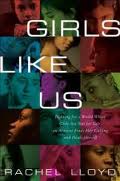
Review: Girls Like Us by Rachel Lloyd
Nothing in Girls Like Us will surprise those exposed to how our world works for the less white and wealthy, but everything in it will shock the other half. Both a call to action and a memorable recollection of the author's own experiences, Girls Like Us is a masterpiece.
If you rape an 11 year old girl, you're a child molester, a sick individual who should be buried under the jail. If you rape her after paying a third party you're just soliciting sex and she's a whore. If you prey upon that same girl, buy her things, treat her well then not so well, then abuse her freely, you are a predator who has groomed her. If that girl has no one to defend her, then you're her boyfriend. Everything contained in Girls Like Us is authentic. I can attest from personal knowledge that this happens all across our country in many states. Young girls are kidnapped, are raped, are trafficked, are sold, and nothing is done. Police view it as a victimless crime. (I could tell a story here about my friend's 15 year old niece that would curl your hair if you expect the police to protect you.)
Don't think this is limited to America. Or Thailand. Or any other nation that isn't where you might be sitting. Don't think it only happens in New York. If you have strip clubs, if you have sex for hire, you have child slavery occurring right under your noses. It's easier to blame the victim than it is to face the reality. Children in your town are being beaten and raped right now. Children are adaptable, they can come to see the most horrific circumstances as normal. Girls are taught to blame themselves for the failures of others. She's a fast tail ho, she's looking for it, she's hard to manage. If she were a better girl, she wouldn't get raped, he wouldn't beat her, she wouldn't need to shake that ass for some cash. She's too stupid to know better, too weak to change. All the lies the slaveholders tell the slaves and anyone who looks too carefully. Rachel Lloyd lays it out in a way that defies denial.
If you rape an 11 year old girl, you're a child molester, a sick individual who should be buried under the jail. If you rape her after paying a third party you're just soliciting sex and she's a whore. If you prey upon that same girl, buy her things, treat her well then not so well, then abuse her freely, you are a predator who has groomed her. If that girl has no one to defend her, then you're her boyfriend. Everything contained in Girls Like Us is authentic. I can attest from personal knowledge that this happens all across our country in many states. Young girls are kidnapped, are raped, are trafficked, are sold, and nothing is done. Police view it as a victimless crime. (I could tell a story here about my friend's 15 year old niece that would curl your hair if you expect the police to protect you.)
Don't think this is limited to America. Or Thailand. Or any other nation that isn't where you might be sitting. Don't think it only happens in New York. If you have strip clubs, if you have sex for hire, you have child slavery occurring right under your noses. It's easier to blame the victim than it is to face the reality. Children in your town are being beaten and raped right now. Children are adaptable, they can come to see the most horrific circumstances as normal. Girls are taught to blame themselves for the failures of others. She's a fast tail ho, she's looking for it, she's hard to manage. If she were a better girl, she wouldn't get raped, he wouldn't beat her, she wouldn't need to shake that ass for some cash. She's too stupid to know better, too weak to change. All the lies the slaveholders tell the slaves and anyone who looks too carefully. Rachel Lloyd lays it out in a way that defies denial.
26 April, 2011
Review: This Life Is In Your Hands by Melissa Coleman
I've struggled with this review. While I think Melissa Coleman's book deserves all the acclaim it will gather, I also have a serious problem with fictionalized memoir. Adding complexity, I have strong feelings about the movement that she (and I) grew up in.
This Life Is In Your Hands is an exceptionally beautiful telling of a story too rarely told, by a modern day Laura Ingalls Wilder.
This Life Is In Your Hands is a fictionalized memoir. Conversations, expressions, interactions are presented as directly factual where the narrator has no knowledge of events. Things in quotes may be imagined, not documented dialogue.
Each of these two sentences is true. Melissa Coleman relates conversations her parents had upon their meeting - conversations she could not have been present for and they are unlikely to have written down. She is also a gifted writer who has composed a memorable telling of her upbringing with far more forgiveness in her heart than I have. During this resurgence of food-as-medicine anti-technology all-organic glorification, her tale is even more important.
The author strongly defends her parents against charges of neglect, despite laying a strong case for parental neglect with her own words. As another child raised in the glow of kerosene lights and left to my own devices while my formerly affluent white parents found themselves through poverty, I think she is too kind. When she relates her public school experience, it rings very true for me. There are things to embrace in the lifestyle that her parents chose. If her parents had been present and engaged, not worn down by hard work and their own hubris, perhaps her story would have gone differently. Sadly, it did not.
Perhaps her most important message is that food is not medicine, organic will not solve all, and diet cannot prevent everything. (Having faced cancer at 39 and 43, with a sibling who became a type 1 diabetic at a young age, I certainly have trouble being polite to people who beg me to consider holistic and homeopathic care. Been there. Done that. Pass the modern medicine my way, please.) If there is a secondary flaw to This Life Is In Your Hands it would be the relationship between Coleman's parents and their mentors. Her disappointment in them is obvious, the cause obscured. How she feels failed by them remains veiled. In all other respects, she has presented a brilliant illustration of her childhood and the forces that shaped it. After reading the book, my spouse largely agreed with my take. I asked him for a second opinion as I recognized my own experiences were coloring my feelings about the work. "Her mother would have been better off in a Burka." was his one sentence summary. I am not sure I disagree.
I do think this is an important book, and an important read. Each generation has a certain amount of people exactly like her parents - driven to cast off what is wrong with their lives they go to the extreme edge. The Coleman's eventually pulled back to make a contribution in the world of organic farming, a goal we can all recognize as in our interests. It's the extreme edges that too often get overlooked.
This Life Is In Your Hands is an exceptionally beautiful telling of a story too rarely told, by a modern day Laura Ingalls Wilder.
This Life Is In Your Hands is a fictionalized memoir. Conversations, expressions, interactions are presented as directly factual where the narrator has no knowledge of events. Things in quotes may be imagined, not documented dialogue.
Each of these two sentences is true. Melissa Coleman relates conversations her parents had upon their meeting - conversations she could not have been present for and they are unlikely to have written down. She is also a gifted writer who has composed a memorable telling of her upbringing with far more forgiveness in her heart than I have. During this resurgence of food-as-medicine anti-technology all-organic glorification, her tale is even more important.
The author strongly defends her parents against charges of neglect, despite laying a strong case for parental neglect with her own words. As another child raised in the glow of kerosene lights and left to my own devices while my formerly affluent white parents found themselves through poverty, I think she is too kind. When she relates her public school experience, it rings very true for me. There are things to embrace in the lifestyle that her parents chose. If her parents had been present and engaged, not worn down by hard work and their own hubris, perhaps her story would have gone differently. Sadly, it did not.
Perhaps her most important message is that food is not medicine, organic will not solve all, and diet cannot prevent everything. (Having faced cancer at 39 and 43, with a sibling who became a type 1 diabetic at a young age, I certainly have trouble being polite to people who beg me to consider holistic and homeopathic care. Been there. Done that. Pass the modern medicine my way, please.) If there is a secondary flaw to This Life Is In Your Hands it would be the relationship between Coleman's parents and their mentors. Her disappointment in them is obvious, the cause obscured. How she feels failed by them remains veiled. In all other respects, she has presented a brilliant illustration of her childhood and the forces that shaped it. After reading the book, my spouse largely agreed with my take. I asked him for a second opinion as I recognized my own experiences were coloring my feelings about the work. "Her mother would have been better off in a Burka." was his one sentence summary. I am not sure I disagree.
I do think this is an important book, and an important read. Each generation has a certain amount of people exactly like her parents - driven to cast off what is wrong with their lives they go to the extreme edge. The Coleman's eventually pulled back to make a contribution in the world of organic farming, a goal we can all recognize as in our interests. It's the extreme edges that too often get overlooked.
23 April, 2011
Review: Royal Weddings by Stephanie Laurens, Gaelen Foley & Loretta Chase
I don't really understand this marketing.
Avon isn't the only imprint offering short stories to celebrate the wedding of William & Catherine of England, but I still don't quite get it. These weddings are royal in name only, as none of the couples concerned are themselves royal. To earn the Royal Weddings moniker, the events take place during other weddings - but not at them. I know, I already said the marketing confused me. So let's ignore it. Is this worth your cash? Yea, I think so. This isn't a bargain priced full anthology, these shorts are super short, but it's two bucks. What's two bucks these days? (Ok, yes, it could be lunch. I give you the point.)
Stephanie Laurens and I have been planning to break up. I read the final book in her last series and just couldn't bring myself to read The Black Cobra Quartet at all. Imagine my surprise when the best, most satisfying short is hers. Taking a woman who's drifted into wedding planning and a French aristocrat, she delivers a tasty bite size treat without annoying me at all. It's like running into an ex at a party and realizing they don't make you feel vaguely sick anymore, but not quite waking up at their place the next day.
Gaelen Foley wasn't for me. We split up during her India series and I'm not even sure what she's done since. In this one she takes the set up of a happily (from the outside) married couple and their failure to talk. While she gets the biting internal conversations down, the story itself did nothing for me. Pout, have sex, change jobs. Or something like that. Mostly it felt like an erotic short which works for plenty of people but bored me. Gaelen, we weren't meant to stay together. I know you don't miss me. It's ok. I still have Loretta.
Loretta can call me up at 3 am, ask me to meet her in a pouring rainstorm in a dodgy area of town and I'll have my keys in my hands before she stops speaking. (At least, she can right now. I'm fickle, the future is uncertain, void where prohibited by law.) Her couple were supposed to be at the wedding of Princess Victoria and Prince Albert (Now there is a setting - go to the wedding people!! Describe it! Be there! Discuss it! That's your marketing... oh never mind.) but instead find themselves... elsewhere. It's such a short and so beautifully constructed I don't want to tell you anything about it. It's like someone starts folding up a paper and I yell "Goldfish!" before they've even got to the tail. Ultimately, it left me wanting. The characters were ready for a full length book, or at least a longer novella. I enjoyed every bit of it but it's like settling down with a lovely dessert, slowly savoring it, licking the fork between bites and suddenly someone walks up and says "Wow! I love this cake - thanks for sharing!" sticks a fork in and takes the rest away. It was perfect, but it's gone.
Avon isn't the only imprint offering short stories to celebrate the wedding of William & Catherine of England, but I still don't quite get it. These weddings are royal in name only, as none of the couples concerned are themselves royal. To earn the Royal Weddings moniker, the events take place during other weddings - but not at them. I know, I already said the marketing confused me. So let's ignore it. Is this worth your cash? Yea, I think so. This isn't a bargain priced full anthology, these shorts are super short, but it's two bucks. What's two bucks these days? (Ok, yes, it could be lunch. I give you the point.)
Stephanie Laurens and I have been planning to break up. I read the final book in her last series and just couldn't bring myself to read The Black Cobra Quartet at all. Imagine my surprise when the best, most satisfying short is hers. Taking a woman who's drifted into wedding planning and a French aristocrat, she delivers a tasty bite size treat without annoying me at all. It's like running into an ex at a party and realizing they don't make you feel vaguely sick anymore, but not quite waking up at their place the next day.
Gaelen Foley wasn't for me. We split up during her India series and I'm not even sure what she's done since. In this one she takes the set up of a happily (from the outside) married couple and their failure to talk. While she gets the biting internal conversations down, the story itself did nothing for me. Pout, have sex, change jobs. Or something like that. Mostly it felt like an erotic short which works for plenty of people but bored me. Gaelen, we weren't meant to stay together. I know you don't miss me. It's ok. I still have Loretta.
Loretta can call me up at 3 am, ask me to meet her in a pouring rainstorm in a dodgy area of town and I'll have my keys in my hands before she stops speaking. (At least, she can right now. I'm fickle, the future is uncertain, void where prohibited by law.) Her couple were supposed to be at the wedding of Princess Victoria and Prince Albert (Now there is a setting - go to the wedding people!! Describe it! Be there! Discuss it! That's your marketing... oh never mind.) but instead find themselves... elsewhere. It's such a short and so beautifully constructed I don't want to tell you anything about it. It's like someone starts folding up a paper and I yell "Goldfish!" before they've even got to the tail. Ultimately, it left me wanting. The characters were ready for a full length book, or at least a longer novella. I enjoyed every bit of it but it's like settling down with a lovely dessert, slowly savoring it, licking the fork between bites and suddenly someone walks up and says "Wow! I love this cake - thanks for sharing!" sticks a fork in and takes the rest away. It was perfect, but it's gone.
20 April, 2011
Review: The Vampire Voss by Colleen Gleason
This is a unique case.
It's rare for me not to finish a book that I've taken to review, much less move forward with the review. But this is not your typical DNF. So much is right with The Vampire Voss that I think I could adore it if it didn't hit my particular buttons quite so hard. Right, so here is the solution.
I am not going to review The Vampire Voss. Mostly. I'll explain what kept me from enjoying it, and if those are not things that would keep you from enjoying the book then I think it's worth a look. Gleeson has an easy writing style with a nice eye for characterization and description, her pacing is solid, and her worlds are well realized. There's a lot more to The Vampire Voss than my displeasure. (If my Sony hadn't bricked twice during my third go at the book I might have made it to the end!)
In this world of Vampires and Vampire Hunters there are also rare persons with The Sight. One of those is Angelica. Her ability to see the moment of a person's death brings her to the attention of (say it with me) The Vampire Voss. Voss is the kind of kid his mother might describe as 'intellectual, sensitive, easily bored' and the other kids might describe as 'a serious pain in the ass'. My problem with Voss, and thus my problem with the book, is that he is a date rapist of high order. He sees a woman, he roofies her with his magic eyes, and they can get it on. He admits he doesn't really care how willing she is at first because hey, she'll like it later. Maybe he comes to realize this is wrong. I don't know. I didn't care. He 'thralls' half a dozen women and I just see rapist.
Book two is The Vampire Dimitri. Dimitri's mom might have described him as 'studious, committed, ethical' while the other kids probably called him 'a serious pain in the ass'. You know that these two men will end up together. Dimitri is the required pigs blood drinker, the vampire with regrets. There's a scene where Voss marvels at the unneeded pain Dimitri puts himself through for his beliefs, since in this universe Lucifer continually sends physical signals of his displeasure to the bodies of his men. Being good hurts, what can Voss tell you. Voss proves he's the good kind of rapist when after a scene that's a little bit Merchant Ivory Slasher Flick, a little bit West Side Story With Fangs he comes upon a defenseless Dimitri and... doesn't hurt him. Ok then.
I understand that the Vampire genre either skirts with or embraces non-consent as a very fact of it's existence. This makes many of the books fail for me, because my bad boys need to be a little less bad than the whole 'She'll want it by the time I'm done' thing. Angelica, of course, is somewhat immune to being enthralled. She can't be the one girl in all the world if she isn't, right? Don't let them have the milk, make them buy the cow.
I like Gleeson's style, I like her mechanics, I will absolutely try her again. For me, the sheer Vampireness of Voss keeps me from falling in love.
It's rare for me not to finish a book that I've taken to review, much less move forward with the review. But this is not your typical DNF. So much is right with The Vampire Voss that I think I could adore it if it didn't hit my particular buttons quite so hard. Right, so here is the solution.
I am not going to review The Vampire Voss. Mostly. I'll explain what kept me from enjoying it, and if those are not things that would keep you from enjoying the book then I think it's worth a look. Gleeson has an easy writing style with a nice eye for characterization and description, her pacing is solid, and her worlds are well realized. There's a lot more to The Vampire Voss than my displeasure. (If my Sony hadn't bricked twice during my third go at the book I might have made it to the end!)
In this world of Vampires and Vampire Hunters there are also rare persons with The Sight. One of those is Angelica. Her ability to see the moment of a person's death brings her to the attention of (say it with me) The Vampire Voss. Voss is the kind of kid his mother might describe as 'intellectual, sensitive, easily bored' and the other kids might describe as 'a serious pain in the ass'. My problem with Voss, and thus my problem with the book, is that he is a date rapist of high order. He sees a woman, he roofies her with his magic eyes, and they can get it on. He admits he doesn't really care how willing she is at first because hey, she'll like it later. Maybe he comes to realize this is wrong. I don't know. I didn't care. He 'thralls' half a dozen women and I just see rapist.
Book two is The Vampire Dimitri. Dimitri's mom might have described him as 'studious, committed, ethical' while the other kids probably called him 'a serious pain in the ass'. You know that these two men will end up together. Dimitri is the required pigs blood drinker, the vampire with regrets. There's a scene where Voss marvels at the unneeded pain Dimitri puts himself through for his beliefs, since in this universe Lucifer continually sends physical signals of his displeasure to the bodies of his men. Being good hurts, what can Voss tell you. Voss proves he's the good kind of rapist when after a scene that's a little bit Merchant Ivory Slasher Flick, a little bit West Side Story With Fangs he comes upon a defenseless Dimitri and... doesn't hurt him. Ok then.
I understand that the Vampire genre either skirts with or embraces non-consent as a very fact of it's existence. This makes many of the books fail for me, because my bad boys need to be a little less bad than the whole 'She'll want it by the time I'm done' thing. Angelica, of course, is somewhat immune to being enthralled. She can't be the one girl in all the world if she isn't, right? Don't let them have the milk, make them buy the cow.
I like Gleeson's style, I like her mechanics, I will absolutely try her again. For me, the sheer Vampireness of Voss keeps me from falling in love.
11 April, 2011
Puff Piece: Pieces Of Paper by Jeannie Lin
I generally like Jeannie Lin's writing, but I like her impulse to offer a piece of fiction set in Tokyo with the proceeds benefiting Japan even more. I don't know if there are region restrictions on this, but I can't see why there would be.
Here is an excerpt.
Try it out and see if it's something that appeals to you. If it does, double bonus. Meet a new author and kick a buck (or part of one) to Japan all at once. If it doesn't - hey it was one mouse click and just a few seconds of your time.
No, I wasn't implying anything by.... Hey, my time is valuable too. Ok! Fine! Look, it was a suggestion! I'm not the boss of you!
08 April, 2011
A Brief Note From Our Sponsor....
I've got some reviews preloaded, but if there is a temporary lull please check back. We're taking another ride on the cancer train around here, so things may be erratic for a few weeks. No Worries, Righty Tighty.
07 April, 2011
Review: Treachery In Death by J.D. Robb
Does Nora Roberts even need reviews?
With a star author like Roberts it can seem pointless to write a review I could devote to a less well known author. As I only review books I think are worth looking at or ones I think are worth avoiding (I'd say I read five or six for every book I feel inclined to discuss) I generally give the major releases a pass. Then Roberts writes something like Treachery In Death and knocks it out of the park.
Peabody dies.
Ok, ok, I'm kidding. (Spoiler alert!) Peabody does not die. (Maybe. I think. Who knows? You'll have to read it yourself.) One thing Peabody does do is find herself in an extremely dicey situation. So dicey that everything ends up on the table. This is the In Death I would go ahead and drop the cash on now. It's not that much more as an e-book than the eventual paperback will be and it's one of the best in the series. Tightly focused on Eve and her team, free of the angst that's been weighing the series down, this one brings the page turning suspense to the front and puts several major characters in new situations. This, the 40th (Really? Is that even possible?) story to feature Eve Dallas is also a great place to join the series. Everything you need is in this volume, no wasted time, no wasted characters.
Of course, Eve still ends the book a bit battered. That's how she likes it. Someday Eve is going to have to examine why every case needs to be closed with her face (even her husband is starting to notice) but it won't be today. Eve is too busy showing that she will eventually lead the NYPD and the only thing standing in her way is time.
With a star author like Roberts it can seem pointless to write a review I could devote to a less well known author. As I only review books I think are worth looking at or ones I think are worth avoiding (I'd say I read five or six for every book I feel inclined to discuss) I generally give the major releases a pass. Then Roberts writes something like Treachery In Death and knocks it out of the park.
Peabody dies.
Ok, ok, I'm kidding. (Spoiler alert!) Peabody does not die. (Maybe. I think. Who knows? You'll have to read it yourself.) One thing Peabody does do is find herself in an extremely dicey situation. So dicey that everything ends up on the table. This is the In Death I would go ahead and drop the cash on now. It's not that much more as an e-book than the eventual paperback will be and it's one of the best in the series. Tightly focused on Eve and her team, free of the angst that's been weighing the series down, this one brings the page turning suspense to the front and puts several major characters in new situations. This, the 40th (Really? Is that even possible?) story to feature Eve Dallas is also a great place to join the series. Everything you need is in this volume, no wasted time, no wasted characters.
Of course, Eve still ends the book a bit battered. That's how she likes it. Someday Eve is going to have to examine why every case needs to be closed with her face (even her husband is starting to notice) but it won't be today. Eve is too busy showing that she will eventually lead the NYPD and the only thing standing in her way is time.
Subscribe to:
Posts (Atom)