Reading was not a priority for me at the end of 2014. I wrote a number of short reviews elsewhere but I don't find them helpful from others so I'm not going to bother to link them here.
A Holiday Playlist
The Trouble With Tokens
The Sweetest Thing by Deborah Fletcher Mello
Festive In Death by J.D. Robb
All I Want Is Everything by Daaimah S. Poole
The Duke's Guide to Correct Behavior by Megan Frampton
Widow Basquiat by Jennifer Clement
Big Hero 6
Showing posts with label Celluloid Dreams. Show all posts
Showing posts with label Celluloid Dreams. Show all posts
18 January, 2015


10 December, 2013
Review: Frozen directed by Chris Buck and Jennifer Lee
 Oh, hey, Frozen, you sure are super, super white! What's that you say? It's the setting? They're pseudo-Scandinavian? Oh. Ok. Except no. I finally get a female focused Disney film that doesn't end in a wedding and what do I do? I ask for more. Why shouldn't I? This is a film for all of our children set in a fantasy kingdom where dignitaries from far away lands arrive to witness a queen's coronation. Why are only some of our children represented? Whatever. Let's move on.
There's a lot to like about Frozen. While I'm not a fan of the musical interludes, I know Disney makes serious money on their soundtrack hustle. There was nothing objectionable here. The instrumental tracks felt stronger than the vocal ones, although I heard kids singing the vocals as we left the theater. Visually the film is beautiful, with some of their best character conception in decades. A Ghibli influence was noticeable in the troll scenes, but not in an intrusive manner. Anna and her sister Elsa were distinct characters with different goals. Having been overprotected by helicopter parents (quickly dispatched), both are ready to face the world. Elsa greets the end of her invisible guardianship with fearful trepidation. Anna greets it with an overenthusiastic need for love and companionship. Both are logical outcomes of their situation.
 |
| Snow White, plus size Princess |
It's interesting that in a film about fearing female power the filmmakers seem afraid to fully unleash the sisters. While there are villains to overcome and boys to consider and adorable sidekicks to meet (more Olaf, please) overall there isn't quite enough between them. Anna is perhaps too forgiving and understanding. Elsa is perhaps too self sacrificing. While Anna dominates the screen it's Elsa we want to spend more time with. Anna's conventionally quirky exuberance is familiar. She's a bit manic and a lot pixie. Her self confidence and loyalty are engaging, it's true. Elsa is a less common female lead. A reluctant queen afraid to indulge her own emotions, Elsa is a study in externally imposed self containment. The true message of Frozen is ultimately not of sisterhood, but of society's Good Girl imperative.
 |
| Elsa breaks out in Diva |
 |
| Fantasia's Thinspiration Fairies |
09 December, 2013
Review: Get A Horse directed by Lauren MacMullen

As a huge fan of Ub Iwerks, the oft overlooked co-creator of Mickey Mouse, I was torn between trepidation and elation when his distinctive style came on screen. Get A Horse has been criticized for it's violence, it's sexism and it's decision to speak more to the adults in the audience than the children. I say way to miss the point. Early Disney shorts were sexist, violent and often racist. To sanitize those elements out of the narrative is to further whitewash history.
By placing the sexualization of Minnie Mouse so blatantly in the center of Get A Horse MacMullen offers the viewer the opportunity to reject it. Minnie's giggling and helpless compliance in her objectification is character consistent. Highlighting Peg Leg's lack of interest in the less attractive (and therefore less valued) Clarabelle Cow shows the dynamic played out in most of the early shorts. Peg Leg Pete is not the misunderstood suitor, he is the rich date rapist. Clarabelle Cow is not a random neighbor, she is the "old maid" who refuses to be pushed out of the party. Clarabelle wants what the smaller, slender Minnie has - male admiration. Minnie's cries for help indicate her higher status. Minnie expects help to be offered and accepts danger as a cost of her privileges. Clarabelle has to elbow her way into the scene, she is only pushed forward if she can absorb a threat for Minnie.
 |
| 1928's Gallopin Gaucho |
Ultimately Walt's Mickey (and this is truly Walt's Mickey down to archival voicing) resumes his place in a newly colorized Toontown. He has no need to walk completely in the modern world. Having ejected Pete, Mickey and his friends plug the hole to resume their idyllic life. In the corner of the final scenes Oswald The Lucky Rabbit pops up to wave. As a cartoon short, Get A Horse was enjoyable. As a tribute to Ub and Walt, it was magical.
02 November, 2013
Love Is Lost (Hello Steve Reich Mix) by James Murphy
Since we launched Love In The Margins I've been ignoring you shamelessly. It's the nature of the new, I'm afraid. When I saw this, the best of Bowie's recent videos, I had to come back. Bowie is claiming production costs ran 13 bucks. I'm assuming he paid the crew a bit more than that. Either way it's still an exceptional piece. Bowie's using the projection technique of his Where Are We Now video to create an aged version of his deceptively youthful physical self. It lends him a vulnerable frailty that he may (or may not) feel despite our perception of him as ageless.
Our setting is ambiguous. Backstage at a show? In hospital? A well appointed storage section of the office? There is a physical Bowie, a projected Bowie, a puppet Bowie (or two or three) and our own experience of Bowie blended into the work. Instantly recognizable aspects of his career are set into conflict (or collusion?) while the physical Bowie observes at a remove. Like all of Bowie's best work, the images lend themselves to multiple interpretations.
Someone is dying. Is the aged Pierrot the fearful witness or the diabolical ringleader? The juxtaposition of wooden and human hands against each other offer eerie suggestions of who the perpetrator is. Have they killed the physical Bowie or has he simply abandoned them yet again? The king of reinvention discarding these more recent personas the way he closed the door on The Man Who Sold The World and Aladdin Sane? Or is the physical Bowie musing on what these reinventions have cost him through the years? Has he divided himself beyond recognition until he is trapped and wrestling with the cost?
The final scene is meant to disturb but not to define. Has physical Bowie simply walked away from them, and therefore from us? Is The Next Day the final chapter in a decades long dance of imagery? Has Bowie washed his hands of us all?
06 October, 2013
Review: From Up On Poppy Hill by Studio Ghibli

From Up On Poppy Hill gets a solid B from me for overall movie quality. I wanted something with the savage weight of Grave of The Fireflies. That's hardly a fair standard. From Up On Poppy Hill raised those expectations because it is set in 1964. The first generation of post war children are coming into their adulthood and everything is changing. Japan is hosting the Olympics. Construction continues at a booming pace. The post-war life is being replaced by a modern Japan. This is pretty huge stuff.
Before we start spoiling everything let me say that the film is beautiful. Studio Ghibli occasionally skimps in the art department. Not here. From Up On Poppy Hill requires multiple viewings from an art standpoint. Characterization is tight and varied. Some of Miyazaki's most beloved stereotypes are left out and the film is stronger for it. The characters feel more modern, even as they also feel true to the time period. The storyline is slight and pulls some emotional punches it really should have landed. This could be cultural. One problem with a film so heavily weighted in a specific time and place is not understanding what the audience may have brought to the viewing. I have no baggage about 1964 Japan, no oral history, no lived experience. There may be resonance I am unequipped to feel.
On to the spoilers.
From Up On Poppy Hill may be the most feminist work Studio Ghibli has put out. Despite their long tradition of strong female characters this one is the one I would put in front. It's heroine, Umi, is unaware of her own power. She is holding her family together, holding her community together and ultimately holds her school together. She is referred to as a lucky charm or a hard worker, but she herself simply wakes up and handles her life. Umi and her younger siblings live with their grandmother while Umi's mother does a work-study in America. Due to events offscreen Umi has taken in boarders, for whom she cooks and cleans. Umi is also a top student at school with an eye toward the sciences. Every morning Umi sends a message, via signal flag, to the boats in the harbor. Every morning one boy on one boat answers, but she never sees it.
Shun, the boy, is the eventual love interest for Umi. There is a ridiculously melodramatic plot twist where they believe they are siblings. Returning to a friendship, Umi and Shun work together to save a historic building. Where Umi's female centric life is quiet and orderly, Shun's male centric building is chaotic, noisy and filthy. It's Umi's quiet wisdom and work ethic that lead the men to understand victory isn't always gained through making the most noise. This isn't done in a gender conventional way. It's not Umi's pious example against their chagrined response. There is a problem. Umi considers practical solutions and the both genders work toward the goal together. Eventually Umi's mother returns. The mystery of Shun's parentage lies in post war confusion and the need for infants to be properly registered. Shun is the son of deceased friends. Umi's father adopted him but Umi's mother refused to abandon medical school. Shun was placed with another couple they knew.
Let's stop here for a moment. Umi's mother is never shamed for her choices as she would be in a western film. She is presented as a good and responsible citizen. She marries a man of limited future for love. She puts her education above the parental yoke on numerous occasions, even rejecting a child. Umi's mother is a radically feminist presentation of a mother. She has raised a child capable of complex responsibilities. She makes no apologies for her choices. Umi's mother is living her life on her own terms with the full support of her family. But back to our lovers.
Umi, despite idolizing her father, isn't quick to believe this Not My Kid tale her dad laid out on mom. It's 1964 so a DNA test is out of the question. Besides, Shun looks enough like her father that she thinks mom was sold a serious bill of goods. The romance is totally off. Eventually Shun discovers a character witness for all three dead parents and life goes on. Hard work wins the day and happily ever after is assumed by the credits. Despite the slight and familiar tale, From Up On Poppy Hill is mandatory viewing. All the women involved are working, in school, or property owners. There is a purpose to each one's life. Except for Umi's magical hair, the women are portrayed in the same manner as the men. After the shambles that was Tales of Earthsea I had real concerns for a post Miyazaki Studio Ghibli. While I mourn his upcoming retirement, I am very interested to see where they take us next.
13 September, 2013
We Can't Have Nice Things: General Hospital Edition
Much like romance the daytime drama (soap) genre frustrates the hell out of me. I'm an ABC girl, so my shows of choice have always been All My Children and General Hospital. I drop in, I get mad, I drop out. General Hospital recently (in soap years) changed leadership. The prior team often seemed to hate women. Women were props for men, things to be shot or raped or put in peril so the men could have feelings about it. They were slut shamed, marginalized, institutionalized. Women were impetuous creatures who failed to think ahead and men were awesome sauce. The new show runners seemed far less hostile to women (although still deeply problematic). It was too good to be true.
GH & I are on a break because they are retconning a serial killer rapist who terrorizes women without being named Jerry Jacks. (Sebastian Roché or it doesn't count, people.) I didn't like Franco before and (although I love Roger Howarth) I don't want Franco now. This brings us to today and me slogging through my DVR backlog. The clip below is a pivotal day in two characters history. This scene is building on decades of ground work. It is comprised of a guest appearance by one of GH's most beloved actresses (Genie Francis, of course.) and a very popular recast. I'm going to sum up what you need to know about these women and where the episode of 6/10/13 finds them.
Lulu is the young married daughter of the famous Luke and Laura. In 1981, shortly after Luke and Laura's first wedding, Laura disappeared from Luke's life. She was abducted by Stavros Cassadine who forced her to bigamously marry him. Held captive by Stavros and his mother Helena, her family believed her dead. Upon her return to the show several years later Laura largely refused to speak of the ordeal. In 1996, when Lulu needed a medical miracle (This is a soap!) it was revealed that Laura had given birth during her captivity. While the son saved Lulu's life, his existence destroyed the Spencer family. Rejected by her father, her mother mentally ill, Lulu becomes a cynical careerist.
In 2013 Lulu is awaiting the birth of her daughter (via surrogate) when she is kidnapped by the still deranged Stavros. Laura and Luke reunite to rescue her. When they confront Stavros Laura is visibly terrified. She offers to return to her position as his wife in exchange for her daughter's freedom. Stavros isn't interested. Laura is too old for him, too damaged by time and life. Stavros has switched his obsession to her daughter. Luke, Laura and Lulu's husband Dante kill Stavros and Helena to rescue Lulu. The next few months are occupied by an amnesia storyline as Lulu represses the knowledge that she too has been forced into a bigamous marriage with Stavros. On 6/10/13 Lulu has recovered. Mother and daughter are meeting for the first time with the decades of damage Stavros did to them in the open. Roll tape.
GH & I are on a break because they are retconning a serial killer rapist who terrorizes women without being named Jerry Jacks. (Sebastian Roché or it doesn't count, people.) I didn't like Franco before and (although I love Roger Howarth) I don't want Franco now. This brings us to today and me slogging through my DVR backlog. The clip below is a pivotal day in two characters history. This scene is building on decades of ground work. It is comprised of a guest appearance by one of GH's most beloved actresses (Genie Francis, of course.) and a very popular recast. I'm going to sum up what you need to know about these women and where the episode of 6/10/13 finds them.
Lulu is the young married daughter of the famous Luke and Laura. In 1981, shortly after Luke and Laura's first wedding, Laura disappeared from Luke's life. She was abducted by Stavros Cassadine who forced her to bigamously marry him. Held captive by Stavros and his mother Helena, her family believed her dead. Upon her return to the show several years later Laura largely refused to speak of the ordeal. In 1996, when Lulu needed a medical miracle (This is a soap!) it was revealed that Laura had given birth during her captivity. While the son saved Lulu's life, his existence destroyed the Spencer family. Rejected by her father, her mother mentally ill, Lulu becomes a cynical careerist.
In 2013 Lulu is awaiting the birth of her daughter (via surrogate) when she is kidnapped by the still deranged Stavros. Laura and Luke reunite to rescue her. When they confront Stavros Laura is visibly terrified. She offers to return to her position as his wife in exchange for her daughter's freedom. Stavros isn't interested. Laura is too old for him, too damaged by time and life. Stavros has switched his obsession to her daughter. Luke, Laura and Lulu's husband Dante kill Stavros and Helena to rescue Lulu. The next few months are occupied by an amnesia storyline as Lulu represses the knowledge that she too has been forced into a bigamous marriage with Stavros. On 6/10/13 Lulu has recovered. Mother and daughter are meeting for the first time with the decades of damage Stavros did to them in the open. Roll tape.
If you're like me you just said WHAT THE EVERLOVING FUCK? I mean, is there any other response? Are these female characters or man-pain hand puppets? Genie is reading lines like she can't believe the pages. "Hey baby, you've had a total mental breakdown and while I was on my honeymoon you remembered a nightmare experience I am uniquely qualified to understand. But forget that, let's gush about your poor husband! It must have been so difficult for him to deal with you being terrorized. Really, how did he stand a few months without your adoration? Let's cook a meal!" No. Seriously. WHAT THE EVERLOVING FUCK?
"Here honey, I got you candy and a baby present. Let me reduce your life to these traditional gender roles while ignoring this massive generational storyline payout. Why don't you talk about what a failure you are for not being a chef while gushing on about Dante's hangnail? Really. It's fascinating. Tell me more." Genie's busy getting paid. (Genie, I adore you. I know what you could've done with a real script here. We'd all be crying on the floor while you put your baby girl back together and helped her redefine her childhood in the face of this new firsthand knowledge of your trauma. There wouldn't be enough Kleenex in the world. People would be sobbing on those scenes into 2035.) It's like there's a giant water cooler at GH labeled We Hatez Wimmin and every writing team must eventually drink from it.
I'm going to go watch Lucy break down over BJ's 1994 death and remember the good times. BJ is a kid in a school bus accident. Her cousin Maxie (Lulu's eventual surrogate) is dying. Tony is BJ's father, Bobbie her mother. Lucy was her stepmother for a time. This was one of GH's golden ages, where real human relationships mattered and women were actual people. (Ok, Maxie's mom was a pouty white Aztec Princess but we try not to think about that.)
05 July, 2013
Review: Monsters University

To truly review Monsters University I would need three or four viewings. Like other successful Pixar projects it's a blending of standard cinema fare with a candy coating. A little Mission Impossible, a little Rudy, a touch of Generic Frat Film and the time honored odd coupling blend into what falls somewhere between "good enough" and "adult worthy" on the kid scale. At it's heart MU is a sports story. Instead of the kid with a dream making the big leagues he comes to understand that team work is the key to success and a great player is nothing without a great coach. As with other Pixar works there are some lines aimed firmly at Mom and Dad which mostly work well.
Monsters University is selling the American myth of meritocracy. Sully enters MU as a legacy student with a strong family history of success. Used to falling upward, Sully is quickly weeded out and finds his future in danger. He and the little kid with the big dream find themselves on the same footing. Although they succeed at redeeming themselves, they initially do so as a result of Sully's flexible ethics (no surprise to viewers of Monsters Inc.) then as a result of Mike's strong work ethic. Expelled from college, their dream of being in the big leagues is achieved by starting in the mail room and working upwards. This is a key part of the Pixar success story. Their films often reinforce the myths we tell ourselves as a people while giving them a tweak. Mike won't be a star quarterback but teams need coaches too. Sometimes breaking and entering is the only way to inspire your friends. No matter what you do, you will never look like the Abercrombie models. Standard stuff. Kid's films love to tell you that the least popular are the most worthy. Monsters University dials that up to 11. It's a little too far.
Mike and Sully are forced to join the fraternity no one wants. They compete against the status obsessed old guard, who give Randall the acceptance he craves. It's a strange subtext in Monsters University. He is not Mike and Sully, therefore his desire to achieve a higher social status is unworthy, it is tainted by the preordained future known to the viewer. Although it is Mike and Sully who impede Randall's successes, it is Randall we are asked to blame. To a viewer who has not seen the prior film, it's an inexplicable shunning that reflects poorly on the lead duo. The other groups are equally cliched. There are the grey toned punks, the beautiful and beautifully matched sorority sisters with terrifying interiors, and the averagely popular. Although some make what appear to be genuine overtures to the misfits, the film makes sure we know it is only to set them up for ever greater humiliations. Outcasts are genuine and supportive, the socially successful are cold to the core. So, at it's heart and despite Randall, Monsters University wants to be an anti-bullying film. Unless you are a bed wetter.
While I did not, a fair number of the world's children suffer from enuresis. All the Pull-Ups and Good-Nites in the world can't cover the societal shame we've inexplicably assigned to the condition. Parents vary wildly, from accepting to enraged. Where some children are taken for medical evaluation, others end up dead. Every year there's an abuse headline with bedwetting as the trigger point. Help boards for parents are full of discipline stories, as though a child's physical development can be changed with the proper chastisement. (My kid is not of average height, so I took away his toys. Why hasn't he started to grow?) Every parent either has a child who struggled with dry nights or has a friend who did. Like any bullying point, the stigma outlasts the ignorance. We know a great deal more about this medical condition than we did in the past. All of that leads up to this - there is a point in the movie where a scare simulator is prepared. The device uses "bedwetter" as the lowest difficulty setting and "heavy sleeper" as the highest. This is like saying you can set the oven at 300 degrees or at 300 degrees. That aside, how many kids in the theater felt that shot in the gut? Here they are, watching an anti-bullying film about hard work leading to success and they get sideswiped by a bedwetting gag. A little shame to sprinkle on their popcorn. Pixar knows better than this and they disappoint me by taking a cheap shot at these kids.
Beyond that, Monsters University is perfectly acceptable. It's a boy-centric crowd pleaser with plenty of comedic moments. (There is no Boo here, all the female characters are either adult authority figures or so far to the side as to be irrelevant.) Your kids will love it. It's unlikely you'll hate it even as the dvd hits the drive for the 15,000th time. It is a perfectly fine film with a lot to say about how we see ourselves and how little we examine our assumptions about who the hero of a story may be.
25 June, 2013
Review: Oz The Great And Powerful

I couldn't finish Oz the Great and Powerful. I made it as far as the creation of the Wicked Witch of the West and no farther. I've heard the Wicked Witch of the East is killed off toward the end, which makes perfect sense because Oz is all about killing women. The magic of Frank L. Baum's legacy lies in it's social commentary. He created a world for children with almost entirely female leads and he trusted boys to stay with it. He did not say "Well, this book is for girls and therefore the boys may be excused from the room." Baum wrote about a myriad of women in complex ways (especially given his contemporaries). He wrote about flawed women, shallow women, greedy women, saintly women, naive women, frightened women, brave women, women who were once men. These women have adventures. They rescue others, men included. They expose corrupt leaderships and galvanize others to carry on in their names. They are conventionally beautiful (Ozma) and unconventionally attractive (The Patchwork Girl).
Here is what Baum never wrote. He never wrote about a shallow flawed abusive man with a "good heart" (Lord save us from that life lie) who was the only hope of otherwise capable women. He never wrote about girls turning against their sisters or standing by and waiting for the arrival of a worthless dick holder to create meaning inside them. He wrote the opposite of that. I was cursing through OTGAP long before the Hollywood moment of West turning green with envy for Glinda. The core message of OTGAP was that women are frequently bitches and any sad excuse for a man is better than one of them. Everyone in the film exists to tell Oz (a charlatan and a fraud, as in the book but with the new addition of womanizing) what a good boy he is. He can do it! He can find the tiniest scrap of soul and use it to lead a kingdom to victory over two sisters that just want power and gold. Since Oz also wants power and gold, he likes this message. The hot babe attached to it doesn't hurt either. This is a man who lies to get with women, who plays them like toys and disposes of them just as casually. But when one of those women finds herself engulfed in fury over his lack of sincerity, she is to blame. Her inner evil is revealed. The problem isn't in him, it's in her expecting anything else.
I couldn't watch another frame from the point West drops into Munchkinland to wave some threats around. I don't want to see anyone in this movie in any other movie. I don't want to watch a film anyone associated with this writes, directs or sweeps floors for. Because the problem with Oz, the thing that needed (apparently) to be fixed, is that it's not about a worthless boy and the jealous bitches he has to deal with. Look, Frank L. Baum was a deeply flawed man. He was a racist with colonialist views and genocidal leanings. But he was able to see women as complex individuals capable of great adventures. What does it say that 100 years later one of our major film companies couldn't? Nothing I can discuss without profanity. Do better, Disney. Do much, much better.
11 November, 2012
Skyfall: Needs More Bond

I love Bond films. Love. Them. They're campy enough that you don't have to take the politics of the thing seriously while realistic enough to evade B movie tedium. Daniel Craig is a fine actor. He's attractive. On paper, this should be great. On the screen, Craig is playing Generic Action Hero instead of James Bond. He's going for a realism that the Bond films can't support. (Tony Stark is a better James Bond than the Bond of Skyfall.)
Right up to the point where the aging retainer whisks someone into a cave I was thinking this Bond owed way more to Batman than to Bond. He's dark, he's moody, he has an artfully placed tombstone of his beloved parents. Give the guy a cowl and call it a day. Instead of having an aging Bond face his Peter Pan complex squarely, Skyfall goes with Get Off My Lawn Bond. He's out to prove that his franchise's 50th anniversary means that the old ways are the best ways. This Bond doesn't need technology, he just needs experience. (No really, this Bond is more into his vintage car than the latest cool gadgets. I know. Believe me. Also, Loki wants to be captured? You don't say.)
If you take Bond out of its cartoonish villains and super evil seductresses, you force the audience to make ethical choices about Bond's actions. Craig's Bond comes across as a date rapist. From the island woman he ignores in bed (with mild contempt) to the Bond Girl lead, Craig seems less a lover and more a customer. Let's go with a mild spoiler and examine Bond Girl # 3 in the film. Bond identifies her as a victim of the sex trade. Sold around age 12, she's put herself into the control of a madman in an effort to escape servicing endless numbers of men. Now living in a level of fear she tells Bond he cannot comprehend, she is desperate for deliverance. Later that evening Bond sneaks (naked) into her shower for the obligatory sex. Bond Girl # 3 has no agency. She is not there for any purpose other than to sleep with Bond and deliver the men in the plot forward. She does not seduce Bond, nor does she offer sex prior to his appearance. The sex between Bond & Bond Girl # 3 is not joyful, it is a bill she must pay to potentially escape relentless terror. Afterward, in the grand tradition, she pays dearly for that frantic gamble.
Skyfall does offer a Bond Girl worthy of this Bond's respect and charm. (The question is why she's interested in him.) Naomi Harris (as Eve) sets the bar for Bond Girls. In fact, if Skyfall had taken a real risk and killed off Bond so Eve could become 007, I'd have cheered the film on. She was a far better Bond (seductive, daring, dangerous, amoral, and effective) than James Bond himself. By the end of the film we've learned her true place, and it isn't one that involves code names. Also keeping me from giving up on Skyfall was an absolutely brilliant Bond Villain. Javier Bardem completely understands the lines between campy and creepy that Bond Villains walk. It is Harris and Bardem that deliver the true Bond film moments. The rest of the cast seems plucked from Generic Suspense Film 101. Beautiful effects and sets can't repair the damage done by a Bond who leaves one wondering what right he has to run amok in other people's countries.
14 October, 2012
Review: Frankenweenie by Tim Burton

Frankenweenie is a mess. Tim Burton needs to admit he's not only a member of Suburbia, he's one of it's biggest boosters. (His outsider card is hereby revoked.) With works like Ed Wood under his belt, being different is Burton's catchphrase. Frankenweenie is clever, visually arresting and a deep reenforcement of the stereotypes that turn kids into outsiders. (Burton hugs the status quo so hard I wondered if charges would be filed.) For a movie aimed at kids, Frankenweenie does a great job of perpetuating tired bigotries.
Young Victor is a quiet boy, preferring his dog to the company of other children. Deeply artistic, he finds creative outlets in science and stop motion animation. His father worries he might be... weird. Of course Victor's mother reassures him that nothing is wrong with the lad. He's perfectly normal. But she goes along with the father's plan to hold Victor's scientific interests hostage unless he agrees to play a sport, perhaps even baseball like that nice boy Toshiaki? Victor's concession to his father's quiet unease results in the death of his beloved dog and the beginning of all future events. (Victor never blames his father for the accident, nor does his father blame himself. That's for the audience to do.)
Toshiaki covers all the points on the Asian character bingo card. He speaks in an erratic and assumed accent, slurring difficult English words (while voiced by an adult Brooklyn born actor). He's slant of eye and sly of nature. Good at baseball and fond of giant turtles, Toshiaki is a top student with a video camera always at hand. His faithful (and much dumber) fat friend Bob is on hand to take the risks so Toshiaki can best Victor in the science fair. When Bob breaks a bone his even fatter mother marches her cat-eye frames into the school to take down the science program. (Fat kids have fat overprotective mothers. It's a rule.) The Eastern European science teacher explains to the small minds in the small town (modest homes at modest prices!) that his goal is to expand his students minds as he cannot expand theirs. Victor's parents exchange knowing sighs as the teacher is promptly fired. Which means it's time to deal with the women. (I'd move on to talking about the black students, but the school hasn't one.)
Victor's neighbor and implied future love interest Elsa is here to show you how a young lady properly rebels. Elsa is soft of voice and sullen of manner. She may question the wisdom of lit candles in her hair but faced with male authority Elsa performs. She sings her wobbly song of patriotic love to the townspeople so they may admire how cute her fire hazard presentation is. When faced with danger she screams for help. I can't pick on Elsa. From the science averse butch gym teacher to the Weird Girl (Burton doesn't even name her. Weird Girl has a bit more backbone than Elsa but ultimately fails to hit the heroine mark. She's a pretty princess who believes the future can be foretold in cat feces.) all of the women in Frankenweenie lack the ability to save themselves. The closest we get is Victor's mother. After pacifying her husband, baking cookies, reading romances, vacuuming and offering Victor a choice of homemade breakfast goodies, Victor's mom spends a few moments fighting off monsters by her husband's side. And that concludes our look at female heroics in Frankenweenie.
In the end only Victor's reanimated pet corpse can be suffered to live - because he made it with love and therefore it's worthy. The other reanimated corpses were tainted by the lack of purity in their hearts, their desire to best Victor creating monsters. (Whatever. It's a boy and a dog story. I get it.) Further keeping Frankenweenie from reaching the mark is a confusing sense of place. The kids use large reels of film or Super 8 cameras, but also talk about running computer models. Victor's house is a love letter to late 60's fads and tableware, but the school's textbooks have removed Pluto from the list of planets. The mothers stay home in their wide skirts while the men march off to work. When the heck are we? There is much to admire in Frankenweenie on a visual level but I was kept from engaging in the story. I was unsatisfied by the message of love over ambition, devotion over determination. There's no need to make space on the dvd shelf for Frankenweenie, but you may wish to buy the inevitable Art Of for your library.
28 August, 2012
Review: The Kid by Charles Chaplin

The Kid was a phenomenon, with far reaching implications not only for the industry but for the lives of those involved. Silent films have a lot in common with category romance. In silent films the characters were often unnamed. The audience knew there would be The Boy and The Girl, a name for either was beside the point. The Boy is almost always of a different economic status than The Girl. True Love was at first sight, with the plot hinging on misunderstanding, class conflict, and external forces. The audience expected The Boy and The Girl to overcome all of this on their path to happiness. This deceptively simple framework offered limitless variations. Chaplin's first full length film was The Kid. He had appeared in six reels for other directors but here he had full creative control as actor, producer and director. Everything hinged on this one. I think it's his finest film. While emotional, it's not as manipulative as City Lights. It has statements about class, but they are subtle.
The Kid subverts many conventions of the orphan story. In The Kid Edna Purviance was given a very feminist role. She does not suffer spiritually from her out of wedlock child. She is presented as a respected, talented, admirable woman. The Girl is not brought down by her out of wedlock child. Instead she thrives in life, becoming wealthy and famous. Given a chance to reunite with her child she eagerly takes it. Through the entire film The Kid is presented as a person, not an object. His wishes and capabilities are given as much weight as The Tramp and The Girl. Set aside is The Boy. By his failure to support The Girl he becomes a footnote to her life and his son's. If this were a Harlequin romance, The Girl would be The Boy and The Tramp would be a friend or sister of The Girl who steps up to mother the orphan in her place. It is odd to consider a 1921 film more modern than many 2012 books. I often wonder how the angel sequence played to contemporary audiences. Occurring in the final seven minutes of the film it seems out of place to modern eyes. Did contemporary audiences expect The Tramp to quietly die in the doorway? It's also difficult to put aside the knowledge that the flirtatious angel is 12. (Several scholars have effectively argued Lita Grey's real life relationship with Chaplin inspired Nabakov to write Lolita.) The absolute star of the film is Jackie Coogan. His story is heartbreaking. In fiction, The Kid was abandoned only to find himself continually beloved. In life, Jackie Coogan was at the mercy of those who exploited him. Even during the film he made (as the co star) half the salary of his bit player father and realized none of it.
Silent films are invaluable resources for anyone interested in the history of their time. Aside from showing off different norms of attire they portray what would be acceptable realities to a contemporary viewer. Slanted for humor or effect, they still contain truth. The pay to sleep homeless shelter, The Girl passing out toys and apples to children in the slums. America fell in love with The Kid because Jackie Coogan was heartbreaking and his reality plausible to them. They wanted The Tramp to have his happy ending and they wanted The Girl to get her son back. When I watch The Kid, I do too.
27 August, 2012
Review: Chaplin by Richard Attenborough

Chaplin the biopic is a mess. It's romanticized, sanitized and fawning. Hallmark would blush at it's naked sentimentality. There are serious inaccuracies and oversights. It's still a fantastic film due largely to the impeccable casting. The focus on RDJ's lead is understandable and well deserved. RDJ so fully inhabits The Tramp that Chaplin himself no longer looks properly like Chaplin. One expects him to resemble RDJ more. It is perhaps the best performance of an actual person ever filmed. It's that good. RDJ encompasses both the mannerisms of Chaplin and our perception of Chaplin into the perfect blend. (Until the last bits of the film. Chaplin in old age is painful. RDJ is hampered by excessive prosthetics and a section of script that's barely watchable.) Because RDJ is so good, the other actors tend to get overlooked.
Just as perfect is Dan Akroyd as Mack Sennett. He captures not only Sennett's seat of his pants opportunism, but also his Canadian-ness, if such a thing can be. He's a genial cutthroat. Paul Rhys is perfection playing Chaplin's brother (and manager) Sydney. Geraldine Chaplin turns in a perfectly heartbreaking interpretation of her own grandmother, frantically crumbling food in an effort to protect herself from a life that's already happened. Maria Pitillo's Mary Pickford shows the sharp mind inside America's Sweetheart and made me long for a Nick and Nora remake putting her opposite RDJ. The film is perfectly cast with actors disappearing into their roles. And yet.
In Attenborough's film Chaplin's affinity for young teens is romanticized. By casting Moira Kelly to play both Hetty Kelly and Oona O'Neill he does a disservice to both women. (The entire presentation of the Hetty Kelly story is problematic when compared to reality.) At it's heart, Chaplin has only two categories for women, mythically pure or deeply damaged. Only Paulette Goddard (wonderfully presented by Diane Lane) escapes this division. The film has Chaplin tricked by a deceitful first wife (Milla Jovovich is appropriately vacant as Mildred Harris). Urged to consider disposing of her pregnancy our fictional Chaplin manfully declares that in his world, you marry the girl. Actually, in Chaplin's world you married the underage girl or charges would be brought. In the film, the blame is on Mildred. So too is blame placed on second wife Lita Grey (the barely seen Deborah Moore). Attenborough prefers to gloss over Lita's falling into Chaplin's world at the age of 12 (or possibly younger) after he cast her as his love interest (the flirtatious angel) in The Kid. Although Grey's version of events has changed several times over the years she is consistent in saying Chaplin urged her to abort and resented their forced marriage. Chaplin's twin problems of avoiding birth control and seducing teens is swept to a mild allusion on the side. It conflicts with the film's narrative of a noble and wounded soul.
As frustrated as I was with the film and as desperately as I wanted to cut both it's last act and it's unneeded fictional narrator (Hopkins) the overall look at Chaplin's world was brilliant. RDJ inspired me to revisit Chaplin after decades spent avoiding his work in favor of lesser known stars. In the brilliance of RDJ (himself a flawed and human man) the brilliance of Charles Chaplin is restored. I went on a week long binge of his work, then his imitators (looking at you, Billy West!) then his contemporaries, only to find myself wishing there were more. Which is sort of like saying Harlequin doesn't publish enough titles.
16 July, 2012
Review: Booker's Place: A Mississippi Story by Raymond De Felitta and Yvette Johnson

I don't know if he was a perfect man. I doubt he was. From my own life I know that overcoming obstacles and perfection rarely walk hand in hand. Booker Wright was a man who kept his eye on the prize. Work hard. Save up. Build something better. Then NBC came to town. What do you do if you've been silent your whole life and someone asks you to speak? A man speaks. So Booker Wright did. To modern ears what he said may not seem very strong. His short speech is available on the internet and was recently featured in various stories about this film. The important part of Booker Wright's story is that he waited. He waited until his speech would be documented, until his speech could endure. Booker's words were a pebble in his own life, a pebble in the lives of those who heard him on the night his words aired. The ripples slowly faded.
Just as Booker's life collided with filmmaker Frank De Felitta's, so Booker's granddaughter collides with Frank's son Raymond. The resulting film, Booker's Place: A Mississippi Story gives voice to the hundreds of Bookers that America held in the recent past. There were Booker Wrights standing up across the south and refusing to Yassir another day. We are taught about Malcolm X and Martin Luther King not because these men were alone in their work, but because they were the most recorded, the most organized, the most eloquent. The black men of America are not made up of the nightly news. The black men of America are Booker Wright. If you ask them to speak, they will.
Booker knew there was a price to his words and he paid it. While he survived the initial attack, he was later murdered. The film, like the family, have their own suspicious about the event. I don't know if I agree. It is tempting to believe in something grand conspiring to put Booker back in his place. It's even reasonable. But sometimes the greatest story can end for senseless reasons. Someone gets drunk. Someone gets even. There may be a broader narrative at work but there doesn't have to be. Booker Wright is enough. We don't need more. The film, however, does. Using the scant source material of Booker Wright available to them the filmmakers rely on a repetition of key scenes or phrases to drive various points home. It's both effective and off-putting. While it doesn't damage the viewing experience it does make the film seem lighter in content than it is. De Felitta interviews many principals of the time and of his father's earlier NBC documentary.
For all that has changed, not much has. Faced with black pain, the white response is still a bewildered "Ain't I been good to you?" One white man stands to talk about that old canard, the black mother. Faced with a black perspective he becomes very emotional. He says he wouldn't have given up that relationship for anything, that he was equally important to the black woman, that he treated her well and she loved him. This is America in a nutshell. Faced with the reality of black life, white America won't give up it's privileges for anything. We are still, in so very many ways, the plantation owner of the 1966 film. And Booker Wright's words are as brave and important now as they were then.
Yvette Johnson, the granddaughter in the film, has collected her blog posts about Booker and Booker's Place into an ebook. I scanned her blog after writing this review and I may cover the book at a later time. As well, there is an excellent review of Booker's Place from the Chicago Sun-Times blog. I don't usually do links, but these are worth a glance.
26 June, 2012
Beyond Brave: The Secret World of Arrietty

If you saw Brave I urge you to consider The Secret World of Arrietty. Do you want voice over stars? How about Amy Poehler, Will Arnett, and Carol Burnett? Good reviews? How about a 94% at Rotten Tomatoes? Strong female lead? Check. Troubled but resolved mother / daughter relationship? Check. Fight over traditional values versus a new way of living in the world? Check. Princess? Sorry. No Princess here. Asexuality? No, Arrietty has an age appropriate curiosity. Prince? Nope. Not even close. Her love affair is doomed from the start, such as it is. Strong message of social responsibility? Check. Feminist viewpoint? Check. Total American box office? 19 million. Brave made that on it's opening day.
Face it people. You like the Princess. You want the Princess. It's the Princess you turn out for.
Back to Arrietty. (A local elementary school was so taken with this film they canceled lessons for the day and organized a field trip to the cinema.) Our entry into Arrietty's world is the narrator, Sho. Sent to live with his grandmother prior to heart surgery, Sho spots Arrietty in the grass. Arrietty lives in a two parent family where her father treats her as a fully capable person. Her mother is housebound and fearful, causing friction with Arrietty who strains at the rules her mother imposes. Arrietty's father is training her to provide for their family, with her mother's support. She is expected to do all he does. She faces the same potentially fatal dangers he does, she gathers the same provisions he does. Arrietty is praised for her strength but chastised for her lack of caution. She's a tween, it's what they do. They rebel.
Pod (her father) and Homily (her mother) have warned Arrietty all her life against mixing with humans. It's not xenophobia, it's hard earned experience. Arrietty is a brave and self reliant character. She makes herself a weapon and uses it in her own defense. She prides herself on her ingenuity and physical abilities. Merida climbs a rock face? Arrietty climbs a similar distance in a treacherous storm. When the new human (Sho) arouses her curiosity she investigates. This leads to repeated fights with her mother. Despite Sho's best intentions Pod and Homily are right. He endangers them. Homily is taken from the family and only Arrietty can save her. In doing so she realizes that her mother's rules are based on hard experience and pragmatism, not caprice. By disregarding her mother, Arrietty has cost her family their comfortable home. She says goodbye to Sho as her family is forced to leave everything behind. In doing so Arrietty urges him to fight for his own life, to follow his own path as she will. She embraces the necessity of her parent's rules but does not adopt their bigotry.
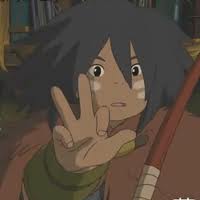 |
| Look Arrietty, I'm not white! But your dad trusts me! Weird! |
So here was a strong female lead with a complex mother / daughter relationship. It had the Disney brand, big name voice actors, and a full advertising campaign. America stayed home. Don't tell me these characters don't exist. Disney has tried to bring you a number of female leads from Ghibli. Mononoke was even a Princess. Maybe next time we will talk about Sen from Spirited Away or Kiki from Kiki's Delivery Service. I know you think "Well, if they can bring them over as imports why can't they produce these stories in America?" Why should they? You don't go to see them.
25 June, 2012
Things Unseen: The Bear And The Bow and Brave

The largest piece of information I can find is the following text. If you wrote it, let me know. Most people have sourced it to a 2010 Entertainment Weekly article, before Reese Witherspoon dropped the project. So assume authorship as EW until I find differently or confirm the issue.
Brave is set in the mystical Scottish Highlands, where Merida is the princess of a kingdom ruled by King Fergus (Billy Connolly) and Queen Elinor (Emma Thompson). An unruly daughter and an accomplished archer, Merida one day defies a sacred custom of the land and inadvertently brings turmoil to the kingdom. In an attempt to set things right, Merida seeks out an eccentric old Wise Woman (Julie Walters) and is granted an ill-fated wish. Also figuring into Merida’s quest — and serving as comic relief — are the kingdom’s three lords: the enormous Lord MacGuffin (Kevin McKidd), the surly Lord Macintosh (Craig Ferguson), and the disagreeable Lord Dingwall (Robbie Coltrane). - Entertainment Weekly
That sounds like a completely different movie. But it also sounds like the same movie. Since the three lords stayed to become her father's drinking buddies, I think there is a story untold. Until Brenda Chapman gives her post career interview or Brave comes out on the Deluxe Bonus From The Attic Edition DVD with the requisite rueful voiceovers, it remains unanswered. I still want to know why Merida has to apologize for everything but her father gets a pass. Sure, he was under the influence of bear but I still think (since she was tied down and all) that he could've taken a second to set aside his manly anger and listen to his kid. Just me on that one?

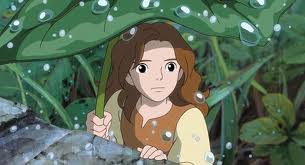 Along with the Scot-Face theming, I'm leaving the fantastic (natural black) hair alone. I've already spent more time on Brave than I intended or care to. If I say more it will be on the subject of our low expectations (all Merida had to do for Amazing Status was not be interested in marriage or overtly sexual) and our cultural blindness. Why didn't we salute Arrietty for it's strong family message? Why wasn't that capable and curious girl held up as a girl we'd like to see more of? Despite a wide release through Disney Arrietty (like the female lead of Spirited Away) was largely ignored by the same people overly excited about the extremely conventional Merida. If Merida had been a boy, the reaction to Brave would be quite different and far less enthusiastic. When we embrace Brave we set the bar for female narratives low indeed.
Just say no to sexuality and we will love you. Weird.
24 June, 2012
Maiden Mother or Crone, Brave Is A Small World After All

There you have it. Girls like horses, right? Merida gets a horse. The most important part of this story is Merida learning to respect her place and Elinor loosening up a bit, so focus on them. Unlike every other Pixar film (except, perhaps Up) and every Disney Princess ever, Merida has no confidantes. She has no comrades. Elinor has no support system. These two women are alone except for the men they must please. When the clans come to visit there is great talk of the close bonds between the families. Elinor is given the hushed impersonal respect common to Traditional Values while the men are excused from being reasonable. Her taming hand causes them to bow and scrape. When she's a powerful bear they tie her naked body down and prepare to kill her. I don't buy the "But she's a BEAR!" aspect of this. She is a bear when Merida's brothers recognize and obey her authority. In a film supposedly about women there are only three - maid, mother and crone. (Ok, there is a sexualized and fairly dim servant, but otherwise.)
Name another Pixar film where the main character has no friends. I'll wait.
Still working on that? In order for Merida or Elinor to have the same friendship offered other Pixar characters, they would have to be seen as something outside of their gender. As long as Merida is trapped in her Token Female Lead role, she is stuck in the trinity. I assume at one point Merida did have a friend. Andrews says he cut the extraneous characters, which means other plot lines were abandoned. Since Merida's father still has a large and varied social group it seems likely that women were once in the cast. Think about the scene just before the ending. Merida reminds the men what makes them great. It is their friendship, it is the service they have done one another. In a film about a mother and daughter, the most significant speech the enlightened heroine gives is... about the glory of men.
23 June, 2012
Review: Brave by Pixar

I saw Brave in a group of six people. Three adults, three kids. Of the adults, two have an abuse background. Of the kids - well that's for them to decide, isn't it? Anyway, the children and one adult proclaimed Brave "Heartfelt, life affirming family fun." No really, someone said that. The other two adults hated it for different reasons. The first adult felt Brave was antifeminist, normalized domestic violence, telegraphed it's intentions, lacked charm and changed characters to suit the needs of the plot. The other adult was vaguely traumatized and wished walking out halfway through had been an option. But the rendering was cool.
For me, Brave failed on every level. (Since this will make me the least popular reviewer on the internet, I'm going to explain why in detail. You might want to see the film first then come back, because I will be talking about all major plot points.) We meet Merida in the traditional pre-titles happy family opening sequence. Then a bear ruins it all. Instead of semi-orphaning Merida as one might expect, the bear just traumatizes her father. He has bear issues. It's like, his thing. Merida's father wants her to be able to take care of herself, despite being a Princess. (The faux Scots things is all over Brave but I will leave that for someone else.) Merida's mother, who wears her hair tightly bound and extra long to show her feminine strength, wants Merida to play the dulcimer and meet the domestic pinnacles of princessdom she herself holds. In what is meant to be a send up of princess culture, Merida's mom rattles off all those traditional values while Merida rolls her eyes. Too bad the film undermines that. To begin with, Merida's father dwarfs The Incredible Hulk. Merida's mother is a slight and beautiful wisp. So the only thing Merida gets from her father is her hair. A hulking muscle bound Princess? Please. Merida's mother even complains that Merida overeats, because a Princess has an eating disorder. It's ok. Merida really only eats the occasional apple. Her plate of cookies is just for show. And her brothers. They can eat what they want because, you know, boys.
Mostly Merida's mom is just impatient with her willful teenage daughter. Things don't boil over until Merida's mother announces that the clans have been invited to compete for Merida's hand in marriage. Merida understandably balks at this announcement. Her mother tells her not to be silly, it's just marriage. Even she was nervous when she was handed off. Let's take a second here. Merida's appetite is unacceptable. Her physical prowess is unacceptable. Pimping her out to the neighbors is just fine. (Traditional family values for the win.) Merida attempts to use the traditional rules of the firstborn being able to compete for the hand of the princess to circumvent the bartering of her sexuality for social order. This infuriates her mother. Repeatedly Merida is told she doesn't know what she's done. Unless someone is allowed to marry her (read, have nonconsensual sex with her for life) the kingdoms will go to war. This message is repeatedly driven home to Merida in a number of ways. Without the Queen's calming and stoic voice controlling them the men fall into violent chaos. Without the right to marry Merida, conflict breaks out. The only thing holding these base animal men back is the dulcet and accepting tones of a confined woman. Okay then.
Moving on from the landmine of sex trafficking and young girls, we encounter Merida's plan to save herself. She runs off to cry. That's about it. She yells at her mother, and storms out. She doesn't set out to lead her own life. She doesn't open an archery school. She doesn't take a meaningful step toward independence because that is what a boy would do. Girls flounce. The magic of the forest leads her to a Miyazaki style crone in the woods who sells her a way to poison her beloved mother. To be fair to Merida, the bear obsessed witch never says the word poison. Neither does Merida. She wants to change her mother (not herself) and thus change her fate. She doesn't want independence or a solution - she wants to control her controlling mother and thus alter in some unspecified and therefore clearly unimportant way, her future. The witch is like hey, I did this once before and it really didn't work out so well but if you're paying, I'm playing. Merida tricks her mother into eating the poisoned cake. Her mother promptly turns into a bear. Wow! A bear! (Hey wasn't there another bear at the start of this movie?) Merida is like, I didn't ask for a bear. I just asked a complete stranger to feed mind altering chemicals to my mom so she'd stop being such a drag. WTF, bear?
The point of the bear is twofold. The first is for Merida to show her mother that the life skills she gained from her father were not useless. The second is to normalize domestic violence. Merida quickly realizes that since her mother is a bear, if her father sees her she will be murdered. This is all Merida's fault. If she had just let herself be pimped out, none of this would have happened. Later, Merida's mother attacks her and lays open her arm. Merida assures her regretful mother that it is Merida's fault. If Merida hadn't acted so hastily and foolishly, her mother wouldn't have hurt her. (That's right kids, it's always your fault.) Merida's father sees the torn clothes of Merida's mother and decides the bear has eaten her. The only way to avenge her death is to kill the bear. The bear that is actually his wife. If you change to the point that your husband doesn't recognize you (although all four of your children do) he will kill you (because he loves you so much) and it will be your daughter's fault. Men are scary irrational creatures women barely hold in check and upsetting that balance has terminal consequences. Merida has to keep her mother alive, control her massive father, keep the kingdom from going to war, and apologize about fifty times. If she had only been a little bit skinnier and a little bit sluttier none of this would be happening.
Of course it is through her brains and her brawn that Merida wins the day and saves the kingdom, right? Well, not so much. Mostly it is through accepting her fate. Merida apologizes a bunch more and demurely walks into a crowd of warring men to use her placid feminine voice to calm them and agree to marry at once so no one has to die. Her mother, still a bear, has seen that Merida holds more value than her stone face and untouched vagina, so she intervenes by giving Merida permission to refuse the marriage. Well, sort of. Merida postpones the marriage by suggesting that free will be given in the choosing of sex partners. No one is really into this until the young men agree that maybe they don't want to sleep with Merida either. The fathers agree that Merida will be courted by the sons and choose one later, maybe after falling in love, thus deferring the still planned upon matrimonial ending. Or course her mother is still a bear and her father still wants to kill her. Merida has to rush upstairs and do some sewing (really) run after her enraged father, fight him off to defend her mother, then cry an awful lot and beg her mother's forgiveness. You see, Merida's mom has always been there for her. All she asked of Merida was one little thing (her entire life) and Merida was so ungrateful that she refused, poisoned her, and brought the kingdom to ruin. If only Merida had just done what was expected of her everyone would be safe and her father wouldn't murder her mother or brothers.
Well, I feel empowered, how about you?
Merida breaks the curse, the other bear is revealed (and defeated) the kingdom is happy, etc. Merida's mother learns to let her hair down a bit (literally) Merida learns her proper place, and with his women returned to their roles the king settles down and doesn't kill anyone. Along the way some small children dig around in a buxom maid's breasts and millions of young girls learn valuable lessons. You can be whoever you want, as long as you have permission. Control over your own body is granted by others. Strength is nice to have, but it's not what really counts in the end. Love means always having to say you're sorry. They wouldn't hurt you if you weren't so difficult. It really is your fault. Crying can totally solve things.
I have long defended Disney's Princesses. I will make a case for the ability to be empowered by any of their willowy young beauty queens. I have to make an exception for Merida. That chick is toxic and so is her whole movie. Thankfully the youngest girl in our group said "Ok, I don't see why Merida had to say she was sorry though." There's hope for the next generation.
23 May, 2012
Things You Could Watch: The L.A. Complex

After five DNF reads in a row I fired up the TiVo and drowned my sorrows in The L.A. Complex. On the surface The L.A. Complex is a completely disposable show doing a paint by numbers DeGrassi style underbelly of entertainment bit. Really, it's pitching to the choir with me. I appreciate a nicely done soap as much as I suspect that the entertainment world is filled with soul killing narcissists who would have mirrors embedded in their shoes if only the light didn't disturb setup. Under the surface The L.A. Complex is pretty much what it was at first glance. It's plot twists are telegraphed, it's characters neatly fill an Edgy Casting 101 class. What made me go a fourth episode (and has me all in till the finale) is an honesty in the script coupled with some exceptional performances. Jewel Staite is ripping the role of Raquel apart. It's up there with Kudrow's deeply uncomfortable (but far too mannered) Valerie Cherish. While an element of discomfort remains, Staite goes in a completely different direction. Her Raquel is all internal rage and frustration. She knows how talented she is, knows how the clock ticks in Hollywood, but by going against her own instincts her career is deader than Johnny Chase's in the early seasons of Entourage. Raquel will claw her way back to the top if she can just find a place to grab. (Note to Raquel - if they offer you Dollhouse, don't take it. That show is a rapetastic mess.)
The rest of the cast is a mishmash, again Degrassi style. You've got the Hot Young Star, Connor. His mommy didn't love him enough and he self harms just to feel something. See, you don't care about him either. We can just move on. Abby, Illegal Immigrant (cough, young Raquel) is a confused mess. Will she strip? Will she act? Will she sing? Will she sleep with the entire cast in the first season? I don't care and neither will you. She's fine, but she's basic. Abby spends a lot of time with Nick, the unfunny comic. Nick's story arc is learning to get out of his own way, plunder the lives of those around him, and cast off the compassion for his fellow humans that will eternally block him in Hollywood. They cast a James Franco type that is so James Franco it required a script nod. Joe Dinicol is a better actor than Franco but the role is going nowhere fast. Actually, the rest of the cast is such a jumble that we should just skip ahead to the other standouts.
Benjamin Charles Watson does a great job with the oh so out there Gay Black Man. He's working with an underdeveloped role while playing off the cliched P. Diddy style world surrounding him nicely. Some of his choices are absolutely absurd (A remote B&B? Really, Tariq?) but Watson is giving a great vulnerability. He's suggesting almost a young James Baldwin as he takes the world around him in and tries to process a place for himself inside it. His counterpart, Ice-T/50-Cent OG with a record rapper Kaldrick is a perfect foil. Andra Fuller develops real charisma out of an unstable character. You've every reason to dislike Kaldrick (and the heavy handed statement he is a human stand in for) but Watson and Fuller are probably going to break my heart.
Also winning me over is an absolutely perfect performance from Aaron Abrams as washed up child star Ricky Lloyd. Give him and his agent their own show and I am there. The L.A. Complex is the sort of show where vomit means still having to ride the city bus. You aren't broke in a giant Manhattan apartment paid for by your Oxford educated boyfriend - you're fishing through other people's trash for recyclables. I can forgive it the broadcast plot twists and straight from central casting characters for the sheer quality of half it's stars. (The other half can go to just about any other CW show on the schedule without my shedding a tear.) It's the sort of show where you know the stripper is going to be a porn star long before she's a backup dancer, but her desperate plea for support gets you anyway. Add Chelan Simmons to the list of actors to watch in The L.A. Complex. This is a footnote show - the thing you never watch and years later can't believe all this amazing talent was in. I'm just going to view it now. I'm hipster like that.
Edited to add - after writing this I decided to see how Staite views the role and googled up some interviews. Click for the best.
02 May, 2012
Review: Comic-Con Episode IV A Fan's Hope by Morgan Spurlock

Statements by the chosen elder statesmen aren't challenged. When McFarlane said the only thing he looks at in a portfolio is the quality of the art my viewing mate laughed. Apparently they once skipped a portfolio review because McFarlane would only meet with people willing to relocate to Phoenix. No feedback without commitment to potentially accept an offer. (Artists don't routinely relocate, either.) Now McFarlane is a busy guy. How he runs his business is his concern, but the documentary frames his statements as ones of accessibility. Like other aspects of the film, there is a lot more to the reality of SDCC.
Spurlock focuses heavily on Chuck from Mile High Comics as a way to illustrate that the con has moved far from it's roots. Chuck's been in a hard business a long time. That doesn't make him the most interesting person to base a large section of the film on. In fact, most of the participants seem chosen for being fairly dull and fitting a geek mold. There is the collector who stores his mid range figures in a gun safe, the lovers with a suffocating dynamic, a young artist who wants to be discovered instead of making something happen, it's a mishmash of expected figures. If I were not already immersed in the geek world, I certainly wouldn't join it on the basis of the film.
With such rich subject matter Spurlock could have addressed issues of accessibility inside the con itself. The most interesting character is a young black soldier. He is the most prepared, the most professional, and the most talented. He is given too little attention. Issues relating to race are completely ignored. Issues relating to women are barely mentioned. A short aside about cosplay women "forgetting their pants" is the only time gender is raised. The staff working the event go uninterviewed. I feel like Spurlock wasted an opportunity. The material underlying Comic-Con Episode IV: A Fan's Hope is so rich. There is so much for a documentary to say about this culture, this collision of commerce and cult. Spurlock didn't say any of it. If you believe Comic-Con to be a collision of misfits and moneymakers, then Spurlock has you covered. Right down to Joss Whedon, master marketer, decrying the raiding of his fellow geek's pockets.
Comic-Con Episode IV: A Fan's Hope won't offend you. It won't enlighten you. It won't do much but make you glad you're not those dudes. And hey, Frank Miller looks pretty sober in it.
20 March, 2012
Review: Chicken With Plums by Marjane Satrapi

Satrapi is telling a fictionalized version of a true tale. Her great uncle, Nassar Ali Khan, suffers a disappointment in life and wills himself to die. Satrapi walks a fine line here. One one side of the coin she wants the reader to engage with and feel for Nassar. On the other, he's a terrible human being. He's not evil, he's a self involved child. The reader is told fairly early that he's going to die and I was completely okay with that outcome. At no point did I find it tragic, at no point did I wish he could have a happier ending. Nassar decides to give up on life and I think "Well, okay. That's fine." I don't think that's the reaction I was supposed to have. On the sympathy side, Nassar was estranged from his family, obsessed with a woman he could not have. His only solace in life was his music. Eventually, that is denied him. (Or he chooses to deny it to himself. It's a matter for debate.) Obviously, Nassar is a deeply depressed man. He is probably chemically depressed and all the other things one would have to be to lie down one morning and decide never to get back up.
He's still a self indulgent child who completely shafted his family. Once, decades ago, he was denied the woman he wanted. Therefore he makes another woman suffer. Once, decades ago, his mother didn't favor him. So he chooses not to favor his own son. I don't buy that there is always a golden child, that for every Abel a Cain is required. These are choices we make as people. If the story of Nassar had been told from another viewpoint I would have felt more sympathy for him. Unfortunately the unloved son isn't treated well in the book either. He is disparaged for his weight, the weight of his eventual children, and the perceived lack of moral fiber in Nassar's granddaughter. Is this to say Nassar was right? To somehow justify his poor parenting? I couldn't get behind it.
Satrapi does a beautiful job of showing the tragedy of Nassar being lost in youthful dreams and refusing (or being unable) to create a satisfying life with the woman and children he had. His wife is the catalyst for his decision to die, but can we blame her? I spent only a few pages with Nassar yet I was willing to drive him over the edge. Chicken With Plums may be slow in places but the tale it tells definitely has punch. If it's the punch the author intended, I can't say. I don't think I will seek the movie out. Nassar and I, we just don't get along.
Subscribe to:
Posts (Atom)