Showing posts with label Harper Collins. Show all posts

08 October, 2013

Review: Art And Sole by Jane Gershon Weitzman


* A version of this review first appeared at Love In The Margins.
Strictly speaking, Art & Sole doesn't fit our concept. That said, if you spend very long in romance circles you will find that shoes are an amazingly frequent topic of conversation. If we made a word cloud, Zappos would dominate. I don't know what it is about the shoe. Cinderella, sure, but most romance heroines obsess on their dresses and rarely mention their footwear. In women's footwear it often seems like the least practical and most painful shoe is the most coveted. While I admire a perfectly painful high heel I don't wear them. I appreciate them as art alone.
Art & Sole is not devoted to wearable shoes. Weitzman has assembled a representative sample of the art commissioned for Stuart Weitzman window displays. It's lovely. This is a true art book, devoid of text. Each page is a carefully photographed art piece inspired by the concept of a shoe. From frosting to needle work to glass to gemstones, each piece inspires you to think what if? What if this were truly a shoe? Would I wear it? Who would I be with these on my feet? Who walks on a bed of diamonds? Why do I think she's the evil one in that tale?
Perhaps shoes appeal to so many because they offer the possibility of transformation. Walk a mile in the other man's shoes. Grab something sensible. Put on your dancing shoes. Become, for a moment, someone other than yourself. The flights of fancy in Art & Sole make it an interesting coffee table book. They offer studies in structural design as well as aesthetics. Some of the shoes appear wearable, despite their lack of function. All of them ask you to imagine the girl who wears them.
At the end Weitzman includes small bios with contact information for most of the 33 artists she features.  I was surprised to see baker Sylvia Weinstock among them. (I was even more surprised by which pieces were credited to her.) This would be a lovely present for a fashion student. I'm having a hard time keeping it intact. Linda Leviton's pages are begging to be removed for framing. Weitzman has pledged her royalties from Art & Sole to charity. October (of course) is for breast cancer research.

18 July, 2013

Review: Serving Victoria by Kate Hubbard

The opening chapters of Serving Victoria are a total slog. Hubbard seems unable to choose between too much background and too little. The reader skips between eras with abandon, as Hubbard references different points in Victoria's life without warning. By the time Serving Victoria rolls into the middle chapters the reader has adapted and is engrossed. Courtiers in Victoria's world had to deal with a mercurial and self centered monarch who saw herself as steadily benevolent. Court life was tedious at best, with those called into service treating it as a holy obligation meant to strengthen their spirit. Duty overrides the narrative as Victoria's servants find themselves in roles their station in life hasn't prepared them for. Her middle class members have an advantage here, as service to the queen conferred benefits to them they might not have otherwise achieved.

Seen through the prism of limited writings from a selection of her staff, Victoria emerges as a complex woman lacking self awareness. She seems fortunate in her support system and almost willfully obtuse in her daily life. Hubbard is forced to leave some questions for a true biographer of the queen while she illuminates what being by Victoria's side entailed. While the reader emerges with a clear picture of the almost suburban isolation of Victoria's world, one occasionally wishes for further insight. Why, after Albert's death, did Victoria so enjoy the drunken disrespect of the Brown brothers? Was it a personal fetish? A rejection of the rigid morality she demanded from others? Alternating between complimentary and condemning, this look at Victoria through the eyes of those serving her is ultimately a look at the business of monarchy. Victoria, for all her freedoms, is as imprisoned as her court.

I found Serving Victoria a rewarding read at the close. The disconnect between her true self and her public image informs the delicate dance still required of the British Monarchy today. Her rejection of her successor (the Prince couldn't win with his parents) and favoring of her daughter is played out in her shuffle of favored ministers. Victoria's court is one where those in waiting do just that for hour upon stultifying hour, dolls in a game of house with far reaching consequences.  I ended with a deeper appreciation for both Alberts and a respect for Victoria's attempts to bridge her idealized world with her actual one. No one in Serving Victoria seems truly happy save (perhaps) the Browns. Respect is a far easier emotion to grant than love or satisfaction.

20 July, 2012

Review: The Rose of Fire by Carlos Ruiz Zafon

Having two TBR piles is a quirk of mine. The first one is books I bought, or mean to read, or read a review of and purchased but might never actually get around to reading. When they were in paper, if they overflowed the shelf I'd bundle them up and ship them off to the library because life is short and obviously I wasn't going to read them. The other is books I have agreed to review various places via promises or promo copies. That I have hard and fast rules about. If I get 20 books in that pile No Books May Arrive Until Finished. We are so underwater right now in review land. I keep reading books from the other TBR pile and ignoring the Pile Of Doom. It's saving me money but I do need to catch up. So when Harper Collins asked me if I would review The Prisoner of Heaven, I had to say no. After all, we are in NBMAUF territory. Harper Collins, being the sneaky mofos that they are, said ok thanks, but there is a free short if you want to read it. Technically a short is not a book. Nor does an ebook have to arrive. So I decided in the middle of the night that Rose Of Fire was totally not a violation of the NBMAUF law and downloaded that bad boy.

I tell you that to tell you this. Now I want to read The Prisoner Of Heaven. It is a slippery slope, these free shorts. They sew the seeds from which massive TBR piles grow. On it's own, Rose of Fire didn't do much for me. It's a little bombastic, a little overblown. I cared exactly not at all for it's main characters. This is probably because I don't read the series. I love Barcelona, I love (in a totally not really love but am obsessed with) the Spanish Inquisition, and hey, a dragon? What! But it was a bit Umberto Eco for me. You know, it feels good for you instead of just good. I ended the short feeling absolutely fantastic about passing up The Prisoner Of Heaven. I decided to just go ahead and read the enclosed excerpt, to see if it continued the events of Rose of Fire or if it was it's own thing.

Dude.

Dude!

It totally sucked me in. I had to stop myself from hitting Kindle's-Buy-This-Right-Now-And-Stay-Up-All-Night-OMG button. Because that would be a blatant violation of the NBMAUF rule and my personal ethics. (Like I have them. Hah! I laugh at myself a little. Ok, lots.) The style was different, the pacing was different, it didn't feel good for me at all. It just felt good. That way lies infidelity. I have pledged allegiance to the TBR Review pile and all it holds dear, Amen. But I did click to add The Prisoner Of Heaven to my list of books to buy when NBMAUF is lifted. Because that's an opening few chapters, that is. It even overcame two of my biggest biases - no longwinded series and no books with bookstore owners. Guilt over cheating on my NBMAUF makes me come here and tell you that Rose of Fire is a free download just about everywhere right now. Be careful about that sample though. It's hard to walk away.

06 July, 2012

Review: Raised By Wolves by Christie Mellor


 Harper likes this book so much they titled it twice. With this being the time of year that well meaning adults buy comedic life skills books for their departing progeny (or the progeny of others) I checked out this new to me book. Please don't buy it for anyone you like. This is the self help guide to adulthood you buy for someone you dislike, possibly even for someone you loathe.

However you title it, Mellor's Wolves  is written in that sort of ha-ha lightly abusive passive aggressive tone that people use to tell you you're fat. She takes the position that you are probably an overindulged child that others find tedious. With the will to change that reading her book has demonstrated, she can teach you to half ass your way to a responsible adulthood. Along the way she has proven tips, theoretical tips, and tips she heard other people talk about. It's like all the clippings your drunk grandmother ever sent anyone in the 1970's when she was tweaking her way through a Reader's Digest backlog.

I find these books interesting because I did leave my far from indulgent childhood home lacking most basic life skills. Cleaning, cooking, job holding, socializing, all of those were skills rapidly learned to function in the larger world. Post, Martin, Bombeck, I read them all. I found that there are two kinds of books. The first is useful, it clearly teaches you some basic knowledge. The second makes a buck for it's author and lets the giver feel superior. Under either title Raised By Wolves is far more the latter than the former. Fittingly, it's pricing is all over the map. Want the US trade paperback with the retro glam's feel? $5.60. Want it on Kindle? $10.99. Hardcover on clearance with the 1960's edutainment cocktail hour graphics? $7.98. Because Publisher Price Fixing* is all about helping you, the consumer, have choices. Buy and ship their dead stock or pay for the right to avoid storing pulp.

*I will now refer to Agency Pricing by the more accurate Publisher Price Fixing term. I never should have bowed to peer pressure and adopted the A word. what can I say, I'm weak like that.

01 February, 2012

Review: Ali in Wonderland by Ali Wentworth

I did not enjoy Ali Wentworth's book. It is entirely possible her material plays better if you have some frame of reference for her as a comedian. When I read Kathy Griffin, I heard her voice in the story. When I read Mindy Kaling I lacked that voice but the book stood up on it's own. For Ali In Wonderland I had no voice to hold up what was ultimately very weak material.

There could have been a great book from the bones of her story, but Wentworth didn't write it. I felt alienated from the author. Unlike Sedaris, where the joke is generally on him and the evisceration of others is done with some kindness, Wentworth's came across as a child of privilege resenting others judging her for that privilege. It was difficult to find a way to commiserate with her. When I would start to get some interest in her life she would throw something out that derailed it again. Getting through the book was such a chore I posted to Twitter every few pages as an encouragement to finish. Perhaps instead of a proper review I will follow the path taken by the book and offer you my loosely connected and highly personalized thoughts, direct from Twitter and chat.

I am not enjoying this upcoming release. Everyone in the memoir but the heroine sucks and it is saturated in unexamined privilege.


Author Washington insider, assures us all the family money gone, then launches into elite life. Own your status.


Opens with castle rented to propose to her, segues into DC life. Currently in prep school where she can do things like fly home at will.


Her life could be a funny and fascinating memoir but her writing style is SO off putting. Hasn't a kind word for anyone, really.


I could see the material being amusing in certain verbal delivery styles. Not coming across in print at all.


Book has a lot of marketing money behind it, expected to be huge. I'm going to get pummeled for hating it. Whatevs. Kiss my Ammy rank g'bye.


Oh hello, Girl Interrupted.


The author of this book just called out 153 lbs as an impossible tipping of the scales, her own mother doesn't recognize her.


Talking about an ex with a clunker, she relates how her mom is worried about safety so sells him her car at token price of 1k.


She and mom lie to him about why, because crazy pride! But hey, worth it for safe boyfriend car!


Not for boyfriend safety, mind you, but for hers. We should always lie to the poorer classes.


Author started to win me over, promptly killed it with dismissive remark about girls with less advantages than she. Calls them Escorts.


Her class issues are flying through the whole thing, triggering all of mine. She pisses away choices then judges people without them.


She calls herself middle class while jaunting about the world and dining with world leaders.


She walks off on an internship at Christie's because they had a dress code and expected her to fetch tea. London housing, even.


Author wants it both ways. Does not want to be judged for her silver spoon, yet wants to judge them for their lack of utensils.


This next tidbit... Almost gang raped by Mexican crack heads, go to the Four Seasons for 2 wks of pampering. Tries to tie in that old car would have been safer.


Situational humor requires a heart. Author saves her warmth for herself.


I am not sure why this book is funny. 3 big blurbs on it, but I haven't even smiled.


Omg. 9/11 has hit and the author takes to her bed at a luxury hotel when she has a perfectly good hotel room farther away.


No really,  9/11 just used as an anecdote to demonstrate how skewed her family is.


Halfway through. Second time author has said yes to an unwanted proposal. It's easier.


On page 215 I laughed. Yes, it was because she compared baptism to preparing a baby for roasting, but it was a welcome drop in this desert.


By page 234 I am back to frown faced reading.


The book is done! The review will wait. I might start a new personal blog since last night I killed Jesus. (Didn't mean to.)


And thus we conclude our first real time review of a book. I appreciated the opportunity to read Ali In Wonderland, it was an advance copy and I always regret disliking a gift. Ali Wentworth is probably perfectly lovely in real life, charming and amusing on a chat show. I have no doubt she is a better person than she came across to me in this book. If I had to guess, I would predict Ali In Wonderland will hit big and satisfy a core market. The crossover appeal is limited. On to the next. 


28 April, 2011

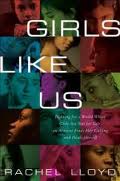
Review: Girls Like Us by Rachel Lloyd

Nothing in Girls Like Us will surprise those exposed to how our world works for the less white and wealthy, but everything in it will shock the other half. Both a call to action and a memorable recollection of the author's own experiences, Girls Like Us is a masterpiece.

If you rape an 11 year old girl, you're a child molester, a sick individual who should be buried under the jail. If you rape her after paying a third party you're just soliciting sex and she's a whore. If you prey upon that same girl, buy her things, treat her well then not so well, then abuse her freely, you are a predator who has groomed her. If that girl has no one to defend her, then you're her boyfriend. Everything contained in Girls Like Us is authentic. I can attest from personal knowledge that this happens all across our country in many states. Young girls are kidnapped, are raped, are trafficked, are sold, and nothing is done. Police view it as a victimless crime. (I could tell a story here about my friend's 15 year old niece that would curl your hair if you expect the police to protect you.)

Don't think this is limited to America. Or Thailand. Or any other nation that isn't where you might be sitting. Don't think it only happens in New York. If you have strip clubs, if you have sex for hire, you have child slavery occurring right under your noses. It's easier to blame the victim than it is to face the reality. Children in your town are being beaten and raped right now. Children are adaptable, they can come to see the most horrific circumstances as normal. Girls are taught to blame themselves for the failures of others. She's a fast tail ho, she's looking for it, she's hard to manage. If she were a better girl, she wouldn't get raped, he wouldn't beat her, she wouldn't need to shake that ass for some cash. She's too stupid to know better, too weak to change. All the lies the slaveholders tell the slaves and anyone who looks too carefully. Rachel Lloyd lays it out in a way that defies denial.

26 April, 2011

Review: This Life Is In Your Hands by Melissa Coleman

I've struggled with this review. While I think Melissa Coleman's book deserves all the acclaim it will gather, I also have a serious problem with fictionalized memoir. Adding complexity, I have strong feelings about the movement that she (and I) grew up in.

This Life Is In Your Hands is an exceptionally beautiful telling of a story too rarely told, by a modern day Laura Ingalls Wilder.

This Life Is In Your Hands is a fictionalized memoir. Conversations, expressions, interactions are presented as directly factual where the narrator has no knowledge of events. Things in quotes may be imagined, not documented dialogue.

Each of these two sentences is true. Melissa Coleman relates conversations her parents had upon their meeting - conversations she could not have been present for and they are unlikely to have written down. She is also a gifted writer who has composed a memorable telling of her upbringing with far more forgiveness in her heart than I have. During this resurgence of food-as-medicine anti-technology all-organic glorification, her tale is even more important.

The author strongly defends her parents against charges of neglect, despite laying a strong case for parental neglect with her own words. As another child raised in the glow of kerosene lights and left to my own devices while my formerly affluent white parents found themselves through poverty, I think she is too kind. When she relates her public school experience, it rings very true for me. There are things to embrace in the lifestyle that her parents chose. If her parents had been present and engaged, not worn down by hard work and their own hubris, perhaps her story would have gone differently. Sadly, it did not.

Perhaps her most important message is that food is not medicine, organic will not solve all, and diet cannot prevent everything. (Having faced cancer at 39 and 43, with a sibling who became a type 1 diabetic at a young age, I certainly have trouble being polite to people who beg me to consider holistic and homeopathic care. Been there. Done that. Pass the modern medicine my way, please.)  If there is a secondary flaw to This Life Is In Your Hands it would be the relationship between Coleman's parents and their mentors. Her disappointment in them is obvious, the cause obscured. How she feels failed by them remains veiled. In all other respects, she has presented a brilliant illustration of her childhood and the forces that shaped it.  After reading the book, my spouse largely agreed with my take. I asked him for a second opinion as I recognized my own experiences were coloring my feelings about the work. "Her mother would have been better off in a Burka." was his one sentence summary. I am not sure I disagree.

I do think this is an important book, and an important read. Each generation has a certain amount of people exactly like her parents - driven to cast off what is wrong with their lives they go to the extreme edge. The Coleman's eventually pulled back to make a contribution in the world of organic farming, a goal we can all recognize as in our interests. It's the extreme edges that too often get overlooked.

08 March, 2011

Review For Two: Heat Wave by Donald Bogle & Blue Smoke by Roger House


I've already raved this week about R. A. Lawson's Jim Crow's Counterculture. I read it as part of a trio of books over the last few weeks. Heat Wave and Blue Smoke take very different paths to the same result, a definitive look at an artist and their time period.

Donald Bogle is well known for his exhaustive research and meticulous detailing. Heat Wave is no exception. Things get off to a slow start as he explains the background behind what begins to seem like every person Ethel Waters ever met or could meet. Once he gets rolling, however, he offers a comprehensive look at this pioneering artist that is refreshingly free of rose colored glasses. Perhaps it's fitting that Waters, certainly not an easy woman, is so well documented in what is not an easy book. Heat Wave is worth the time, and it will reward the reader willing to explore not just Ethel Waters but the world she lived in. Ethel has largely been forgotten, but Bogle respects both her place in history and her absolute talent. Here she is in a clip from a film intended for black audiences only, with a very young Sammy Davis Jr as the President. I chose this clip because it illustrates the difference in the artist when she is not beholden to please a white ticket buyer. Instead of the cotton picker of her 1929 recording of this song, an elegant woman takes the stage before expounding on the power of Harlem life and completely refuting cotton as a profession.


Blue Smoke has a different aim. Rather than a comprehensive exploration of the times and people that made the artist, Roger House uses the art to explore the man. Taking Broonzy's discography to tell the story of his life, House quote his lyrics before expanding on the times in which he wrote them. It makes for an instantly accessible and compelling read. House writes as economically as Broonzy sang.

Unlike Ethel Waters, Bill Broonzy did not find his fortune with his guitar. It certainly led him to many experiences he would not otherwise have had, but it never allowed him to fully leave manual labor behind. as with other artists of the time his interaction with the Lomax family both gained him a wider audience and a minstrel version of himself to perform for the white blues enthusiasts. House details his work bringing other musicians to be interviewed by Alan Lomax, stressing that we have to view those tapes through the lens of Lomax's own bias. Broonzy knew what Lomax was looking for and he delivered it. We can't therefore take those words as a full and accurate representation of Bill Broonzy himself. In the music House finds a fuller picture of the man and through that man the era in which he worked. LSU Press has great pricing on Blue Smoke, both in paperback and ebook.  I think it is definitely worth your time. Since it's only fair, let me follow that look at Ethel Waters with a look at Big Bill Broonzy, a guitarist that should be familiar to everyone. The effects of his popularity in Europe are certainly seen in the work of the European musicians that followed.

15 January, 2011

Review: Cinderella Ate My Daughter by Peggy Orenstein

I'd like to thank Mad Men for bringing the name Peggy back. Not that Ms. Orenstein has been using a different name, just as a general point of gratitude. Peggy is a perfectly awesome name, although it is not mine.

Cinderella Ate My Daughter is the perfect gift for my sister in law. Although we both spent middle school stumping for the passage of the Equal Rights Amendment we came out with different views on children's toys. She views the parade of Barbie and Princess with the side gaze of someone feeling ill, and I happily acquire all the Monster High and Bratz Whor'z a child could wish. Both of us are trying to raise body confident, high achieving, take no prisoner daughters. Peggy Orenstein is talking to both of us in her book.

Looking at the copy for Cinderella left me ready to judge the book by it's cover. Author is from Berkeley? (We've both lived there.) Author has written on gender issues in the past? I was ready for a lecture on Why Princesses Are The Training Wheels Of Pole Dancing. (Nothing against pole dancing. When I was a tween I babysat for some, they tip well.) Instead Cinderella is a nuanced examination of gender stereotyping in the market place and in our homes. It acknowledges the joint forces of conflicting maternal messages and peer pressure in raising a confident and capable daughter. The author manages to reasonably defend Twilight as a phenomenon. (I didn't think I could see anything positive in that quartet.) Peggy Orenstein has the same problem as my sister in law - she planned to ban all things pink and Barbie before her daughter was born, then discovered that her daughter had other desires. In her reasonable examination of what we think is wrong versus what might actually be wrong she sets the framework for (among other topics) a serious conversation on the early sexualization of children.

Really, forget the Oprah pick of the month. Get your book club to agree on reading Cinderella Ate My Daughter. Except for the member that will be upset that Peggy Orenstein doesn't respect Sarah Palin (and you have at least one, be honest) everyone in the group will have something to say about this topic. Does Cinderella offer solutions? Not many. That's not the point of the book. The point is to bring a new way of thinking to topics we feel we already understand. (Pageants might not be that different from dress up after all.) Opinionated without preaching, fair when a cheap shot would be popular, Peggy Orenstein has offered a great read about her own struggle to define appropriate boundaries for her daughter. Read it with some women you love and bitch about it afterward. All our daughters might be better off for our doing so. (If we're really feeling wacky and utopian, we might band together to demand publishers stop cutting our heads off on book covers.)