15 August, 2012

Review: The Way To A Duke's Heart by Caroline Linden

Yea, go ahead and buy it.

I love almost everything about this book. I like everything on the cover from the color balance to the "Bitch, please" stare of the heroine. Linden finishes her The Truth About The Duke series with the best of the three. (I admit I had my concerns about this one.) Having reviewed both the prior books I decided to finish the series out. I'm so glad I stuck with Linden. In fact, I liked The Way To A Duke's Heart so much I think you should go ahead and start there. Nothing really happens in the prior books that is vital to the third. Look, I'll get you ready. There's this Duke In Waiting named Charlie. He's got two brothers and an inheritance issue. His brothers have tried to help but both of them wised up and dumped the ball back where it belongs. Charlie has had enough time to feel sorry for himself and work on his Daddy Issues. It's crunch time. (That's it. You're good to go.)

Our heroine is an awkward businesswoman on a mission. With her brother considering investment in the latest canal scheme Tessa is off to investigate the legitimacy of this enterprise. Trusted by her family, unable to trust those outside it, Tessa doesn't want to suck up to a charmer in the hotel lobby. Since Tessa might hold the key to Charlie's dilemma, he charms her elderly companion instead. Tessa says ok, whatever, that's cool. I've got books to audit and swamps to slog. You do you, Charlie. I'm busy doing me. Which she does. Sadly for Tessa, Charlie is trying to do her too. (But not that way.) He pretends an interest in the canal investment as a pretext for investigating Tessa's involvement in his dilemma. Continuing Linden's tradition of bucking some time honored Regency conventions it turns out that Tessa is a completely disinterested bystander. She has nothing at all to do with the mysterious blackmailer that's been mucking up Charlie's life. Nor is she willing to be a diversion while Charlie evades his responsibilities.

The evolution of Charlie from sulky party boy to Duke Of Tessa's Dreams is very well done. Both characters know who they are and (more importantly) why they are. Tessa and Charlie offer each other the same thing - someone to take them seriously and hold them accountable. Charlie respects Tessa's intelligence. As a man well aware of his own shortcomings he can easily see the strength in hers. For her part, Tessa has no experience of him. She sees a man well positioned to make changes in people's lives so she expects him to do so. While she guides him toward responsibility he leads her into frivolity. They are well suited to each other and to the plot. It's a nice balance Linden maintains for almost the whole of the book. My only complaint about The Way To A Duke's Heart arrives shortly after The Truth About The Duke is revealed. The truth itself is satisfying in content and execution. The events just following that are a failure for me. In exploring his past Charlie falls into one of my genre pet peeves. "If I had sex with you and you're not the hero / heroine, you completely suck." Yes, Charlie has a Crazy Bitch Ex in his past (as does Tessa) and the CBE briefly becomes the books focus. Handled just a little differently the CBE would have lifted the book from very good to possibly brilliant. As it stands the CBE bogs us down before being swept to the side as Tessa and Charlie get on with the getting on.

If you've been following the series or not, The Way To A Duke's Heart is a fun read. I like Linden's way with characterization. With this book the author moves off my TBR and onto my auto-buy list. (If nothing else, her strong voice knocked Charlie Sheen out of my mind for the entire read. I didn't think that was going to be possible.)

13 August, 2012

Review: Right State by Mat Johnson and Andrea Mutti

Political commentary is hard to do correctly. I'd love to tell you that Mat Johnson has pulled it off but he falls into a familiar pitfall. There is no one human in Right State. These are puppets we've played with before. While obviously coming in from a liberal viewpoint, Johnson isn't that far from Frank Miller's recent conservative ravings. Johnson is gentler and less bigoted but still delivers a book without any relatable characters. There is no one for the reader to walk beside in  Right State. The most sympathetic character is a heavy handed stand in for a point of view. I leave Right State unsure of it's agenda. Nothing here is likely to shed light to anyone else. If you are a conservative Right State will feed your belief that liberals consider you ill educated at best and a racist head case at worst. If you are a liberal it oversimplifies the appeal of the far right political movement. There is a danger in assuming your idealogical opponent to be fundamentally different from yourself.

Ted Akers is a pundit. He speaks passionately for money without deeply believing his own words. He is rhetoric in a suit spreading a toxic point of view for profit. He is, of course, a good guy. No one ever thinks they are the problem. Right State has a strong set up here. Several far right pundits have recanted their past beliefs. Discovering you are part of the problem is not a simple journey to take. Instead of a gradual discovery of his own blindness, Akers is quickly immersed in a full fledged conspiracy. Reluctantly drafted to thwart a death threat against America's second black liberal president (no, Right State is not a futuristic thriller) Akers finds himself surrounded by extras from Deliverance. These undereducated militants consider Ted Akers a national hero.

I want to pause here to refute the easy assumption that the patriot / militia movement is made up of cult leaders and dim thinkers. The election of President Obama may have galvanized them, but it did not create them. I have known sophisticated, intelligent, articulate people who have moved deeper and deeper into these movements over the last fifteen years. To conflate an extreme far right belief with insanity is to underestimate the attraction of this movement. What the KKK was to the 1960's, they are to us today. A plot on the level that Akers is sent to unravel would not consist of one crazed cult figure and dozens of dimwitted followers. While crazed cult figures and dimwitted followers can certainly exist in any party it lessons the impact of Akers awakening to have it precipitated by such a group. It also relegates Right State into a preach-to-the-choir stance. This book will no more reach across the divide than Miller's Holy Terror. This is a shame.

Akers, of course, discovers there is more at work behind the scenes than he realized. The militants are being manipulated by forces high in the opposition party, the party Akers once defended. His disillusionment is as swift as it is brutal. For the reader, it's a bit of a yawn. How much more compelling  would Akers awakening in place have been? How much could Johnson have said about our broken system of shouting if Akers awoke after a successful plot? If the catalyst was not being tossed down the rabbit hole but awakening in Wonderland and realizing the cost? What if the revelations in Akers came from the implementation of the change he advocated for? Right State is a lost opportunity. Johnson tells the story of a man confronting the crazy fringe he inspired. It may be the tale Johnson set out to tell but it is a well worn and cliched one. The fish in this barrel have already been shot. Johnson is better than this material and I hope he takes another shot at our great divide. Right State was all wrong for me.

11 August, 2012

How To Spend Your Money: Waring Pro CC150 Cotton Candy Machine

I don't understand the Ladies Who Refuse Lunch. Why do people eat 100 calorie chemical snack packs when they could have 40 calories of sweet sugary goodness on a stick? I'm sure there's a reason that has to do with blood sugar crashes and refined carbs. Tell me all about it later. Right now I am excited about my latest kitchen toy. After a No Good Terrible week full of Problems I Can't Solve I found myself at Sur La Table. Some people drown their sorrows in sex with strangers. I buy a new spatula. Or a cotton candy machine. You know, like you do.

Commercial cotton candy machines? I've run them, disassembled them, cleaned them, and patronized them. I've never thought a home unit could do more than produce a token puff. The kind (and by kind I mean evil) people at Sur La Table invited me to play around with one of their units. Dude. DUDE! Look at that photo! I used half a tablespoon of sugar! I totally bought it. I also bought a jar of classic pink vanilla spinning sugar by Hammonds. At $9 for a small jar it's 32 cents a serving. The floss sugar Gold Medal puts out is less than 11. On the other hand, you have to store that sugar nice and dry until you've eaten 90 odd sticks of cotton candy. It seems sensible to pay a little more to eat a little less.

I've been playing with the machine a few days running. It's quick to clean and much more fun than most kitchen toys. A cup of table sugar mixed with 1/4 teaspoon of cinnamon made a delicious cotton candy but only produced half the fluff of sugar alone. When the flavor mix gets too heavy the sugar builds up in crisp little sticks on the side of the bowl. A good person would crunch it up and respin it, but I have to be honest. I just eat the cinnamon shards outright. (Waring suggests mixing Kool Aid with table sugar. Um. No. Super nasty.) I think later this week I'll mix up a cocoa / sugar base or a ginger / sugar base for some other interesting flavors. In the meantime, there is nothing wrong with vanilla. Nothing at all. (If you're going to throw a carnival in your kitchen I suggest starting with a reversed chopstick. Those paper cones aren't meant for home units. They only pack them in because you've been programmed to think cotton candy belongs there.)

09 August, 2012

Review: The Ugly Duchess by Eloisa James

I suppose instantly forgettable isn't the best way to describe a book I plan to recommend. Here's the difficulty. I read The Ugly Duchess a week ago and had some fourth act problems with it. I decided to wait a few days before writing the review. In the interim I completely forgot what my problems were. I also forgot everything about the book itself. Scanning early reviews didn't trigger any recollections so I read the darn thing again. I still like it and I still have issues with the fourth act.

The Ugly Duchess is a forced marriage of deception tale. Theo is the sort of gawky and insecure young heroine romance loves. She's smart and ready to rebel. Her mother dresses her inappropriately, her guardian taps into her funds. In an effort to impress a young man she admires Theo reveals a caustic way with words. Of course this will (eventually) lead to her finding out the price of those words as she earns her own moniker (and the book gains it's title). Remember ladies, be nice or be silent.

Theo's bank account has been raided by her guardian, the father of our soon to be Duke, James. James must marry Theo to obscure his father's crime. As it happens, James and Theo are already in love yet unaware of it. I'll give Eloisa James that because the portrait of our hero and heroine as young teens is so pitch perfect. Everything is emotional. Everything is unforgivable. Everything is the most important thing to happen to anyone ever. They romp about like the puppies they are, reveling in their new freedom from their parents, eager to grab the reins of their lives. Everything will be different now. Of course, parents are not so easily dismissed. The reins of life can be hard to control. Soon the bubble bursts. Theo is left abandoned, alone but for her mother (she apparently had no friends but James) and her money. She sets herself to rebuilding his estates and repressing everything about herself that James loved. (It defies logic, but there it is.)

James falls in with pirates. At first it's just for the thrill of it but later (when he needs to make things right with Theo) he reveals his true calling was freeing slaves. Because of course it would be. Never mind that when he decides to embark on piracy it's nothing at all to do with slavery. Both Theo and James are afraid to face their true selves, afraid to demand their true lives because of the self inflicted shame they carry. A major theme of The Ugly Duchess is life after parents. Who are you without your parents to appreciate? Who are you without your parents to defy? Who are you when death removes the mirror you've viewed yourself in? For both James and Theo death has been a major force for personal reinvention. We rejoin James and Theo as a couple when seven years have passed. Theo is preparing for her new life as a legal widow. James has had a sudden revelation and returned. Instead of the warm and passionate woman he left, James finds a repressed woman who finds the idea of sex unpleasant.

Here we fall into the fourth quarter abyss. I feel as though Eloisa James loses interest in her books at the close. They either dip into the farcical or speed to the end. Here, when James and Theo reunite as different people with an ocean of life experience and pain between them, is where the story should begin. Here, with no desire for sex or children, with no true excuses for abandonment, in the ashes of their youth, is the meat of the tale. Except it isn't. Theo goes from frigid to fire with haste. It's a high school reunion. The star couple has an Appletini or six and shack up for the rest of the event. The love they had for each other as children is pasted onto the adults they became then used as an excuse to wipe away the intervening years. One moment a character doesn't ever want children, the next they adore babies. One moment the thought of sex inspires self contempt, the next it's bloomers in the bushes. Add to that a closing chapter with the requisite show of brute force in defense of Theo's honor (violence - so hot and manly) and it's like a hundred other books.  Which is a shame. The first 2/3 of The Ugly Duchess is wonderful enough to still make this a four star read for me.

07 August, 2012

Flawed And Fallen Women


I just finished a book I really enjoyed. It was a top read in all respects except one. Almost as unwelcome as the Hermetically Sealed Heroine is the Crazy Bitch Ex. Why can't relationships just not work out? Why does the genre insist that our heroine is special and unique to the hero (or vice versa) while all past relationships were a narrow escape from the cauldron of hell? Shelve your divorce issues, people. Sometimes you don't get married. It's why we have friends we used to fuck instead of shallow graves in the backyard. Sex is not a sacred event that can only be correctly bestowed upon one person. In the case of this book I was really into the hero. His evolution from sulky arrested adolescent to leading man was skillfully done and fully realized. Then his ex shows up. Suddenly, I hate both of them. If you've ever spent time on a legal aid board, poverty skills forum or any other place second, third or fourth wives hang out you know exactly what I am talking about. The current relationship is pure and magical. The past relationship is a succubus draining the life from their innocent and trusting spouse.

In this case, our hero rides off to apologize for a one night stand several years past, thankfully leaving the heroine out of it. The CBE is in an insanely dysfunctional marriage she entered a scant two months after rejecting the hero on grounds of potential poverty. Her parents may have forced her into the relationship and since then she's rarely seen in public. On a trip to London our hero was drunk as a Duke and spent a weepy evening reliving past glories. Along comes the harsh light of dawn and he realizes he just wanted to bang her once. He's out of there and she's on her own. CBE heads back to her husband, never to cross Drunky McDuke's mind again. 

On the other side of the marriage, CBE's husband is wicked crazy. He engages in a three book arc of revenge culminating in a promise to kill the hero if he so much as glances at the husband's prized tea kettle. He's angry, unreasonable, and obsessively focused on his wife (the aforementioned CBE) and Drunky. Our hero has been a pretty stand up guy to this point. He's all about women's rights. He's discovered his own father had a potential CBE that turns out just to be a nice dead lady. (See? Relationships CAN just not work out!) So to this point we're ok. Then it all goes Jerry Springer. Drunky may (or may not) have fathered a child with CBE and CBE has informed her husband of this either to torment him or because she's honest. CBE is sobbingly grateful that Drunky has finally come to rescue her from an (allegedly) abusive husband she fears will kill her. At this point Drunky has had his own life threatened (and certainly turned upside down) by CBE's husband. He's afraid of the guy himself. So he sneers down at her for making her husband the mess he is. How dare she complain when she has a wealthy, titled husband who adores her. She's a celebrated (if rarely seen) beauty with four children. Tend to them and bother him no more. Later Drunky takes a moment to wonder if CBE's husband might really kill her. He thinks it sucks the kid might suffer, especially if it's his, but what can he do? He's famous Drunky McDuke and that other guy is Reclusive Lord Crazy. How can Drunky McDuke do anything for his potential child or baby mama? And why should he? She's obviously a head case who has driven Reclusive Lord Crazy mad with her bitchy ways. Thank god he didn't marry her! 

Our hero rides off to apologize to his family for Reclusive Lord Crazy stalking them after his failure to keep it zipped. Later in the book Drunky stares down at his first (second?) born son with awe and hopes all sons are so beloved. As a reader we are supposed to share Drunky's revulsion for his CBE and Reclusive Lord Crazy. As well, we are supposed to share the hope that Lord Crazy's son is his own. As a person familiar with domestic violence and the ease with which people turn away from it's pleading victims I had a hard time looking at Drunky after that. I'm pretty sure CBE quickly took a header down the stairs leaving Bastardish Son to grow up with a hot and cold father he can never satisfy. Eventually BS will meet a Hermetically Sealed Heroine and the two will go off to their own HEA. That's how things go in Romancelandia. 

I would have thought a hell of a lot more of Drunky if he'd taken the words of a women he once loved (enough to marry) seriously. If he had investigated her safety as carefully as he did his own paternity before coming to a ruling of CBE I'd have forgiven him. The Crazy's may be in a hell of their own making, one they enjoy in the manner of those drawn to these relationships, but she could also be in serious danger. I find it hard to take a man seriously when the life of his former lover and possible child are something to shrug over and walk away from. Maybe that's just me. 

06 August, 2012

Return Of The Hermetically Sealed Heroine

Who started the hymen fetish? Is it the same person who decided all women in a romance who are not the heroine must be subordinate or murdered or evil? Why do we who love books about women hate women so much? (I know, I know, we're all full to the gills with preprogrammed cultural messages. I get it. Still.) I'm having a hard time reconciling a book I recently loved and a book I'm struggling to read  with my love of the genre. I don't know why I am drawn to the authors or stories I am. Why do I read about endless Dukes when I cannot stand the multi generational rich? Why am I forever sympathetic to a parade of doe eyed damsels in my fiction when I don't tolerate them in my own life?

I'm a total hypocrite. I get that. So's my genre.

In the case of the book I am loathing the early set up is a Hermetically Sealed Heroine. The book takes place in Romancelandia with a number of improbable events in a row. I am uncertain if I will read Chapter Two given the events of the Prologue and Chapter One. Our heroine is a former spy chosen from the gallows and trained to perform any action necessary, including whoring for her country. Now discharged, our heroine has been seen with a number of rich men in a number of scandalous costumes. She is considered to be a woman for hire. She wanders into White's, climbs upon a table, partially disrobes, declares herself a virgin, and offers her hymen to the highest bidder. Then she calmly leaves. There are so many things wrong with this. This is so far into Fantasy Land that Romancelandia hardly seems an adequate description of the world this heroine lives in. There is, based on the opening pages, no sexual violence in her world. Women are not raped to know their place, raped to respect their betters, or raped just because they can be. Our heroine is not only Hermetically Sealed (allowing her to cash in her hymen like a lottery ticket) she's also loaded with Magic Rape Repellent.

Think about it. She's been in prison on death row. She's been in war. She's been intimate (but not vaginally) with rich men who are either paying for or believe they can pay for her body. She's infiltrated a zone forbidden to women and offered sex in a group setting of powerful men, yet she has no fear at all of sexual violence. No hesitation. Who is this woman? Where would she come from? How can she even exist? Setting all of that aside she's decided to offer her hymen up for auction in a bid for financial freedom. Who is going to buy that? Unless you're trying to cure yourself of a sexually transmitted disease are you really part of the hymen cult? Who, beyond pedophiles, really belongs to this organization? What kind of man checks a woman out and thinks "Man, she'd be so much hotter with an intact hymen" and in what world is he also unlikely to enforce the social order through sexual violence? Why is the Virgin Whore still a thing? One of the men surrounding her asks why she'd auction it off instead of marry. Who in that room is going to marry her? How does that work in this bizarro world?

She walks out of White's unmolested and I have to decide if I'm going to read on. Genre books have had women in and out of White's like crazy lately. Sometimes they're standing in the rain getting their Lloyd Dobler on, sometimes they're eating in the kitchen as a special I Value Your Feminist Ways treat from the hero. Occasionally they push in the front doors as though they have every right to bring an errant brother / husband / lover/ random man home. They are never met with violence. Because they are the heroine and bad things cannot happen to women endowed with Magic Rape Repellent. Now ex-lovers of the hero? Oh, that is a different story indeed. Since this is long enough, it's a tale for tomorrow. Bring your blankie.


27 July, 2012

Review: I'd Like To Apologize To Every Teacher I Ever Had By Tony Danza

First, the title. This thing is Fiona Apple long. I'd Like To Apologize To Every Teacher I Ever Had: My Year As A Rookie Teacher At Northeast High. That's like, 19 words. Let's just call it My Bad and move on. You know, the way one of Danza's students tells him her name and he thinks "Oh, I'll just call her Nick." (But Black Nick cause we already have White Nick.) My Bad is kind of awesome. It sidesteps most of the Rich Man Teaching pitfalls to deliver a straightforward look at what standardized testing has done to American's teachers and students. Of course Danza's students need more resources, better home lives and a more supportive system. But Danza doesn't condescend. When he encourages his kids to grab the opportunities they do have he never comes off as above them. Danza speaks to the students and the reader directly, as an imperfect man in an imperfect world.

In doing so he does the teaching memoir a great service. People who would never read a book about schools (unless it had recently been made into an uplifting Oscar film) will read My Bad because Tony Danza wrote it. His celebrity will illustrate that the grades given your child's school are not an indication of the passion or performances within it. His writing style is open and engaging. While nothing in the book is particularly surprising, the journey is pleasant. Danza admits that he struggled greatly with 20% of the average teacher workload and far more resources. He illustrates how the tasks we are asking our teachers to perform are impossible. As well, he doesn't fall for the One Teacher Who Cares myth that many teaching memoirs do. He recognizes that the teachers care. It is our society that does not.

My Bad is imperfect, like the subject it covers. Danza is a product of his times. While he works to keep race out of the book there are times he slips. Faced with a racist parent he blames "the culture" of the other children. A student on a downward slide demonstrates her unhappiness through the "extreme hairstyles" of an afro or cornrows. His good old days are of a certain tiny slice of American life. These things appear to be based more in ignorance than bias, as Danza otherwise presents himself as an open and rational man. Danza admits his imperfections to the reader, often harsher on himself than we would be. As a result he comes across as sincere and charismatic. Working in the story of a failed reality series (the excuse for his year at Northeast) Danza is desperate not to fail his students. He certainly doesn't fail the reader. My Bad is well worth checking out.

22 July, 2012

Review: Are You My Mother by Alison Bechdel

DNF books rarely get a review from me. If I didn't finish it, I can't really assess how it all comes together. I've read books that made choices I found inexplicable at page 50 which made perfect sense by page 350. In the case of Are You My Mother nothing could happen in the remaining pages to overcome the first 143. I don't even know how to talk about Are You My Mother without committing class warfare. Bechdel is not really talking about her mother in Are You My Mother, she is talking about herself.

The first 143 pages deal almost exclusively with Bechdel's emotional turmoil over writing. Her thoughts on therapy are covered extensively as are her therapy sessions. Theories are trotted out and highlighted as though Bechdel is taking notes for a midterm. In the world of Are You My Mother everything is required to hold deeper meaning. I once had a relative say to me, completely serious, that my cousin's headaches were caused by his mother hitting the brakes too hard in the car while pregnant. If (he went on at length) she had been a softer and more cautious driver then her son wouldn't have headaches. Bechdel's book is exactly like that. (In the case of my relative, I thought his son's headaches were probably due to an excessive intake of beer.)  Bechdel considers every injury, every thought, every dream to have a message from the universe inside. This is not terribly far from tin foil hat territory for me and this is where the class warfare comes in. Bechdel doesn't just seek a therapist. Once committed to therapy she embarks on a study of the field. She transfers into analysis. Therapy (and her therapists) become the security blanket she clutches against the rest of her life. Nothing, judging by the first 143 pages of Are You My Mother, could ever be as fascinating to Bechdel as thinking about herself is. The luxury of this both in terms of time and energy is staggering.

Not finding Bechdel's time on the couch as fascinating as she does made me think I was not the market for this book. Are You My Mother could have strong appeal to women of a certain income level and assumptive entitlement. Bechdel's issues with her upbringing are her own. Whatever works for her in her life is her business. As a reader I needed a narrative to carry me through Are You My Mother that simply didn't exist. Certainly I sympathize with Bechdel seeking enlightenment in the great works of philosophy and literature. So do we all. The fact that her deepest revelations come from The Drama of the Gifted Child (a book I loathe) and Dr. Seuss' Sleep Book is telling. After six weeks struggling to finish Are You My Mother I have to walk away. My relationship with the book is probably toxic for us both. I don't wonder what God is trying to tell me when I scratch my arm. I get a band-aid and keep pruning the hedge.

20 July, 2012

Review: The Rose of Fire by Carlos Ruiz Zafon

Having two TBR piles is a quirk of mine. The first one is books I bought, or mean to read, or read a review of and purchased but might never actually get around to reading. When they were in paper, if they overflowed the shelf I'd bundle them up and ship them off to the library because life is short and obviously I wasn't going to read them. The other is books I have agreed to review various places via promises or promo copies. That I have hard and fast rules about. If I get 20 books in that pile No Books May Arrive Until Finished. We are so underwater right now in review land. I keep reading books from the other TBR pile and ignoring the Pile Of Doom. It's saving me money but I do need to catch up. So when Harper Collins asked me if I would review The Prisoner of Heaven, I had to say no. After all, we are in NBMAUF territory. Harper Collins, being the sneaky mofos that they are, said ok thanks, but there is a free short if you want to read it. Technically a short is not a book. Nor does an ebook have to arrive. So I decided in the middle of the night that Rose Of Fire was totally not a violation of the NBMAUF law and downloaded that bad boy.

I tell you that to tell you this. Now I want to read The Prisoner Of Heaven. It is a slippery slope, these free shorts. They sew the seeds from which massive TBR piles grow. On it's own, Rose of Fire didn't do much for me. It's a little bombastic, a little overblown. I cared exactly not at all for it's main characters. This is probably because I don't read the series. I love Barcelona, I love (in a totally not really love but am obsessed with) the Spanish Inquisition, and hey, a dragon? What! But it was a bit Umberto Eco for me. You know, it feels good for you instead of just good. I ended the short feeling absolutely fantastic about passing up The Prisoner Of Heaven. I decided to just go ahead and read the enclosed excerpt, to see if it continued the events of Rose of Fire or if it was it's own thing.

Dude.

Dude!

It totally sucked me in. I had to stop myself from hitting Kindle's-Buy-This-Right-Now-And-Stay-Up-All-Night-OMG button. Because that would be a blatant violation of the NBMAUF rule and my personal ethics. (Like I have them. Hah! I laugh at myself a little. Ok, lots.) The style was different, the pacing was different, it didn't feel good for me at all. It just felt good. That way lies infidelity. I have pledged allegiance to the TBR Review pile and all it holds dear, Amen. But I did click to add The Prisoner Of Heaven to my list of books to buy when NBMAUF is lifted. Because that's an opening few chapters, that is. It even overcame two of my biggest biases - no longwinded series and no books with bookstore owners. Guilt over cheating on my NBMAUF makes me come here and tell you that Rose of Fire is a free download just about everywhere right now. Be careful about that sample though. It's hard to walk away.

18 July, 2012

Review: Rape Girl by Alina Klein

Rape Girl is a young adult novel actually intended for tweens and teens.  With so many adults reading YA these days it can be challenging to find books thematically appropriate for actual 10 to 14 year olds. I was given an advance copy of Rape Girl to review but it took it's time getting to the top of my TBR pile. I find it difficult to read about rape, especially date rape or the abuse of a child. I shouldn't have worried. Rape Girl is not really about rape. While the description of what occurs during a rape kit is somewhat detailed, it is not graphic. The rape itself occurs largely off the page. Rape Girl is concerned with what happens after you speak up. I would love to see Rape Girl adopted as a discussion book for groups of both genders. Valerie's experience is not limited to girls who report their attacker. When Adam (Valerie's rapist) explains himself he speaks words that have been spoken to many girls in many places. Overall, Rape Girl gets the details right and deserves to find a wide audience.

As a young tween and teen I went to many of the parents-out-of-town parties that Valerie throws at the beginning of the book. I was never invited to the all ages block party she experiences later, although I throw them myself. The drunken party gone wrong is rooted in truth but still a cliche. Rape Girl neatly sidesteps this pitfall. In a sense, the party is the roller coaster ride and the rape occurs when the reader thinks Valerie has safely navigated the turns. Details are revealed in a bit of a haze. This makes sense for Valerie's state of mind. She is a pitch perfect teen, confrontational, reclusive, resentful. Because is the victim of a non-violent rape, she has trouble articulating her own feelings about what has happened to her. While she did not consent, does she have a prosecutable case? Is a failure to physically fight a type of consent? If Adam considers it consensual sex does she have the right to call it rape? These are things young date rape victims struggle with for years.

While Rape Girl gets the big details right, there are some smaller details that don't come together. For a young reader unfamiliar with Utah or Mormons, the setting will be lost. An adult reader will understand the importance of Adam becoming a missionary, but a tween or teen might not know what a religious mission is. Valerie's father is dead. His death seems irrelevant to their lives. Valerie doesn't reflect on him being gone in the context of what has happened to her.  In a very strong scene Valerie's mother gives her a car, but afterward Valerie is primarily driven by her mother. Valerie's time was slightly off for me too. I am not sure, for example, that waterbeds are still prevalent. In my part of the country they were once commonplace but currently unheard of. She checks Facebook from her shared family computer instead of her iPod or smart phone. These are minor  (and possibly regional) things but they gave Rape Girl a hybrid 90/10's feel. The small disconnects kept Rape Girl from being a truly exceptional book and placed it firmly in the good category.

For a young adult reader, none of these details may matter. I hope Rape Girl is adopted as a summer read for many girls. Beyond the rape itself Valerie's commitment to standing up for herself is a valuable example. The social price she pays (and the unexpected allies she finds) reach beyond her specific events. There is a universal appeal to Rape Girl that will allow young readers to easily identify with Valerie's struggle.

16 July, 2012

Review: Booker's Place: A Mississippi Story by Raymond De Felitta and Yvette Johnson

Booker Wright was a man.

I don't know if he was a perfect man. I doubt he was. From my own life I know that overcoming obstacles and perfection rarely walk hand in hand. Booker Wright was a man who kept his eye on the prize. Work hard. Save up. Build something better. Then NBC came to town. What do you do if you've been silent your whole life and someone asks you to speak? A man speaks. So Booker Wright did. To modern ears what he said may not seem very strong. His short speech is available on the internet and was recently featured in various stories about this film. The important part of Booker Wright's story is that he waited. He waited until his speech would be documented, until his speech could endure. Booker's words were a pebble in his own life, a pebble in the lives of those who heard him on the night his words aired. The ripples slowly faded.

Just as Booker's life collided with filmmaker Frank De Felitta's, so Booker's granddaughter collides with Frank's son Raymond. The resulting film, Booker's Place: A Mississippi Story gives voice to the hundreds of Bookers that America held in the recent past. There were Booker Wrights standing up across the south and refusing to Yassir another day. We are taught about Malcolm X and Martin Luther King not because these men were alone in their work, but because they were the most recorded, the most organized, the most eloquent. The black men of America are not made up of the nightly news. The black men of America are Booker Wright. If you ask them to speak, they will.

Booker knew there was a price to his words and he paid it. While he survived the initial attack, he was later murdered. The film, like the family, have their own suspicious about the event. I don't know if I agree. It is tempting to believe in something grand conspiring to put Booker back in his place. It's even reasonable. But sometimes the greatest story can end for senseless reasons. Someone gets drunk. Someone gets even. There may be a broader narrative at work but there doesn't have to be. Booker Wright is enough. We don't need more. The film, however, does. Using the scant source material of Booker Wright available to them the filmmakers rely on a repetition of key scenes or phrases to drive various points home. It's both effective and off-putting. While it doesn't damage the viewing experience it does make the film seem lighter in content than it is. De Felitta interviews many principals of the time and of his father's earlier NBC documentary.

For all that has changed, not much has. Faced with black pain, the white response is still a bewildered "Ain't I been good to you?" One white man stands to talk about that old canard, the black mother. Faced with a black perspective he becomes very emotional. He says he wouldn't have given up that relationship for anything, that he was equally important to the black woman, that he treated her well and she loved him. This is America in a nutshell. Faced with the reality of black life, white America won't give up it's privileges for anything. We are still, in so very many ways, the plantation owner of the 1966 film. And Booker Wright's words are as brave and important now as they were then.

Yvette Johnson, the granddaughter in the film, has collected her blog posts about Booker and Booker's Place into an ebook. I scanned her blog after writing this review and I may cover the book at a later time. As well, there is an excellent review of Booker's Place from the Chicago Sun-Times blog. I don't usually do links, but these are worth a glance.

12 July, 2012

Notes From The Road.....

I am in transit, with an Internet connection too unreliable for image uploading or post formatting. This happens more than you'd expect. Making notes for a review it occurred to me that my review notes rarely line up with the actual review. I don't write in drafts. Since this isn't a paying gig it is a one and done transaction. Sure, I hope the review is useful or entertaining or not a complete waste of our collective time, but I save the sweat and tears. I need that for profitable endeavors. Back to my point. In situations like this I often make a few notes in case I've forgotten what I wanted to say about the just finished book by the time I get around to the review. Enjoy this look at how little those notes translate into a finished product. In this case the notes were for Milan's The Governess Affair,I believe.
TGA Who he is vs who he is in response,  parent hopes,  his hopes.  Her mother? Her astute assessment of soap market. Identifying with a mother procuring education for a son. Consent,  shades of. Unhappy ending. Crazy people think they're sane. Robert is the villain. Dealing with Richard via Robert? Jobs that just are not worth it. Past cannot be preserved, broken glass jar. Letting things go, Hugo vs Serena's sister.
Back when my brain worked all of that would have been five words, tops. I have pages of notes I no longer understand. Back in the day I could recreate five pages of thoughts from less than five words. I miss that!

08 July, 2012

Review: The Last Victim by Karen Robards

Let's get the petty complaint out of the way quickly. In the opening pages of The Last Victim our heroine, Charlie Stone, is regretting drinking the booze laden "Goofy Grape Kool-Aid". Ok, two points. Maybe three. Goofy Grape was a Funny Face flavor that ended production in 1983. The events are taking place in 1997. Our heroine was born in 1980. It is possible she was so fond of Goofy Grape at the age of three that she adopted it as her generic name for grape flavored drink mixes, but it bugged me. Like I said, petty. Fast forward 15 years and I've got some issues with The Last Victim that are far from petty. I'm writing this in early June, so my entry into the book was cold, not an advance review in sight. If you go into the book knowing the basic plot you may enjoy it far more than I did. Robards has good pacing, she has distinct characters, their actions are consistent and logical to who they are. Unfortunately there is one element of The Last Victim I couldn't get past for all the Goofy Grape in the world.

Charlie Stone  is about the dumbest heroine I've ever read. (I know Robards likes the name, she's used it before, but if you're going to write a series about a woman who sees dead people the names Charley and Harper are taken.) Charlie Stone is self destructive in a completely new and original way for me. She is sexually attracted to serial killers. Ok, that might not be fair to Charlie. She is sexually attracted to a dead serial killer. Our supposed love triangle is between Mr. Great On Paper who leaves her unaffected and Mr. Rocking Body Dead Guy who killed seven women before he was placed on Death Row. Charlie muses to herself that the attraction is sick (YES) and unwise (YES) and maybe even a bad idea (DO YOU THINK?) yet finds herself unable to resist his rock hard abs. Because if a man is hot, even if you know he is evil, sex is what you can't stop thinking about (NO). This aspect of the book is so problematic that the rest of it doesn't even matter. If you can get past the hero being a serial killer, if inmate fantasy is your thing, The Last Victim is going to rock your world. If you think a woman who survived a serial killer, studies serial killers and is trying to save a young girl from a serial killer overlooking a serial killer's crimes for his hot body is reasonable, have I got a book for you. We've seen this dynamic before. Let's do a quick compare and contrast between Robard's Charlie and Darynda Jones' Charley. For Robards, we will use CS, for Jones we will use CD. Ready?

Sees dead people. CS / CD
Is the Grim Reaper. CD
Has super hot physical encounters when asleep. CS / CD
Is normal human who should know better. CS
Boyfriend has been in jail. CS / CD
Boyfriend killed or tried to kill parent. CS / CD
Boyfriend pursued by apparent demons from hell CD / CS
Boyfriend appears to protect her when needed, even against own will. CD / CS
Boyfriend admits to having done great evil. CD / CS
Boyfriend claims innocence of murder. CS

So yea, the paranormal girl and the super bad boy from hell is a thing, apparently. It's better than Charlaine Harris and her incest-lite sibling couple... ok it's not. I am more comfortable with the high ick factor in the Grave Sight series than I am with Charlie Stone and her boy toy. I completely get that Robards is going to pull a switcheroo in the second book and reveal that Garland is not a serial killer. (He hints at it enough.) But you have to go with what is on the page. On the page Garland is a man being drawn into Hell who threatens, who intimidates, who admits to having done very bad things and who has been convicted by DNA and other evidence. Charlie actually wonders, while getting frisky, if sexual gratification is what flips his psycho switch. The reader may suspect Garland will turn out to just be an average criminal, but Charlie believes him to be otherwise and there lies a very dangerous thing indeed. A serial killer is not a child who went wrong one day. They are not a misunderstood person in need of compassion. A serial killer is a predator who sees other humans as prey. A love affair between Charlie and Garland is like a chicken loving Colonel Sanders. How can a reader buy into that?

Garland is shown to have an explosive temper and a bad past. But he watches ESPN! And he is physically attractive! He can't be so evil as that, can he? Look! He engages in grooming behavior with Charlie! He protects her and berates her! He compliments her! He's a good guy gone wrong! He can be saved, right? No! It doesn't matter if Garland turns out to be innocent in a later book. We are in this book. And in The Last Victim he is the last person I'd consider a hero. That Charlie, with the information she has at hand, falls for him makes her impossible to root for. She can never overcome my personal judgement of Dumber Than A Rock by a later revelation of innocence. It's like the old Regencies where the girl dresses up as a guy so the hero can run around saying NoHomoTho while checking out her ass. I'm not interested in any trend that requires me to go NoPsychoTho.

All of that said, this book is going to have devoted fans. I think it will spark a lot of conversation in romance about where the boundaries of mainstream couples are and what leeway we will and won't give an author in telling her story. I know what side I'm on.

06 July, 2012

Review: Raised By Wolves by Christie Mellor


 Harper likes this book so much they titled it twice. With this being the time of year that well meaning adults buy comedic life skills books for their departing progeny (or the progeny of others) I checked out this new to me book. Please don't buy it for anyone you like. This is the self help guide to adulthood you buy for someone you dislike, possibly even for someone you loathe.

However you title it, Mellor's Wolves  is written in that sort of ha-ha lightly abusive passive aggressive tone that people use to tell you you're fat. She takes the position that you are probably an overindulged child that others find tedious. With the will to change that reading her book has demonstrated, she can teach you to half ass your way to a responsible adulthood. Along the way she has proven tips, theoretical tips, and tips she heard other people talk about. It's like all the clippings your drunk grandmother ever sent anyone in the 1970's when she was tweaking her way through a Reader's Digest backlog.

I find these books interesting because I did leave my far from indulgent childhood home lacking most basic life skills. Cleaning, cooking, job holding, socializing, all of those were skills rapidly learned to function in the larger world. Post, Martin, Bombeck, I read them all. I found that there are two kinds of books. The first is useful, it clearly teaches you some basic knowledge. The second makes a buck for it's author and lets the giver feel superior. Under either title Raised By Wolves is far more the latter than the former. Fittingly, it's pricing is all over the map. Want the US trade paperback with the retro glam's feel? $5.60. Want it on Kindle? $10.99. Hardcover on clearance with the 1960's edutainment cocktail hour graphics? $7.98. Because Publisher Price Fixing* is all about helping you, the consumer, have choices. Buy and ship their dead stock or pay for the right to avoid storing pulp.

*I will now refer to Agency Pricing by the more accurate Publisher Price Fixing term. I never should have bowed to peer pressure and adopted the A word. what can I say, I'm weak like that.

01 July, 2012

Review: Barnes & Noble vs Anyone Else

No. Really.
This is a US-centric tale told in reverse order. It begins yesterday. 

I very rarely do business with Barnes & Noble.  I don't like the way they conduct themselves. As of today, I won't bother with them until the going out of business sale. The kids saw a book and craft combo for $16 during a kill some time browsing session. I told them before I opened it I wanted to check the online reviews. Turns out the chain exclusive set is available for $7 online. With free store pickup. From the same location.

Yes, I'm returning it. It's the final straw in my Barnes & Noble coffin. I differ from many readers in my choice of retailer. Here are my standards. Don't screw me over and I will shower you with money. That's it, that is the full list. You don't need rock bottom prices (although I love a bargain as much as the next girl.) You don't need the fanciest or most stylish location. You need to have the item I want to buy (or get it in a timely fashion) and not screw me. Barnes & Noble has repeatedly failed the test. 

The blogworld asks me to shower my money upon different vendors. In the beginning, I was as anti-Amazon as the next girl. I thought their discounted prices were a result of their inflated shipping costs and I ordered from other sources. Then Amazon stopped screwing me on shipping. I was a strong supporter of Waldenbooks until they closed, then Borders until they did the same. During these years the blogworld begged me to shop at my local indie retailer. I didn't have one. Haven't had one for a good 25 years. So thanks, blogworld, but I can't sign on. Then they wanted me to mail order from my local indie retailer, chosen apparently at random. I tried a few. I had an 80% order correct completion rate. I went digital. I supported digital indie retailers. Then Agency publishing driven by Apple and Barnes & Noble screwed me. And them. I stopped showering those publishers with money. I went Harlequin and Amazon. (Most of my big six reviews are library or ARC driven. I considered dropping all reviews for those publishers, but with book buying dollars more important honest reviews seemed more important to me.) Avon revised their pricing  and I said ok, Avon can get showered with my money again. 

The big trend in blogworld now is begging me to support Barnes & Noble. I don't see why. They screw me every chance they get. They screw me in the store by charging me double what they charge me if I don't impulse buy. (That is some messed up retail logic right there.) They screw me with the worst digital customer service of anyone I've dealt with ever. They screwed me with price fixing in the digital world which was preceded by price fixing in the paper world. None of the tactics they are currently in hot water for, that I am currently being asked to support them through, are new. Barnes & Noble has never been a retail white knight, ever. I'm done showering them with money and I'm done with being asked to. Stick a fork in them and let's all move on. You know what I would support? Here's a small business idea. Open a kiosk with a computer terminal and one copy of a few hundred books. Let me browse them. I'll pick the ones I want and you'll send a download link to my email. Don't screw me and I'll shower you with money. Just make sure the books aren't Agency, because until the DOJ is done with them I am as well. 

28 June, 2012

Things You Should Listen To: Flashing Lights by Kids These Days


What do I tell you about Kids These Days that I haven't already said? They are, without question, the best young group working today. It's everything you like about rap, everything you like about soul and a few things you didn't even know you missed coming together in perfect little bites. Turning Kanye's Flashing Lights into a social commentary Kids These Days give us the best thing since Jay-Z dusted off  Ice-T's 99 Problems. It's like Marvin Gaye's What's Goin' On jumped into the future to see how little has changed. Austin Vesely perfectly matches the retro-modern feel with his 60's inspired visuals. The final shot of the thin young  drummer, his arms raised before being cut off into the dark, is a perfect end note. 

"Lock you up cause they don't want to see you in no cap and gown." - Kids These Days

You don't have to watch this video thinking about Rekia Boyd or that Chicago has had more than 250 murders in six months. But think about that. At least one Chicago resident dies every day, most of them black. Yesterday it was 7 year old Heaven Sutton at a candy store. Look at this page and tell me you don't want to holler. Every day in Chicago people are dying, people are crying, and people are lying about why. Chicago is not unique. Chicago is their America, I have mine. You have yours. 

"Brother, brother, brother there's far too many of you dying." - Marvin Gaye


27 June, 2012

Review: Scandal Wears Satin by Loretta Chase

 Loretta Chase is a victim of high expectations. Scandal Wears Satin is a perfectly serviceable book with a few flaws. Unfortunately when you write like Loretta Chase does you end up being graded on a curve. This is my least favorite Chase book but it still beats most of the wallpaper historical authors working. I want to establish that I know this book would kill as a debut novel. As the second installment of The Dressmakers series it collapses under it's own weight.


Scandal Wears Satin wants to be too many things to too many characters. This keeps it from truly serving any. It also has a tic. I hate that. It can be J.D. Robb running an anal, it can be Jayne Castle and her coff-tea, it can be Loretta Chase and the surname Noriot. I don't care about the context, a tic drives me out of the story and up a wall. In Scandal Wears Satin the word Noirot is an all purpose wallpaper covering a multitude of plot needs.  Why does Sophy do that / think that / feel that? Because she is a Noirot. Often repeatedly. The problem is that while Chase understands enough of what being a Noirot means for the explanation to satisfy, the reader does not. It was her Noriot pride and her Noriot lack of morality and her Noriot style coupled with her Noriot wit that made Sophy a chore to hang out with. Sophy has what could be a fascinating backstory kept hidden from view by the gauzy hand wave of her surname. Sophy also has three sisters. What richer soil is there than the sibling relationship between women? It's never used. Occasionally her older sister (from the prior book) will comfort her or she will worry about the possible reaction of the third sister. (The third sister is nearly invisible.) We have Sophy, from a family of grifters who died of cholera in Paris. She sneaks around London in disguise, works as a columnist and is co-owner of a dress shop. Her sister has recently married a Duke. So of course we spend all our time with Longmore.

Longmore's family is even more fascinating than Sophy's fabled Noriot line. First of all, he's titled and rich. His sister is impulsive and somewhat spoiled. His mother dislikes Sophy. Ok, that's it, we're done. Of course the problems of the extended Longmore clan are the most interesting place to go with this story. It is obvious. Even a Noirot could see it. Or someone who isn't a Noirot. I get confused. Anyway, we also have a street kid with a host of nicknames and a few deft skills that is also just window dressing. His story doesn't go anywhere either. 90% of Scandal Wears Satin involves getting Longmore's incredibly boring sister out of the incredibly predictable problem she's gotten herself into. While there are some interesting side note (Love, love, love Hampton Court as a retirement home) most of the book is just waiting for a different book to happen. Why does Sophy even like Longmore? She thinks he's an idiot. Why does he feed her delusion that he's slow? He shows every sign of intelligence. Why does the rival shop from the prior book enter the picture at all? It doesn't affect the plot in any significant way. Everything about Scandal Wears Satin leads to why? Perhaps it all becomes clear in a third book, perhaps not. Either way I wanted more from the excellent start to this series than I received from Scandal Wears Satin. Maybe it's the Noirot in me.

26 June, 2012

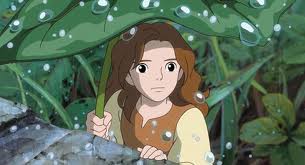
Beyond Brave: The Secret World of Arrietty

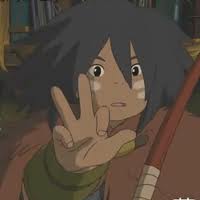
Brave is being treated as some new, unexpected, long awaited event. It's a film. Intended for children. Marketed and distributed by Disney Pixar. With a female lead. With a mother daughter relationship. If you take away the word Pixar and add the word Ghibli, this happened in February too. The difference is hardly anyone went. If there is such a pent up desire for alternatives to the Disney Princess machine, what kept parents away from The Secret World of Arrietty? This film opened to almost precisely ten percent of Brave's opening. (U.S. numbers).

If you saw Brave I urge you to consider The Secret World of Arrietty. Do you want voice over stars? How about Amy Poehler, Will Arnett, and Carol Burnett? Good reviews? How about a 94% at Rotten Tomatoes? Strong female lead? Check. Troubled but resolved mother / daughter relationship? Check. Fight over traditional values versus a new way of living in the world? Check. Princess? Sorry. No Princess here. Asexuality? No, Arrietty has an age appropriate curiosity. Prince? Nope. Not even close. Her love affair is doomed from the start, such as it is. Strong message of social responsibility? Check. Feminist viewpoint? Check. Total American box office? 19 million. Brave made that on it's opening day.

Face it people. You like the Princess. You want the Princess. It's the Princess you turn out for.

Back to Arrietty. (A local elementary school was so taken with this film they canceled lessons for the day and organized a field trip to the cinema.) Our entry into Arrietty's world is the narrator, Sho. Sent to live with his grandmother prior to heart surgery, Sho spots Arrietty in the grass. Arrietty lives in a two parent family where her father treats her as a fully capable person. Her mother is housebound and fearful, causing friction with Arrietty who strains at the rules her mother imposes.  Arrietty's father is training her to provide for their family, with her mother's support. She is expected to do all he does. She faces the same potentially fatal dangers he does, she gathers the same provisions he does. Arrietty is praised for her strength but chastised for her lack of caution. She's a tween, it's what they do. They rebel.

Pod (her father) and Homily (her mother) have warned Arrietty all her life against mixing with humans. It's not xenophobia, it's hard earned experience. Arrietty is a brave and self reliant character. She makes herself a weapon and uses it in her own defense. She prides herself on her ingenuity and physical abilities. Merida climbs a rock face? Arrietty climbs a similar distance in a treacherous storm. When the new human (Sho) arouses her curiosity she investigates. This leads to repeated fights with her mother. Despite Sho's best intentions Pod and Homily are right. He endangers them. Homily is taken from the family and only Arrietty can save her. In doing so she realizes that her mother's rules are based on hard experience and pragmatism, not caprice. By disregarding her mother, Arrietty has cost her family their comfortable home. She says goodbye to Sho as her family is forced to leave everything behind. In doing so Arrietty urges him to fight for his own life, to follow his own path as she will. She embraces the necessity of her parent's rules but does not adopt their bigotry.

Look Arrietty, I'm not white!
But your dad trusts me!
Weird!
Arrietty is not without flaw. There are some slow pacing moments (like Brave) and a subtle racism in the depiction of Spiller, a Borrower from another area. Because he is a forager he is shown in stereotypical 'savage' attire. But Spiller is also their salvation. Where her parents thought they were the last of their race, Spiller proves differently. He offers to be their guide to a new home and shows a strong attraction to Arrietty. She treats his interest casually, her mind is full of Sho and her family. Alongside the messages of self reliance and family respect is a strong rejection of materialism. Arrietty is told time and again to take only what she needs. While they beautify their home it is through their own craftsmanship and recycling. Goods they have not made are a trap they must never accept. It is better, in her family's mind, to live independent lives through their own labor than risk being enslaved in luxury. They pride themselves on repurposing items to meet their needs.

So here was a strong female lead with a complex mother / daughter relationship. It had the Disney brand, big name voice actors, and a full advertising campaign. America stayed home. Don't tell me these characters don't exist. Disney has tried to bring you a number of female leads from Ghibli. Mononoke was even a Princess. Maybe next time we will talk about Sen from Spirited Away or Kiki from Kiki's Delivery Service. I know you think "Well, if they can bring them over as imports why can't they produce these stories in America?" Why should they? You don't go to see them.

25 June, 2012

Things Unseen: The Bear And The Bow and Brave

So once upon a time Brenda Chapman had a movie planned for Pixar. It might have been good. It might have been awful. I've been trying to find the original concept for Brave because I can't shake the feeling that this wasn't the intended Girl Power message. (And really, I will move on soon. It's the contrarian in me. As more and more reviews arrive jumping over the incredibly low bar of Not Completely Sexualized to herald Merida as a triumph, I find myself saying Yes, But...)

The largest piece of information I can find is the following text. If you wrote it, let me know. Most people have sourced it to a 2010 Entertainment Weekly article, before Reese Witherspoon dropped the project. So assume authorship as EW until I find differently or confirm the issue.

Brave is set in the mystical Scottish Highlands, where Merida is the princess of a kingdom ruled by King Fergus (Billy Connolly) and Queen Elinor (Emma Thompson). An unruly daughter and an accomplished archer, Merida one day defies a sacred custom of the land and inadvertently brings turmoil to the kingdom. In an attempt to set things right, Merida seeks out an eccentric old Wise Woman (Julie Walters) and is granted an ill-fated wish. Also figuring into Merida’s quest — and serving as comic relief — are the kingdom’s three lords: the enormous Lord MacGuffin (Kevin McKidd), the surly Lord Macintosh (Craig Ferguson), and the disagreeable Lord Dingwall (Robbie Coltrane). - Entertainment Weekly


That sounds like a completely different movie. But it also sounds like the same movie. Since the three lords stayed to become her father's drinking buddies, I think there is a story untold. Until Brenda Chapman gives her post career interview or Brave comes out on the Deluxe Bonus From The Attic Edition DVD with the requisite rueful voiceovers, it remains unanswered. I still want to know why Merida has to apologize for everything but her father gets a pass. Sure, he was under the influence of bear but I still think (since she was tied down and all) that he could've taken a second to set aside his manly anger and listen to his kid. Just me on that one?


Along with the Scot-Face theming, I'm leaving the fantastic (natural black) hair alone. I've already spent more time on Brave than I intended or care to. If I say more it will be on the subject of our low expectations (all Merida had to do for Amazing Status was not be interested in marriage or overtly sexual) and our cultural blindness. Why didn't we salute Arrietty for it's strong family message? Why wasn't that capable and curious girl held up as a girl we'd like to see more of? Despite a wide release through Disney Arrietty (like the female lead of Spirited Away) was largely ignored by the same people overly excited about the extremely conventional Merida. If Merida had been a boy, the reaction to Brave would be quite different and far less enthusiastic. When we embrace Brave we set the bar for female narratives low indeed.

Just say no to sexuality and we will love you. Weird.

24 June, 2012

Maiden Mother or Crone, Brave Is A Small World After All

Yesterday I was unable to move beyond Brave's normalization of domestic violence to really discuss where it fails as a Pixar film. Much ink has been spilled on the replacement of original director Brenda Chapman with Mark Andrews over creative differences. I really didn't care. Directors get replaced all the time. Mark Andrews co wrote two of my favorite Pixar shorts, One Man Band and Jack Jack Attack. I had high hopes for him. In the aftermath of seeing Brave I think he might be a huge part of where the film went wrong. I've read a few dozen interviews with him this morning and two points come up again and again. He added animals and streamlined the characters, cutting away those that were not the main family.

There you have it. Girls like horses, right? Merida gets a horse. The most important part of this story is Merida learning to respect her place and Elinor loosening up a bit, so focus on them. Unlike every other Pixar film (except, perhaps Up) and every Disney Princess ever, Merida has no confidantes. She has no comrades. Elinor has no support system. These two women are alone except for the men they must please. When the clans come to visit there is great talk of the close bonds between the families. Elinor is given the hushed impersonal respect common to Traditional Values while the men are excused from being reasonable. Her taming hand causes them to bow and scrape. When she's a powerful bear they tie her naked body down and prepare to kill her. I don't buy the "But she's a BEAR!" aspect of this. She is a bear when Merida's brothers recognize and obey her authority. In a film supposedly about women there are only three - maid, mother and crone. (Ok, there is a sexualized and fairly dim servant, but otherwise.)

Name another Pixar film where the main character has no friends. I'll wait.

Still working on that? In order for Merida or Elinor to have the same friendship offered other Pixar characters, they would have to be seen as something outside of their gender. As long as Merida is trapped in her Token Female Lead role, she is stuck in the trinity. I assume at one point Merida did have a friend. Andrews says he cut the extraneous characters, which means other plot lines were abandoned. Since Merida's father still has a large and varied social group it seems likely that women were once in the cast. Think about the scene just before the ending. Merida reminds the men what makes them great. It is their friendship, it is the service they have done one another. In a film about a mother and daughter, the most significant speech the enlightened heroine gives is... about the glory of men.

23 June, 2012

Review: Brave by Pixar

Hey look, Pixar used a girl. Check out that weapon! Merida is going to use her abilities in a traditionally male arena to win recognition of her equality, right? Yeah. Not so much. In fact, Merida is going to realize that her true power lies in submission. It's going to be so awesome. Unless you have an abuse background and then it might be traumatic. Let's get to it!

I saw Brave in a group of six people. Three adults, three kids. Of the adults, two have an abuse background. Of the kids - well that's for them to decide, isn't it? Anyway, the children and one adult proclaimed Brave "Heartfelt, life affirming family fun." No really, someone said that. The other two adults hated it for different reasons. The first adult felt Brave was antifeminist, normalized domestic violence, telegraphed it's intentions, lacked charm and changed characters to suit the needs of the plot. The other adult was vaguely traumatized and wished walking out halfway through had been an option. But the rendering was cool.

For me, Brave failed on every level. (Since this will make me the least popular reviewer on the internet, I'm going to explain why in detail. You might want to see the film first then come back, because I will be talking about all major plot points.) We meet Merida in the traditional pre-titles happy family opening sequence. Then a bear ruins it all. Instead of semi-orphaning Merida as one might expect, the bear just traumatizes her father. He has bear issues. It's like, his thing. Merida's father wants her to be able to take care of herself, despite being a Princess. (The faux Scots things is all over Brave but I will leave that for someone else.) Merida's mother, who wears her hair tightly bound and extra long to show her feminine strength, wants Merida to play the dulcimer and meet the domestic pinnacles of princessdom she herself holds. In what is meant to be a send up of princess culture, Merida's mom rattles off all those traditional values while Merida rolls her eyes. Too bad the film undermines that. To begin with, Merida's father dwarfs The Incredible Hulk. Merida's mother is a slight and beautiful wisp. So the only thing Merida gets from her father is her hair. A hulking muscle bound Princess? Please. Merida's mother even complains that Merida overeats, because a Princess has an eating disorder. It's ok. Merida really only eats the occasional apple. Her plate of cookies is just for show. And her brothers. They can eat what they want because, you know, boys.

Mostly Merida's mom is just impatient with her willful teenage daughter. Things don't boil over until Merida's mother announces that the clans have been invited to compete for Merida's hand in marriage. Merida understandably balks at this announcement. Her mother tells her not to be silly, it's just marriage. Even she was nervous when she was handed off. Let's take a second here. Merida's appetite is unacceptable. Her physical prowess is unacceptable. Pimping her out to the neighbors is just fine. (Traditional family values for the win.) Merida attempts to use the traditional rules of the firstborn being able to compete for the hand of the princess to circumvent the bartering of her sexuality for social order. This infuriates her mother. Repeatedly Merida is told she doesn't know what she's done. Unless someone is allowed to marry her (read, have nonconsensual sex with her for life) the kingdoms will go to war. This message is repeatedly driven home to Merida in a number of ways. Without the Queen's calming and stoic voice controlling them the men fall into violent chaos. Without the right to marry Merida, conflict breaks out. The only thing holding these base animal men back is the dulcet and accepting tones of a confined woman. Okay then.

Moving on from the landmine of sex trafficking and young girls, we encounter Merida's plan to save herself. She runs off to cry. That's about it. She yells at her mother, and storms out. She doesn't set out to lead her own life. She doesn't open an archery school. She doesn't take a meaningful step toward independence because that is what a boy would do. Girls flounce. The magic of the forest leads her to a Miyazaki style crone in the woods who sells her a way to poison her beloved mother. To be fair to Merida, the bear obsessed witch never says the word poison. Neither does Merida. She wants to change her mother (not herself) and thus change her fate. She doesn't want independence or a solution - she wants to control her controlling mother and thus alter in some unspecified and therefore clearly unimportant way, her future. The witch is like hey, I did this once before and it really didn't work out so well but if you're paying, I'm playing. Merida tricks her mother into eating the poisoned cake.  Her mother promptly turns into a bear. Wow! A bear! (Hey wasn't there another bear at the start of this movie?) Merida is like, I didn't ask for a bear. I just asked a complete stranger to feed mind altering chemicals to my mom so she'd stop being such a drag. WTF, bear?

The point of the bear is twofold. The first is for Merida to show her mother that the life skills she gained from her father were not useless. The second is to normalize domestic violence. Merida quickly realizes that since her mother is a bear, if her father sees her she will be murdered. This is all Merida's fault. If she had just let herself be pimped out, none of this would have happened. Later, Merida's mother attacks her and lays open her arm. Merida assures her regretful mother that it is Merida's fault. If Merida hadn't acted so hastily and foolishly, her mother wouldn't have hurt her. (That's right kids, it's always your fault.) Merida's father sees the torn clothes of Merida's mother and decides the bear has eaten her. The only way to avenge her death is to kill the bear. The bear that is actually his wife. If you change to the point that your husband doesn't recognize you (although all four of your children do) he will kill you (because he loves you so much) and it will be your daughter's fault. Men are scary irrational creatures women barely hold in check and upsetting that balance has terminal consequences. Merida has to keep her mother alive, control her massive father, keep the kingdom from going to war, and apologize about fifty times. If she had only been a little bit skinnier and a little bit sluttier none of this would be happening.

Of course it is through her brains and her brawn that Merida wins the day and saves the kingdom, right? Well, not so much. Mostly it is through accepting her fate. Merida apologizes a bunch more and demurely walks into a crowd of warring men to use her placid feminine voice to calm them and agree to marry at once so no one has to die. Her mother, still a bear, has seen that Merida holds more value than her stone face and untouched vagina, so she intervenes by giving Merida permission to refuse the marriage. Well, sort of. Merida postpones the marriage by suggesting that free will be given in the choosing of sex partners. No one is really into this until the young men agree that maybe they don't want to sleep with Merida either. The fathers agree that Merida will be courted by the sons and choose one later, maybe after falling in love, thus deferring the still planned upon matrimonial ending. Or course her mother is still a bear and her father still wants to kill her. Merida has to rush upstairs and do some sewing (really) run after her enraged father, fight him off to defend her mother, then cry an awful lot and beg her mother's forgiveness. You see, Merida's mom has always been there for her. All she asked of Merida was one little thing (her entire life) and Merida was so ungrateful that she refused, poisoned her, and brought the kingdom to ruin. If only Merida had just done what was expected of her everyone would be safe and her father wouldn't murder her mother or brothers.

Well, I feel empowered, how about you?

Merida breaks the curse, the other bear is revealed (and defeated) the kingdom is happy, etc. Merida's mother learns to let her hair down a bit (literally) Merida learns her proper place, and with his women returned to their roles the king settles down and doesn't kill anyone. Along the way some small children dig around in a buxom maid's breasts and millions of young girls learn valuable lessons. You can be whoever you want, as long as you have permission. Control over your own body is granted by others. Strength is nice to have, but it's not what really counts in the end. Love means always having to say you're sorry. They wouldn't hurt you if you weren't so difficult. It really is your fault. Crying can totally solve things.

I have long defended Disney's Princesses. I will make a case for the ability to be empowered by any of their willowy young beauty queens. I have to make an exception for Merida. That chick is toxic and so is her whole movie. Thankfully the youngest girl in our group said "Ok, I don't see why Merida had to say she was sorry though." There's hope for the next generation.


21 June, 2012

Review: The Price of Inequality by Joseph Stiglitz

To be completely honest, I can't really call this a review. Perhaps I should have labeled it a strong recommendation. What would I say? As a protagonist the legislative bodies of America frequently act in odds with the nation's self interest. I find it unlikely that such actions would occur. Insanely rich people are completely fine with breaking the economic core of the nation, rendering them unsympathetic.  Voters are locked in an abusive relationship through a lack of choices and a powerful desire to self harm.

Actually, that review would probably rock. Alas, it remains unwritten.

With The Price of Inequality Stiglitz lays out some pretty tedious economic theory in an accessible and popular way. You might think you understand why our economy is bleeding jobs while your bank account gets thinner but you really don't. Unless you do, I don't want to prejudge you. However I am not a Nobel Prize winning economist and therefore found Stiglitz made several outstandingly infuriating points. What we do about it, that's a different story. Step one, admit you have a problem.

We are so screwed.

I'd like to pretend that I've been spending my time reading books like this one. Or genre fiction, or comic books. To be truthful I've spent the slump evaluating various iPad games. VelociRapture vs Monsters Ate My Condo? I'm your girl.  Things are looking up though, since I switched from the K3 back to the Land of Sony Readers my reading has gone up dramatically.

13 June, 2012

Review: Three Weddings And A Murder

Books just aren't holding my interest at the moment. Three Weddings And A Murder is a decent slump breaker.

I believe I have crossed over into the Obsolete Reader section of the market. My grandmother used to complain that there were no good Gothics anymore. Now with Gothics a distant memory, Regencies having evolved into Wallpaper Historicals, and the rise of Paranormals I begin to see her point. Long live the Victorians! I'm sure my kids will lament their demise as the Windsorian books begin to hit shelves. (Is Windsorian even a word? Well, we've a decade or so to figure that out.) Three Weddings And A Murder made me reflect on my place in the genre food chain because Tessa Dare is a very good author who bores me silly.

On paper, I should love Tessa Dare. In practice I find myself emotionally removed from her work. I'm not quite ready to cue my reader to the oldies station (Best of yesterday and today!) but my bones are creaking. In The Scandalous, Dissolute, No-Good Mr. Wright Dare tells a time lapse tale of a young girl and a not so old man. I enjoyed it more than other works I've read by Dare but I felt the characterization was somewhat uneven. The heroine's speech patterns didn't work for me. She was given to more exposition than I found strictly plausible. The hero was charming, but his HEA required evolution didn't feel organic. (Why would he do that? Is he insane?) Tessa Dare is firmly in the list of authors I admire yet avoid. If you like Tessa Dare, I'd buy the anthology just for her novella - it's the closest she's come to winning me over.  

Of course the draw for me was Courtney Milan's The Lady Always Wins. As an open fanatic of Milan I was not disappointed. While it lacks the emotional punch of The Governess Affair I found it the strongest of the four. (It played to my personal fetishes. Tulipmania has always fascinated me.) This is a tale of lovers lost, but their loss has a solid cause. I believed their separation as much as their reunion. You can't live on love, and Ginny knew that far better than Simon. (The formerly meddling parents are some of Milan's best characters. I adored their brief appearance.) I think what kept The Lady Always Wins from hitting great (it's very good) is the resolution. Ginny, who is risk averse, is required to bet almost everything in a way I am not sure she would. I believed her motivations, but her actions I have mixed feelings about. The fact that I spent so much time worrying about Would Ginny Have Done That reflects my investment in the characters.

Leigh LaValle was one of two authors new to me. The Misbehaving Marquess didn't work. This is a short where a little bit of communication between the primary characters would go a long way. They felt very modern in a historical setting, treating their relationship as something easily set aside. The reasons for estrangement were thin and the reunion therefore lacked power. Both of them needed a pair of Big Kid pants. Carey Baldwin was also a new author to me. I'm reasonably certain (but too lazy to do any actual research and verify) that she's a debut author.  Solomon's Wisdom is a modern suspense that wouldn't be out of place next a Susan Elizabeth Phillips book. I don't think it does Baldwin any favors to follow three similarly themed tales with such a change of pace. Once I adjusted to the swap there was a lot to appreciate. While not offering a real challenge to solve, her mystery had several fresh touches that kept me interested. (I may check out her full length novel.) Overall this benefit compilation is worth checking out.